
Instrument and Plant Air Drying
Heatless desiccant drying of compressed instrument air and plant air using activated alumina to deliver pressure dew points below minus 40 °C for DCS pneumatic systems.
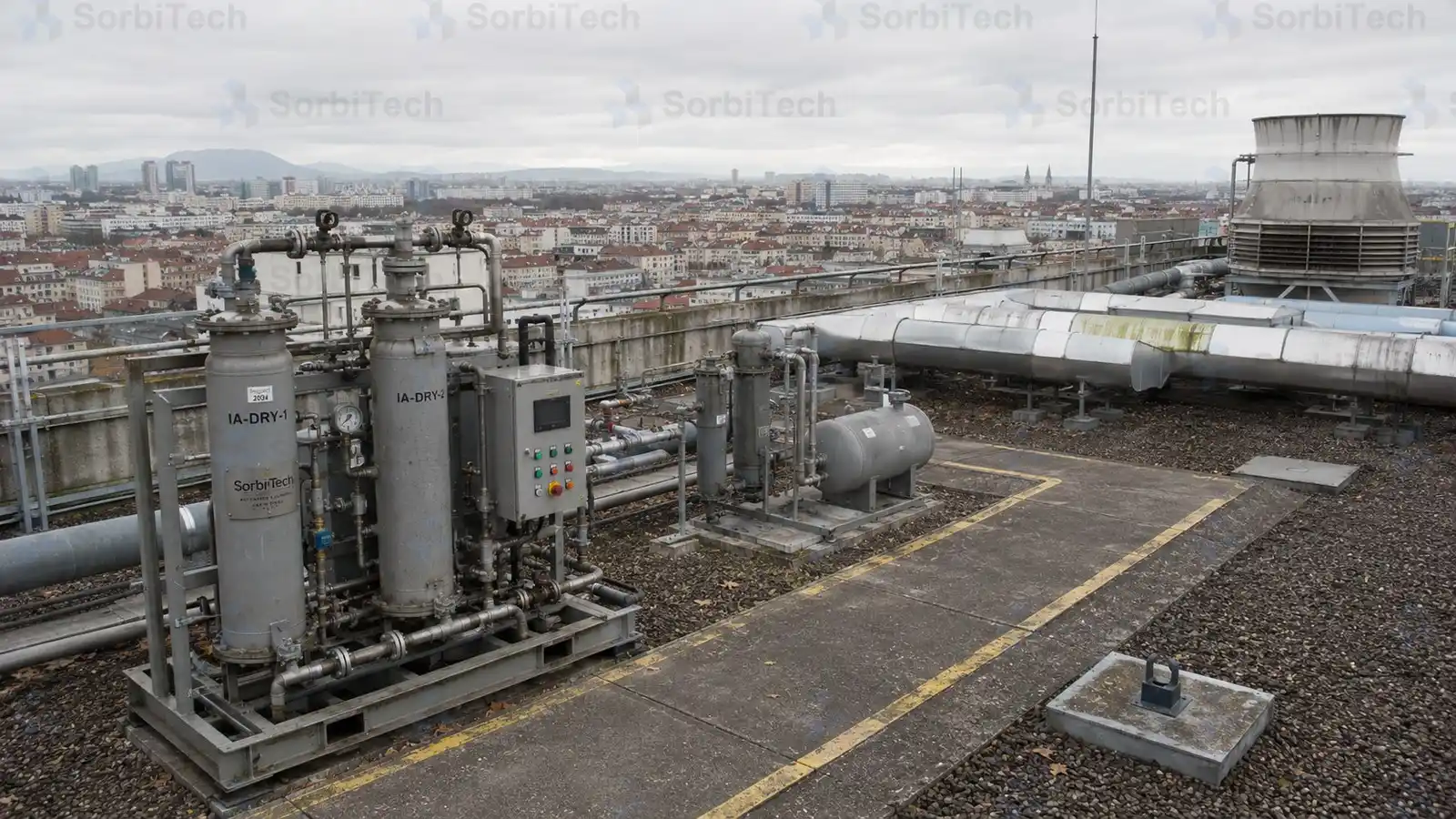
Instrument and plant air drying delivers dry, clean compressed air for distributed control system pneumatic valves, instrument bubblers, and plant air services. A twin tower heatless desiccant dryer charged with activated alumina drying grade cycles every 4 to 10 minutes between adsorption and pressure swing regeneration, holding pressure dew point below minus 40 °C.
Instrument Air Reliability Is Plant Reliability
Distributed control system pneumatic valves, instrument bubblers, control valve positioners, and plant air services across every process plant run on compressed air. The air must be dry enough that no water condenses in the coldest part of the distribution piping; on an offshore platform or a winter onshore plant that target is a pressure dew point below minus 40 °C. Failure modes range from nuisance alarms and instrument drift to full plant trip when a control valve seizes on frozen water.
Heatless Desiccant Dryer Operation
The SorbiTech heatless desiccant air dryer uses twin towers of activated alumina drying grade in a fast pressure swing cycle. One tower is on adsorption at line pressure; the other regenerates by depressurising to atmospheric and purging with dry product air drawn from the on line tower. The cycle repeats every 4 to 10 minutes. No regeneration heater is needed, the cycle runs entirely on the energy already in the compressed air system.
Activated Alumina Resists Fast Cycling
The deciding adsorbent property is attrition resistance. Heatless cycles produce mechanical stress on the bed at every pressurisation; softer media break into fines that discharge through the downstream filters and contaminate instruments. The SorbiTech activated alumina drying grade meets ASTM D4058 with attrition loss below 0.3 percent, which holds the bed integrity through 5 to 7 years of fast cycling without measurable dusting.
Delivery and Sector Coverage
Delivered as a packaged heatless dryer by SorbiTech with the SorbiTech alumina charge, instrument air filters, and outlet quality monitoring. Common applications across industrial gas, oil and gas (especially offshore), petrochemicals and refining, and pharmaceutical sites where the DCS depends on instrument air integrity.
Selection Guidance
Heatless desiccant dryer with activated alumina drying grade (high attrition resistance) for industrial and offshore service. Silica gel white for clean dry feed. Sized for the plant air consumption peak plus a margin.
A Specified, Verified Solution
Define the duty
We capture your process conditions: flow, composition, pressure, temperature, and the target outlet specification.
Select media & configuration
Our engineers recommend the adsorbent grade and system type that meet the duty with margin.
Size & engineer
Bed sizing, vessel design, and cycle parameters are engineered to your case and documented for approval.
Commission & verify
We support loading, start up, and performance verification against the guarantee.
Recommended Products & Systems
Adsorbents & Media
-
01
 Adsorbent
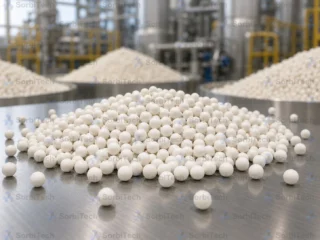
Activated Alumina Drying Grade
High capacity activated alumina for compressed air dryers, gas dehydration, and heatless desiccant systems.
Water Cap.
≥ 20 %
Adsorbent
Activated Alumina Drying Grade
High capacity activated alumina for compressed air dryers, gas dehydration, and heatless desiccant systems.
Water Cap.
≥ 20 %
-
02
 Adsorbent
Carbon Molecular Sieve CMS 450HP
Ultra high purity carbon molecular sieve. 99.99999 percent (7N) N2, selective O2 and CO2 capture, 1.0 to 1.6 mm pellets, minimal fines, deoxo polishing…
Water Cap.
Feed must reach ISO 8573 class 1.4.1, deoxo polishing recommended for 7N %
Adsorbent
Carbon Molecular Sieve CMS 450HP
Ultra high purity carbon molecular sieve. 99.99999 percent (7N) N2, selective O2 and CO2 capture, 1.0 to 1.6 mm pellets, minimal fines, deoxo polishing…
Water Cap.
Feed must reach ISO 8573 class 1.4.1, deoxo polishing recommended for 7N %
-
03
 Adsorbent
Carbon Molecular Sieve CMS 420KT
High efficiency carbon molecular sieve. Higher oxygen affinity under 7 to 12 barg, 1.2 to 1.8 mm pellets, Snowstorm Filling compatible, ASTM D4058 attrition…
Water Cap.
Feed must reach ISO 8573 class 1.4.1 %
Adsorbent
Carbon Molecular Sieve CMS 420KT
High efficiency carbon molecular sieve. Higher oxygen affinity under 7 to 12 barg, 1.2 to 1.8 mm pellets, Snowstorm Filling compatible, ASTM D4058 attrition…
Water Cap.
Feed must reach ISO 8573 class 1.4.1 %
-
04
 Adsorbent
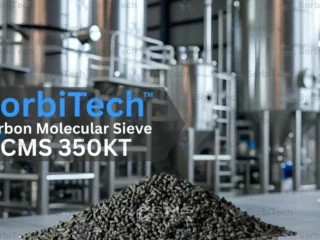
Carbon Molecular Sieve CMS 350KT
Rapid adsorption carbon molecular sieve. 40 to 90 second cycle at 7 to 10 barg, up to 99.99 percent N2, 1.0 to 2.2 mm…
Water Cap.
Moisture at supply below 1.0 percent, feed must reach ISO 8573 class 1.4.1 %
Adsorbent
Carbon Molecular Sieve CMS 350KT
Rapid adsorption carbon molecular sieve. 40 to 90 second cycle at 7 to 10 barg, up to 99.99 percent N2, 1.0 to 2.2 mm…
Water Cap.
Moisture at supply below 1.0 percent, feed must reach ISO 8573 class 1.4.1 %
-
05
 Adsorbent
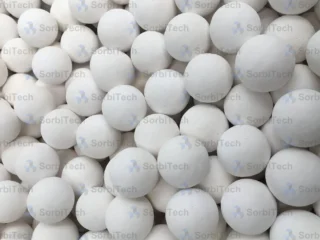
Activated Alumina Impregnated
Promoter loaded activated alumina for hydrogen sulphide, chloride, and Claus tail gas guard duty.
Form
3–5 mm spheres · 1.6–3.2 mm spheres
Adsorbent
Activated Alumina Impregnated
Promoter loaded activated alumina for hydrogen sulphide, chloride, and Claus tail gas guard duty.
Form
3–5 mm spheres · 1.6–3.2 mm spheres
-
06
 Adsorbent
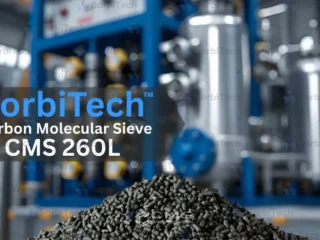
Carbon Molecular Sieve CMS 260L
Affordable carbon molecular sieve. 1.2 to 1.8 mm pellets, sub 10 Angstrom pore, 95 to 99.9 percent N2 from compressed air at 7 to…
Water Cap.
Intolerant of liquid water, feed must reach ISO 8573 class 1.4.1 %
Adsorbent
Carbon Molecular Sieve CMS 260L
Affordable carbon molecular sieve. 1.2 to 1.8 mm pellets, sub 10 Angstrom pore, 95 to 99.9 percent N2 from compressed air at 7 to…
Water Cap.
Intolerant of liquid water, feed must reach ISO 8573 class 1.4.1 %
Engineered Systems
-
01
 Equipment
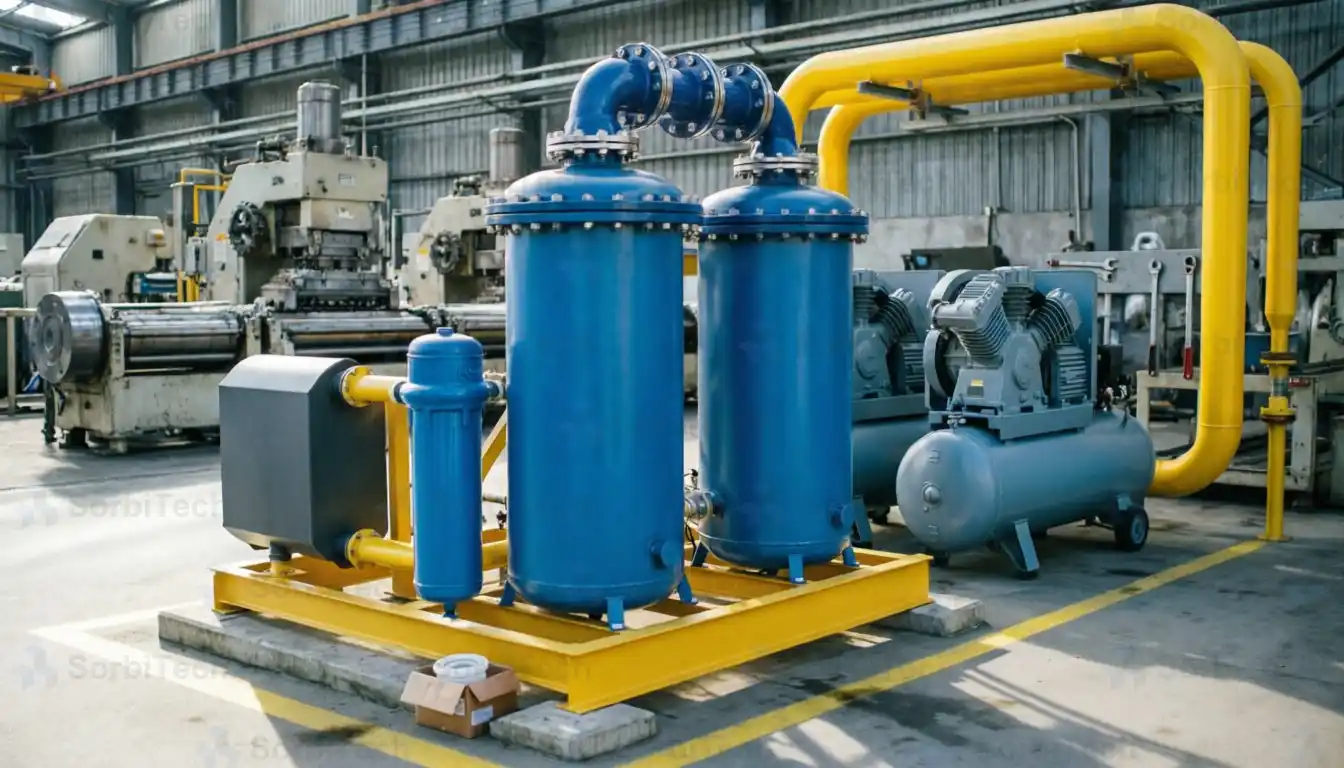
Heatless Desiccant Air Dryer
Twin tower heatless desiccant compressed air dryer using activated alumina or silica gel for instrument and process air to pressure dew points below minus…
Capacity
50–10,000 Nm³/h
Equipment
Heatless Desiccant Air Dryer
Twin tower heatless desiccant compressed air dryer using activated alumina or silica gel for instrument and process air to pressure dew points below minus…
Capacity
50–10,000 Nm³/h
-
02
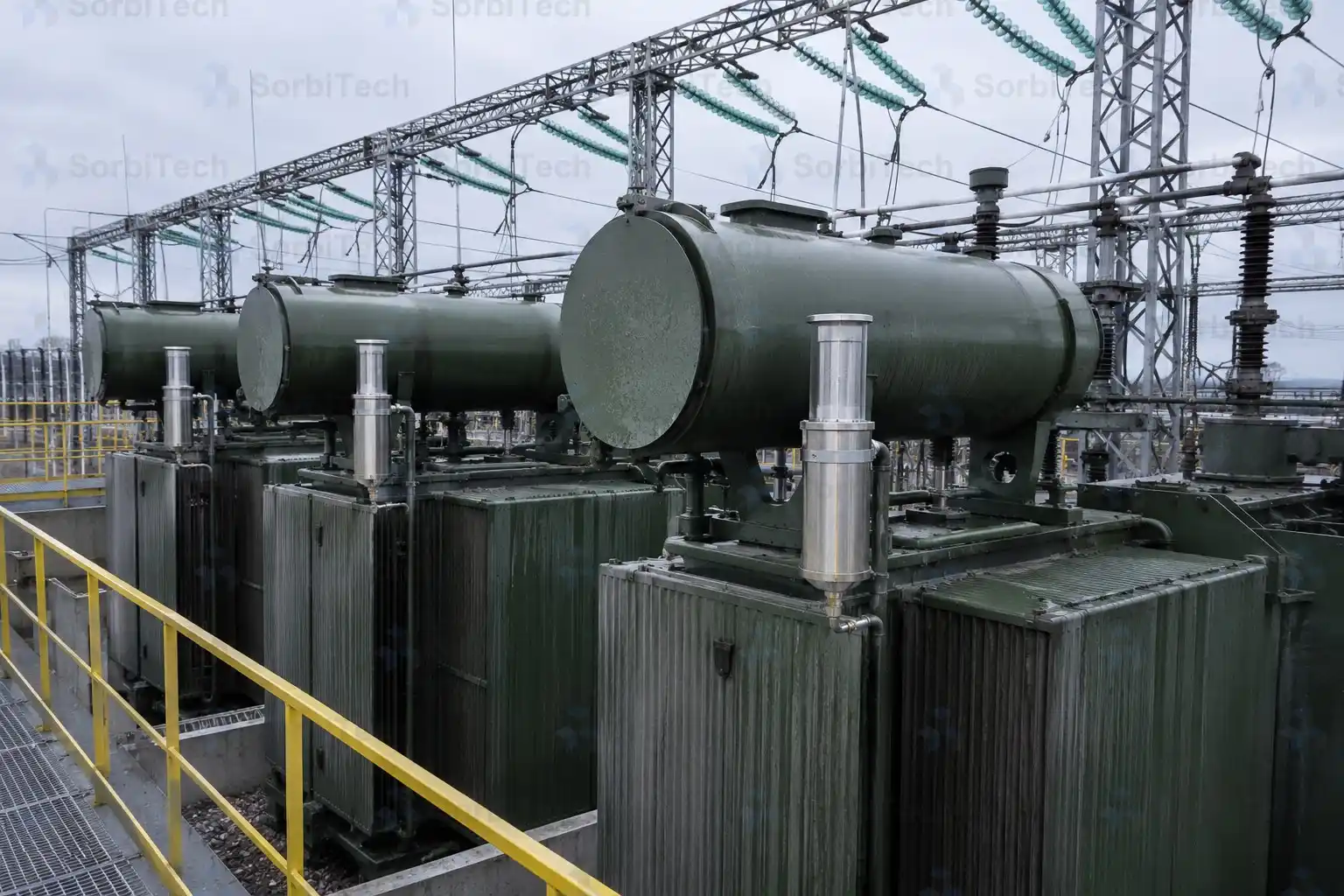 Equipment
Transformer Breather Cartridge System
Pre packaged stainless steel transformer breather cartridge with indicating silica gel for grid transformer moisture protection across the high voltage transmission and distribution network.
Capacity
0.5–25 kVA transformer to 800 kV substation
Equipment
Transformer Breather Cartridge System
Pre packaged stainless steel transformer breather cartridge with indicating silica gel for grid transformer moisture protection across the high voltage transmission and distribution network.
Capacity
0.5–25 kVA transformer to 800 kV substation
-
03
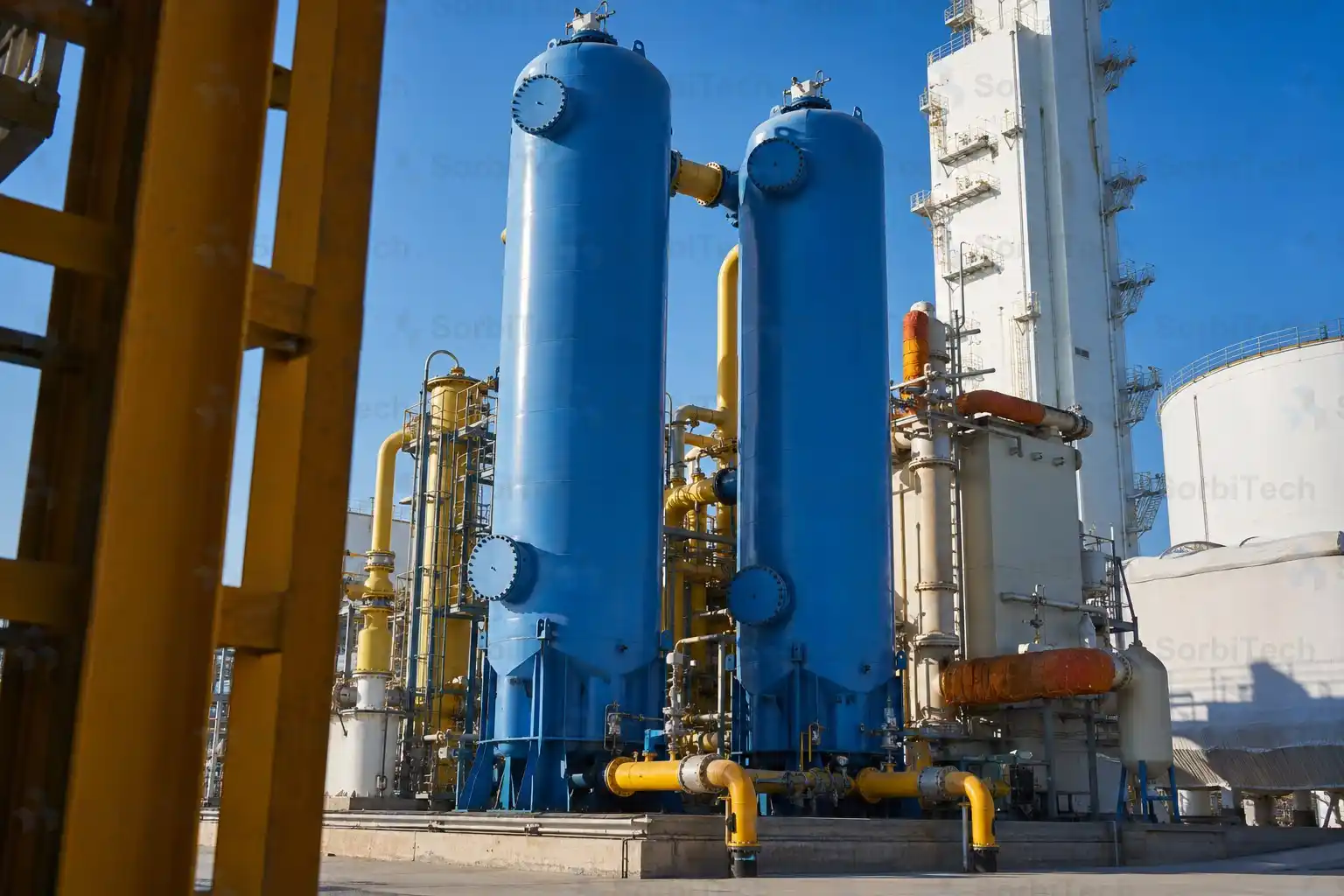 Equipment
Cryogenic ASU Pre Purification Package
Front end TSA pre purification package for cryogenic air separation units removing water, carbon dioxide, and trace hydrocarbons before the cold box.
Capacity
5,000–500,000 Nm³/h air
Equipment
Cryogenic ASU Pre Purification Package
Front end TSA pre purification package for cryogenic air separation units removing water, carbon dioxide, and trace hydrocarbons before the cold box.
Capacity
5,000–500,000 Nm³/h air
-
04
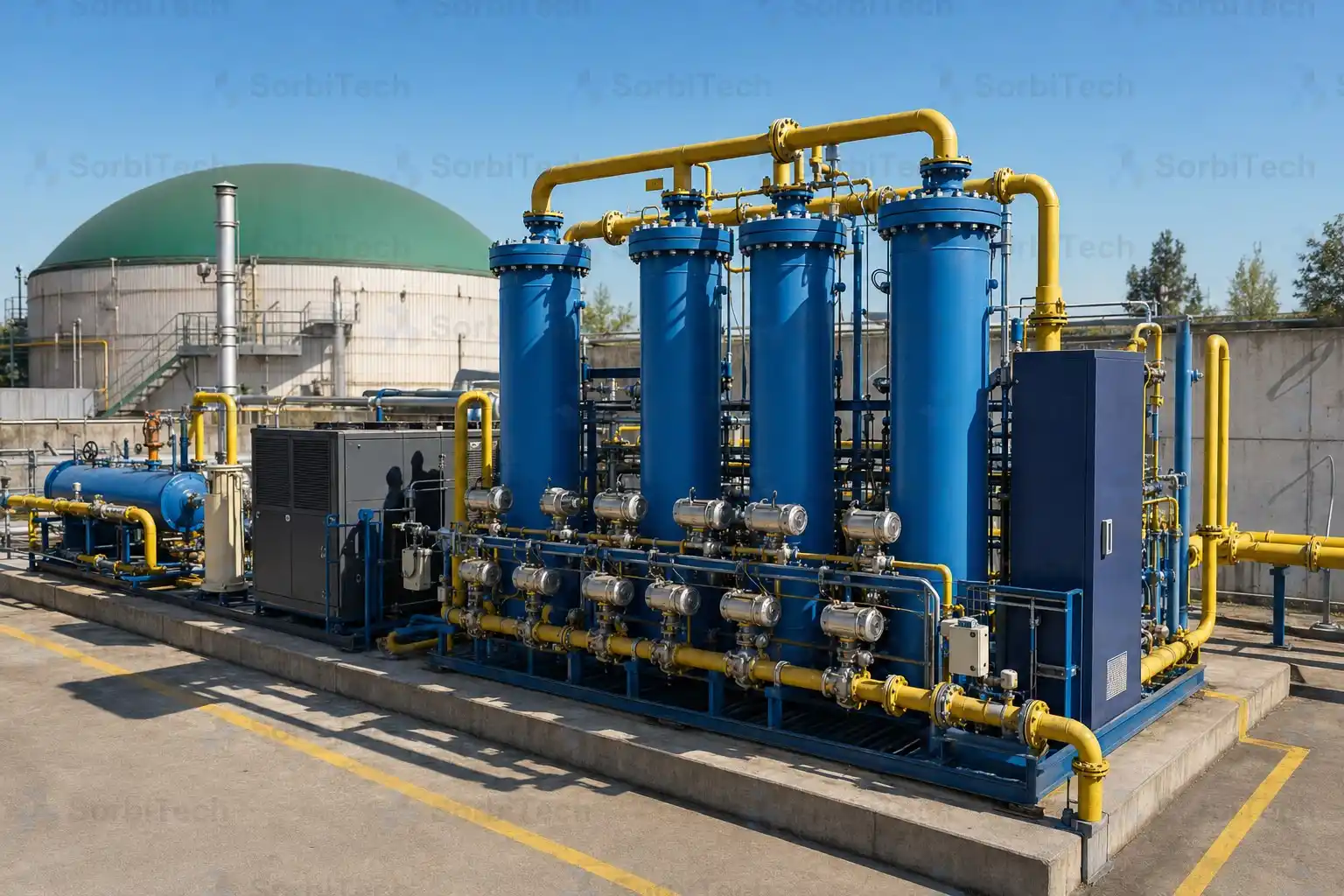 Equipment
Biogas Upgrading Unit
PSA biogas upgrading unit using carbon molecular sieve to separate carbon dioxide from methane and deliver grid quality bio methane from anaerobic digester biogas…
Capacity
50–2,000 Nm³/h raw biogas
Equipment
Biogas Upgrading Unit
PSA biogas upgrading unit using carbon molecular sieve to separate carbon dioxide from methane and deliver grid quality bio methane from anaerobic digester biogas…
Capacity
50–2,000 Nm³/h raw biogas
-
05
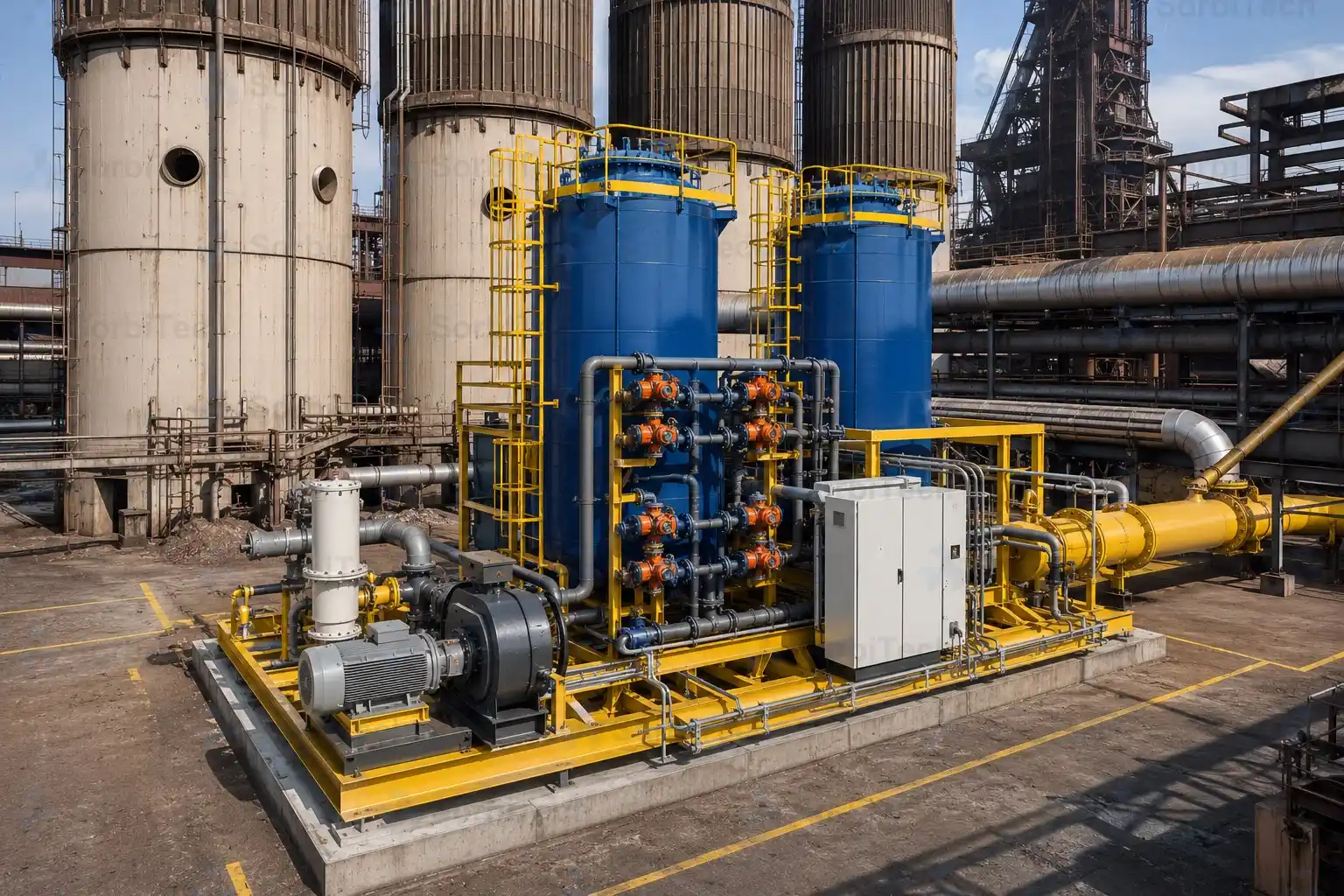 Equipment
Oxygen VPSA Package
On site vacuum pressure swing adsorption (VPSA) oxygen generation package delivering 90 to 95 percent oxygen for medical, aquaculture, ozone generation, and metals applications.
Capacity
50–2,500 Nm³/h O₂ (90–95 % purity)
Equipment
Oxygen VPSA Package
On site vacuum pressure swing adsorption (VPSA) oxygen generation package delivering 90 to 95 percent oxygen for medical, aquaculture, ozone generation, and metals applications.
Capacity
50–2,500 Nm³/h O₂ (90–95 % purity)
-
06
 Equipment
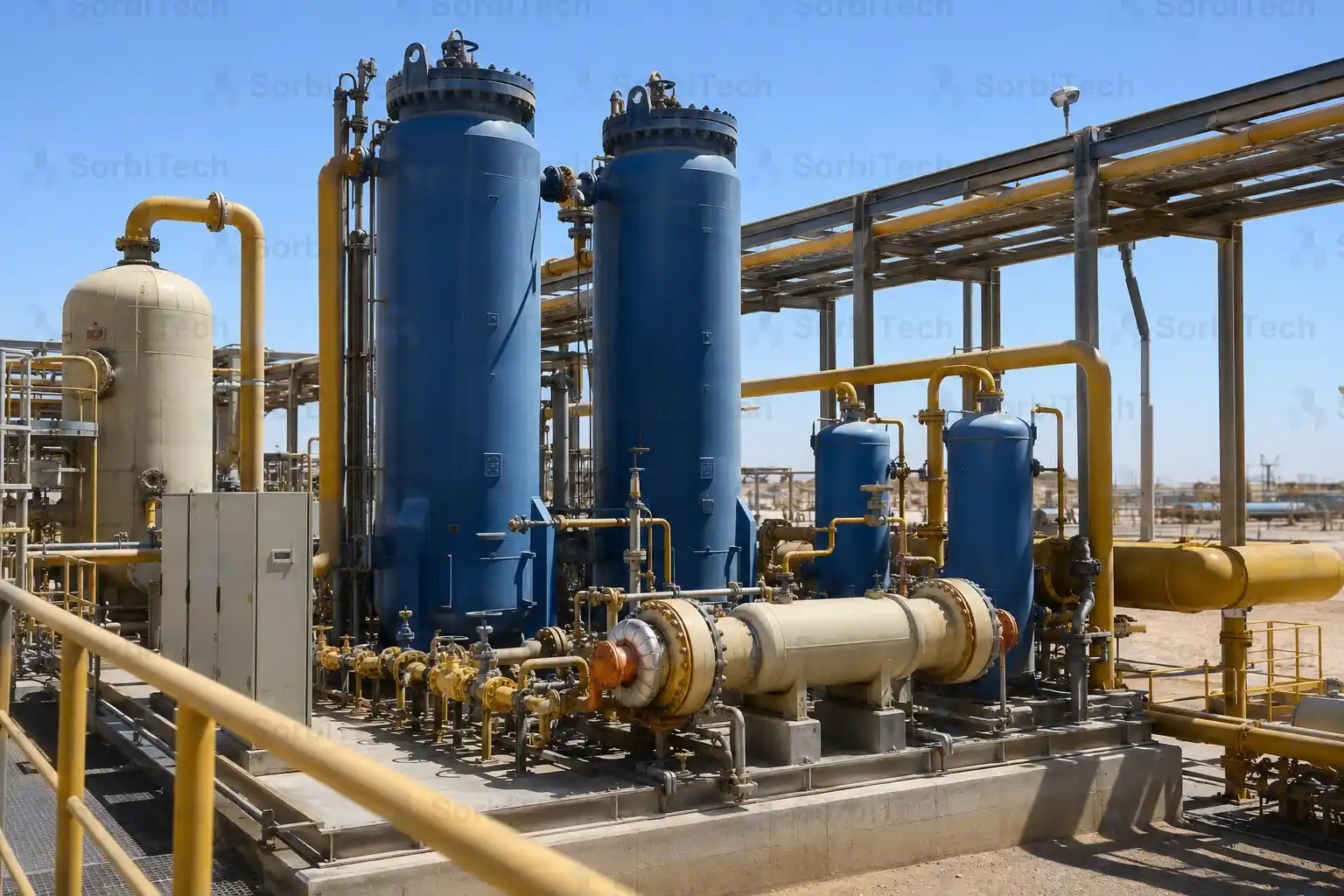
Gas Sweetening Unit
Molecular sieve and impregnated carbon gas sweetening unit for H₂S, CO₂, and mercaptan removal from natural gas, refinery gas, and LPG streams.
Capacity
0.5–500 MMSCFD
Equipment
Gas Sweetening Unit
Molecular sieve and impregnated carbon gas sweetening unit for H₂S, CO₂, and mercaptan removal from natural gas, refinery gas, and LPG streams.
Capacity
0.5–500 MMSCFD
Industries Using This Application
-
01
 Sector
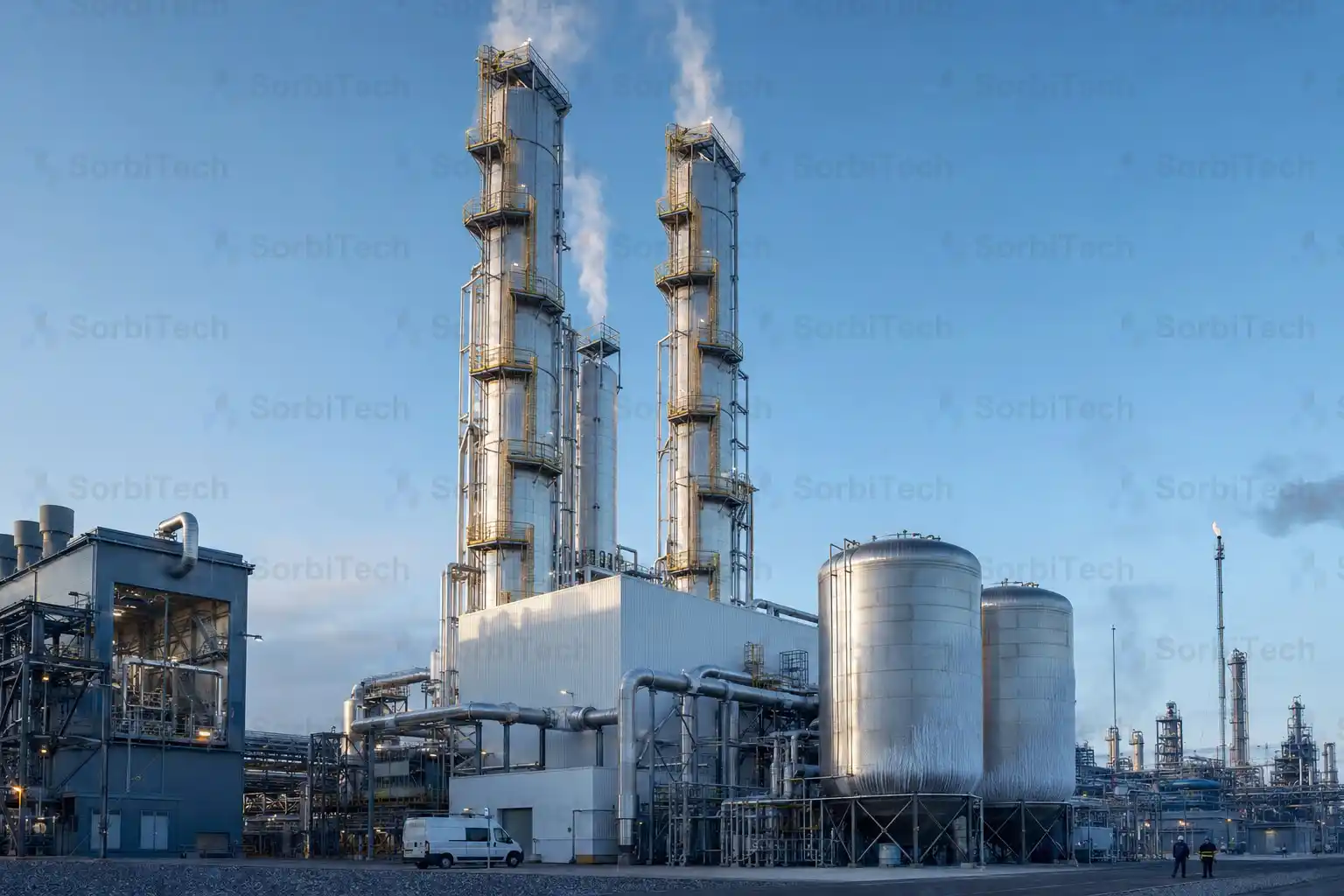
Industrial Gas & Air Separation
Molecular sieves and carbon molecular sieve plus PSA/TSA systems for nitrogen and oxygen generation and cryogenic air separation pre purification.
Sector
Industrial Gas & Air Separation
Molecular sieves and carbon molecular sieve plus PSA/TSA systems for nitrogen and oxygen generation and cryogenic air separation pre purification.
-
02
 Sector
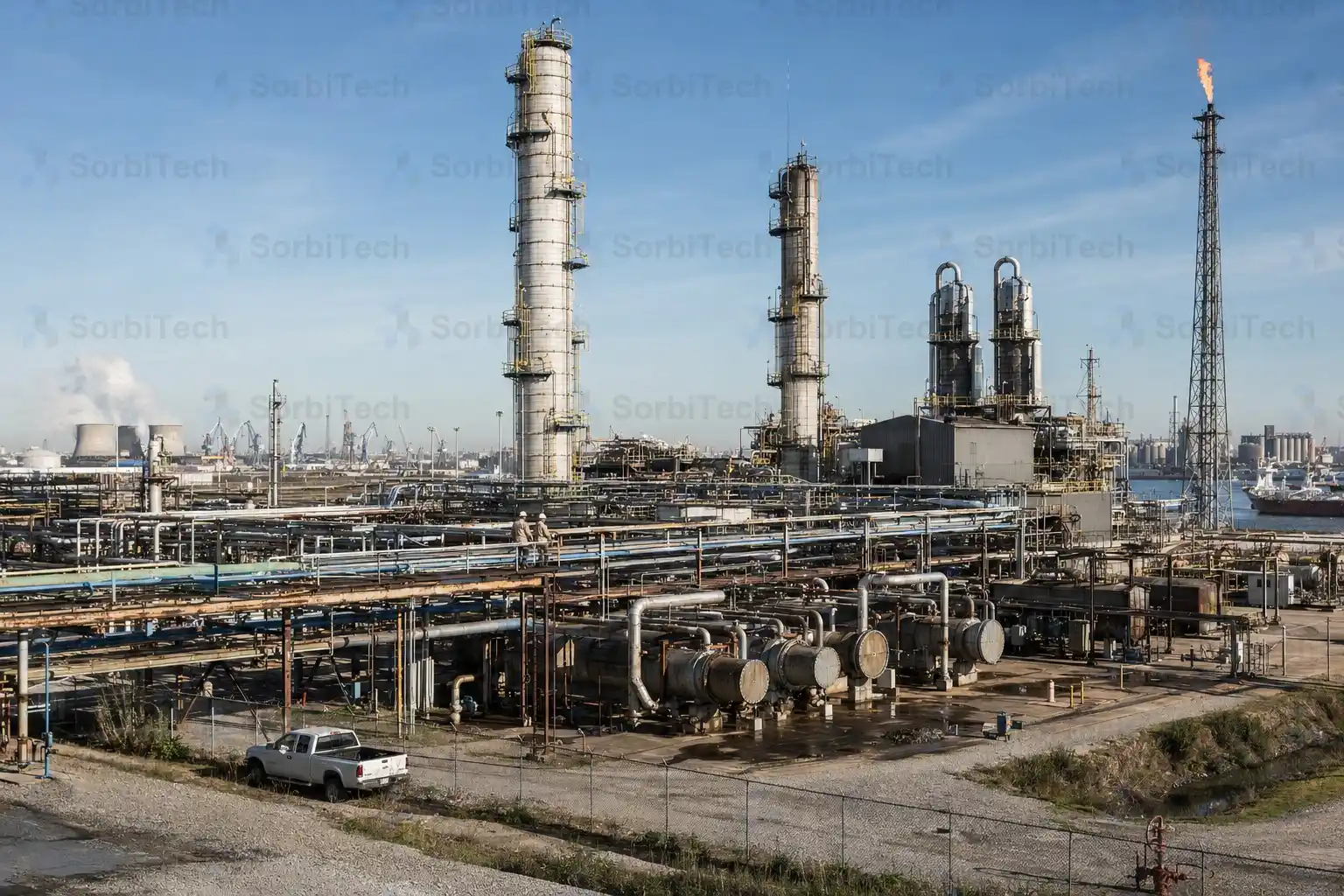
Petrochemicals & Refining
Adsorbents and separation systems for feedstock drying, process gas conditioning, solvent recovery, and refinery effluent treatment.
Sector
Petrochemicals & Refining
Adsorbents and separation systems for feedstock drying, process gas conditioning, solvent recovery, and refinery effluent treatment.
-
03
 Sector
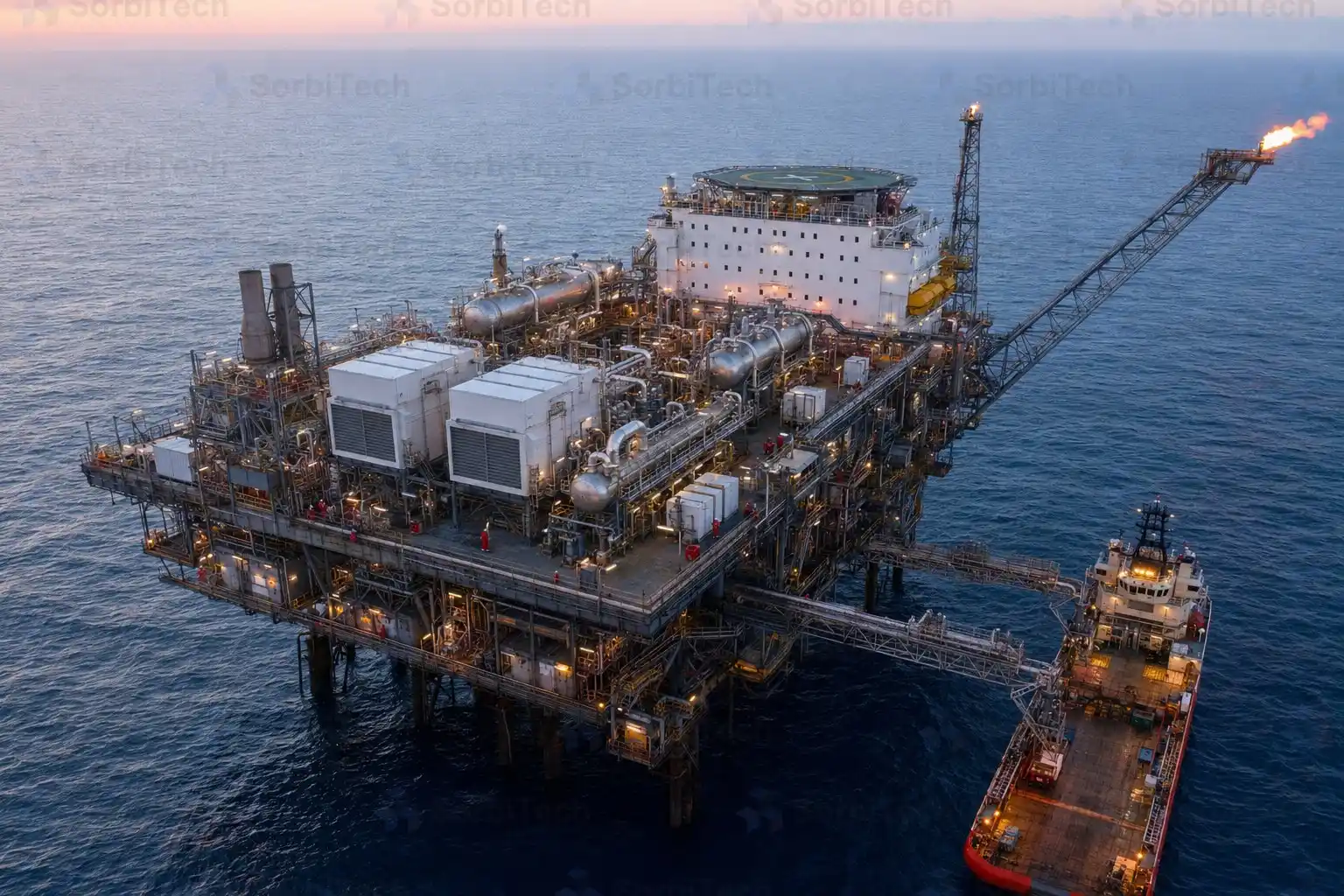
Oil & Gas
Complete dehydration, separation, and treatment across upstream, midstream, and downstream oil and gas. SorbiTech supplies the adsorbent media and the engineered systems from one…
Sector
Oil & Gas
Complete dehydration, separation, and treatment across upstream, midstream, and downstream oil and gas. SorbiTech supplies the adsorbent media and the engineered systems from one…
Specify a Solution for This Application
Provide your process conditions and our team will recommend the grade, configuration, and sizing.