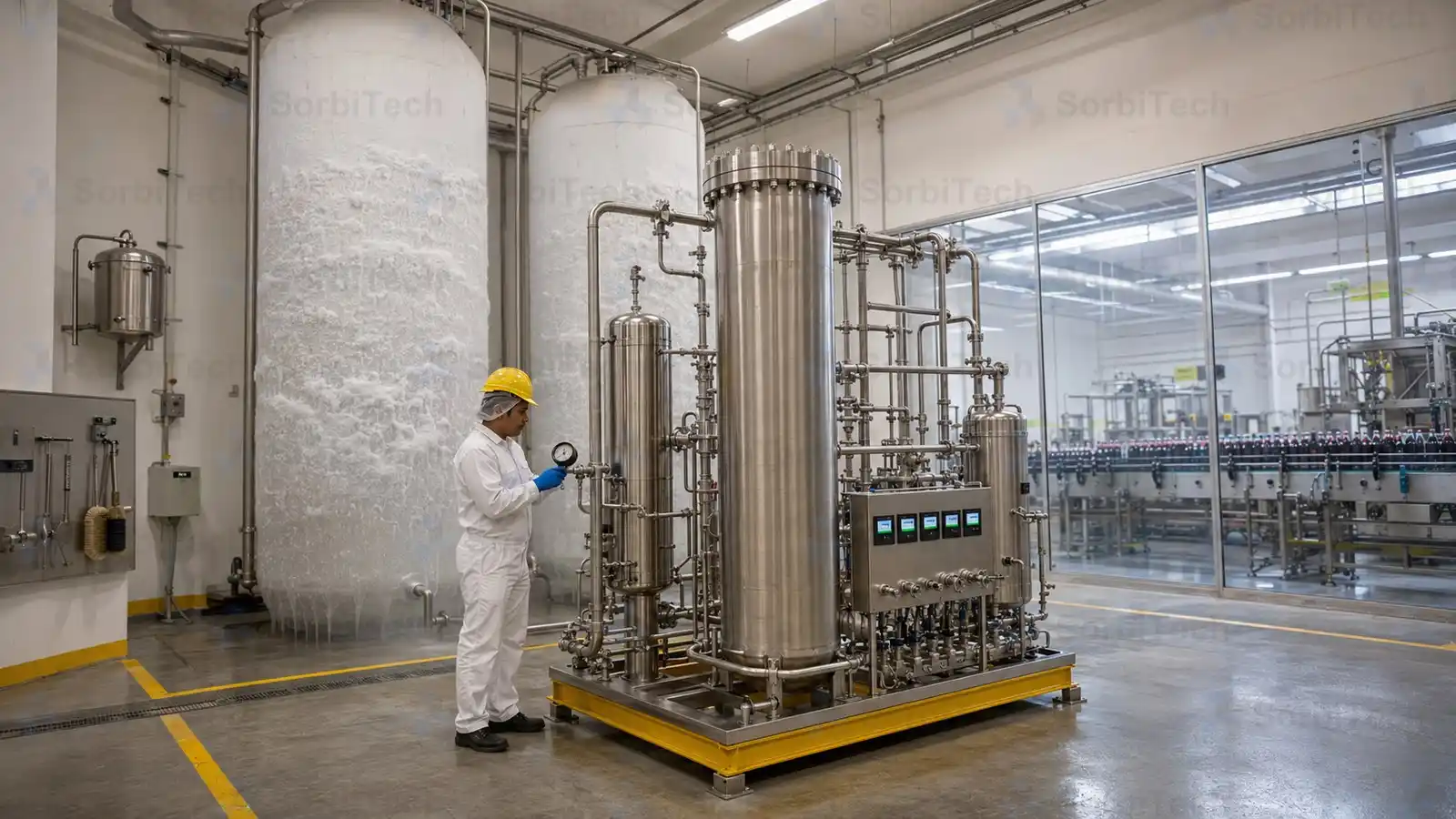
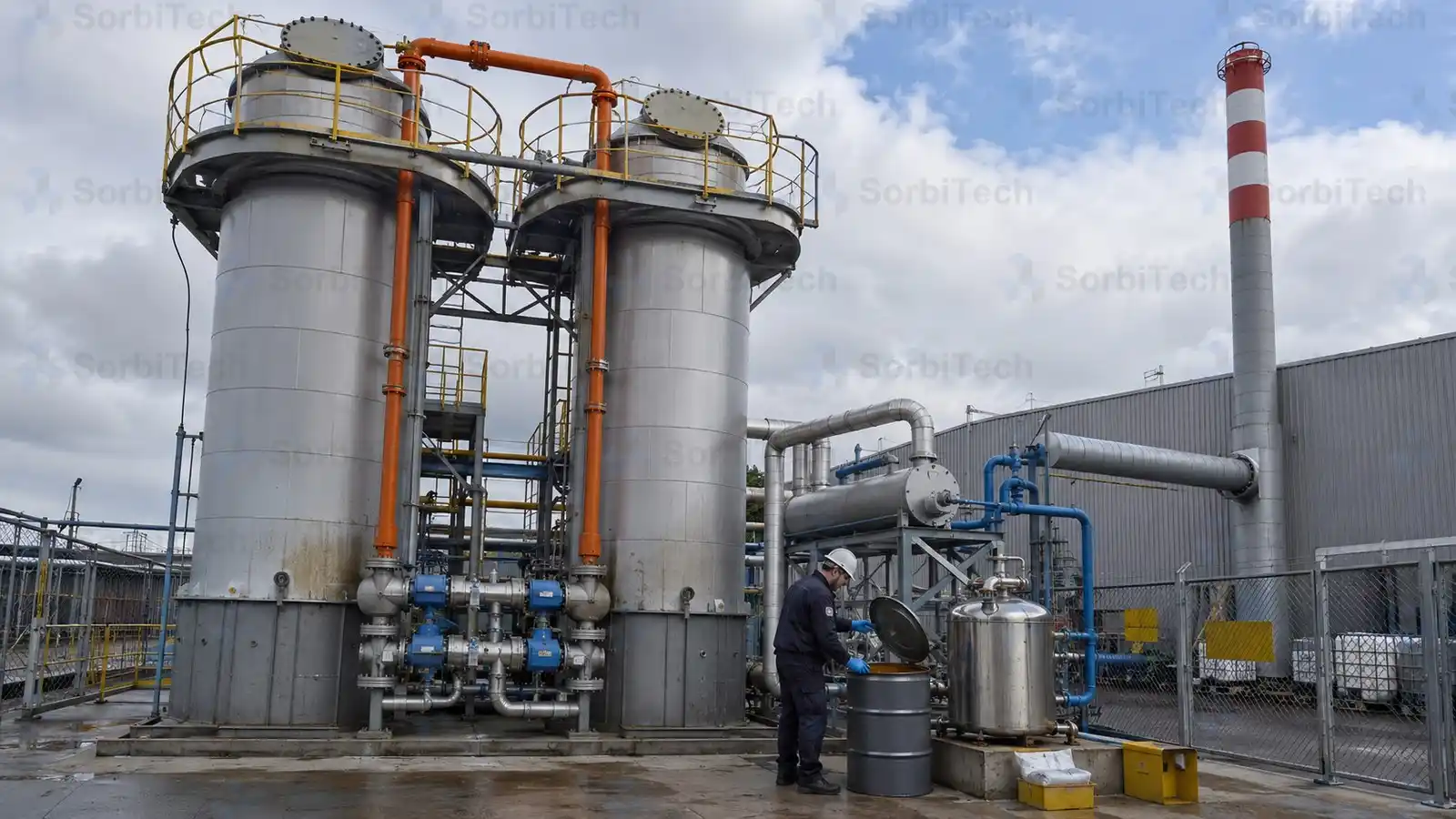
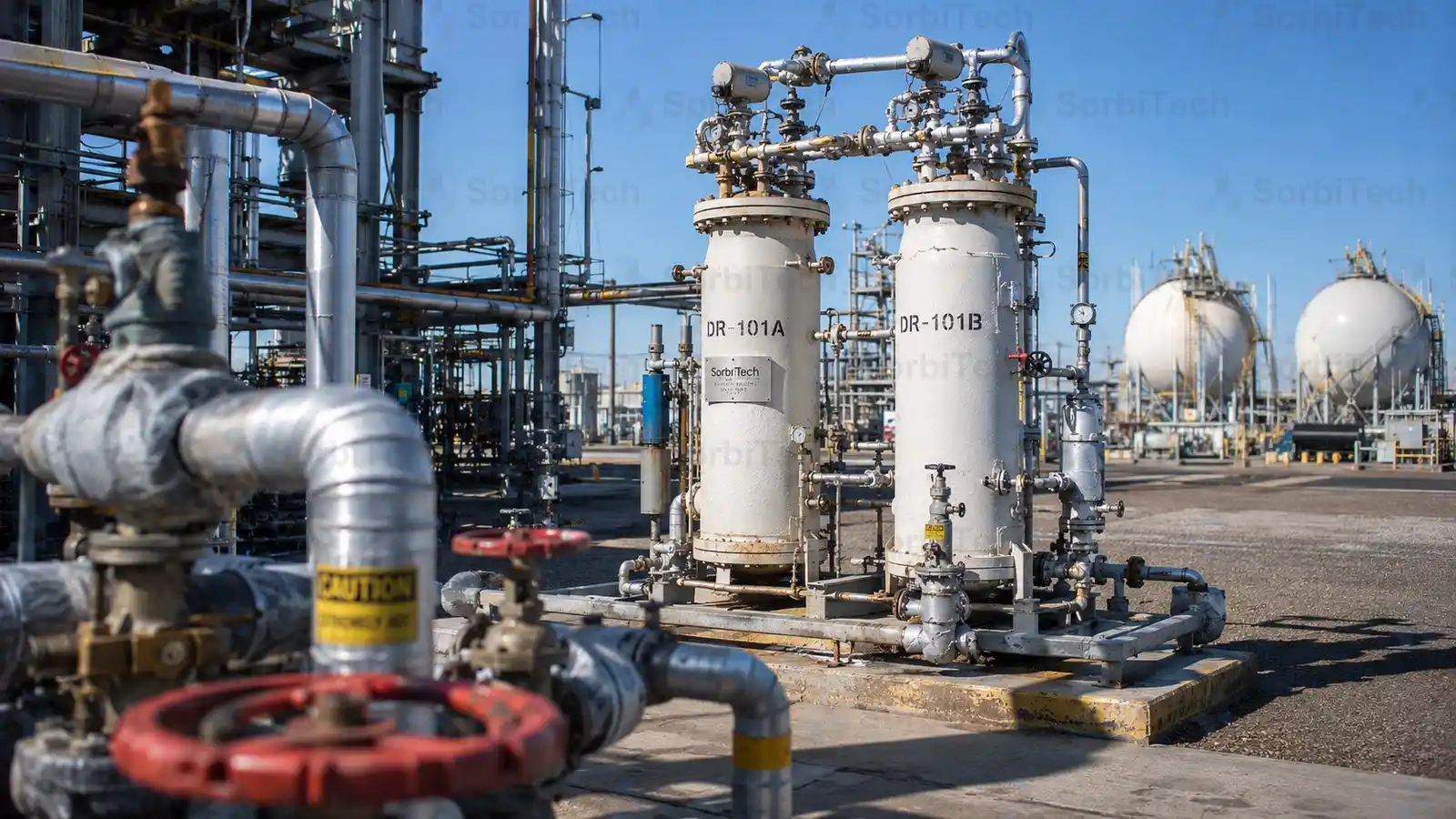
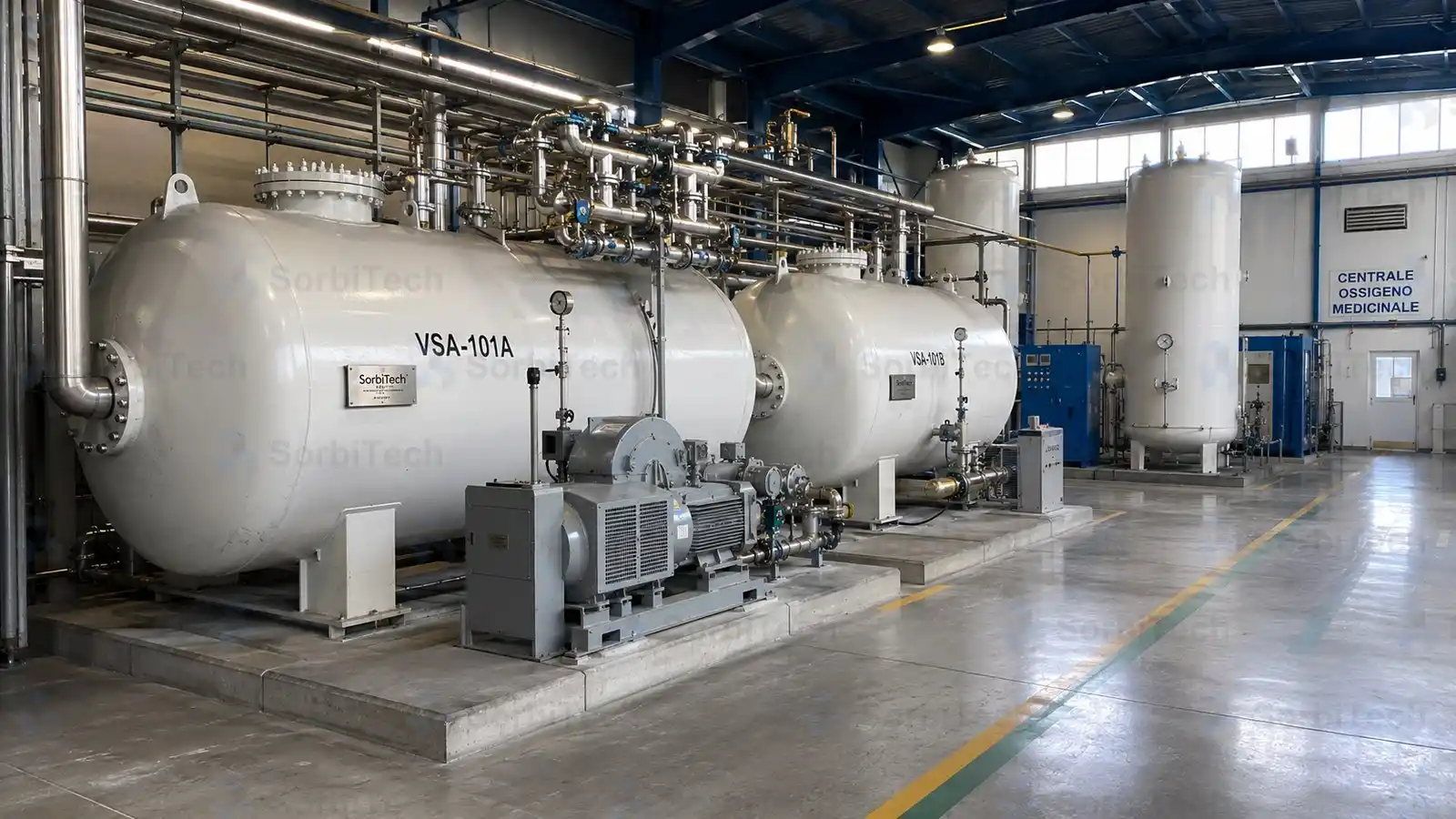
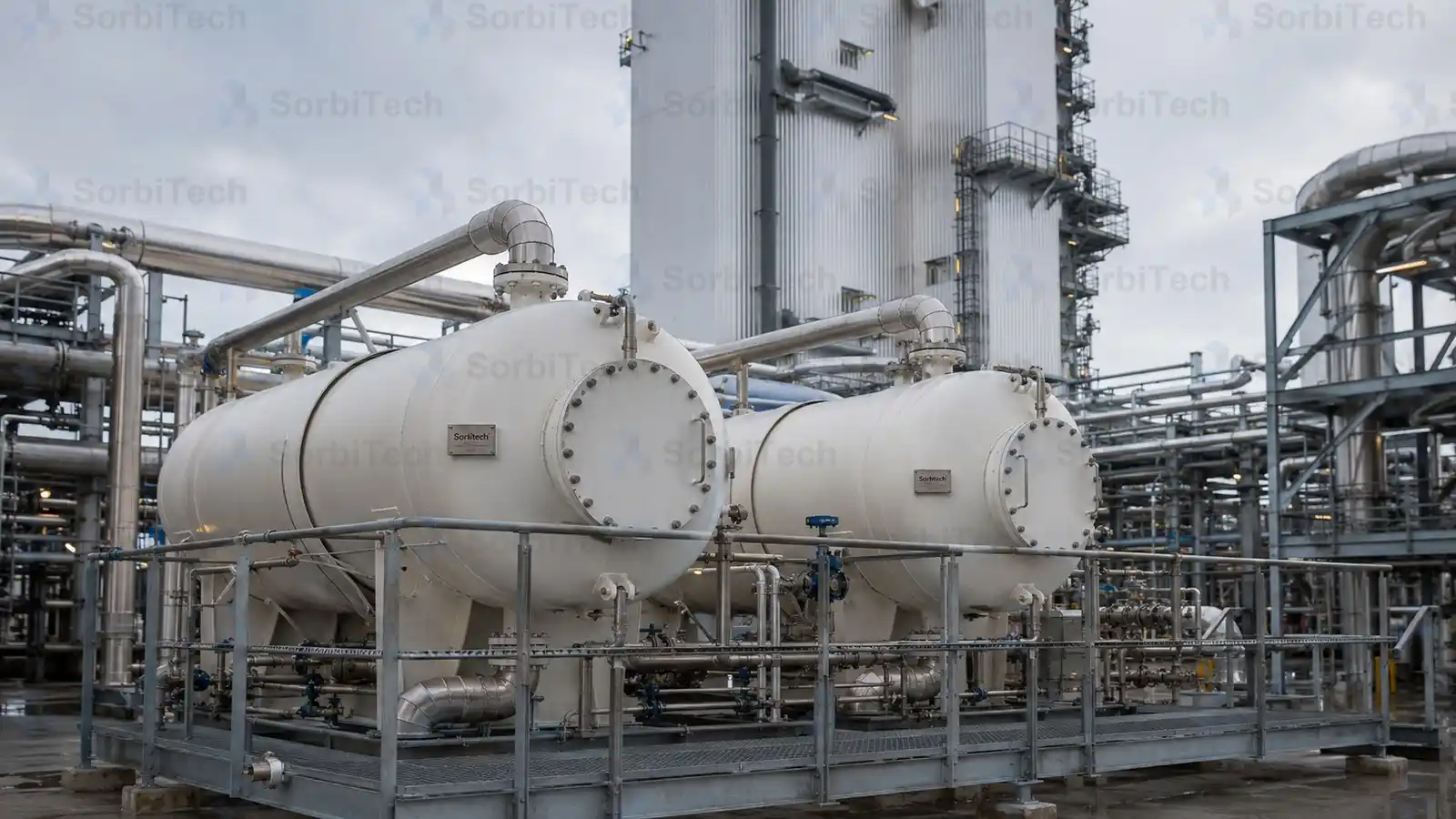
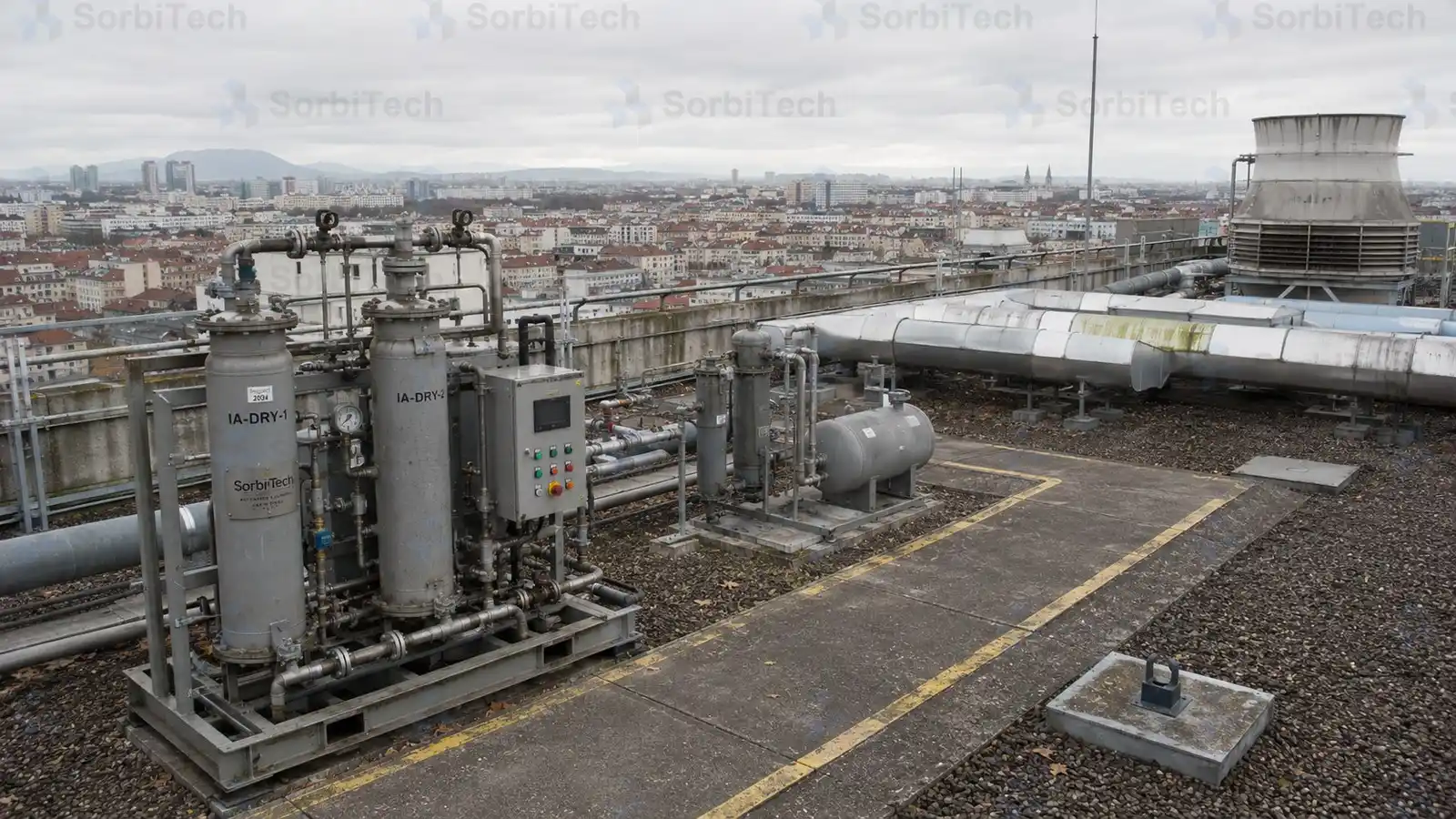
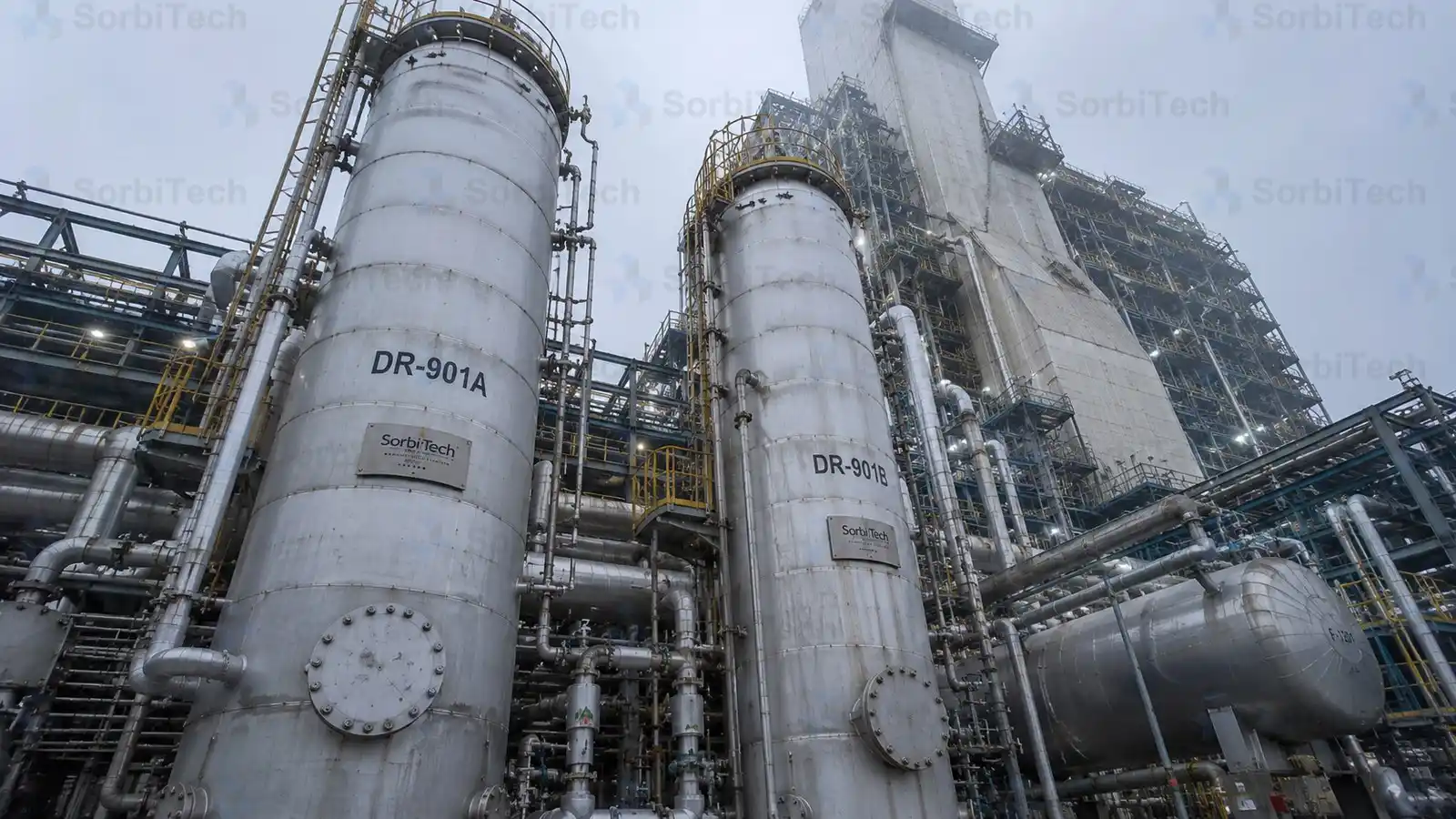
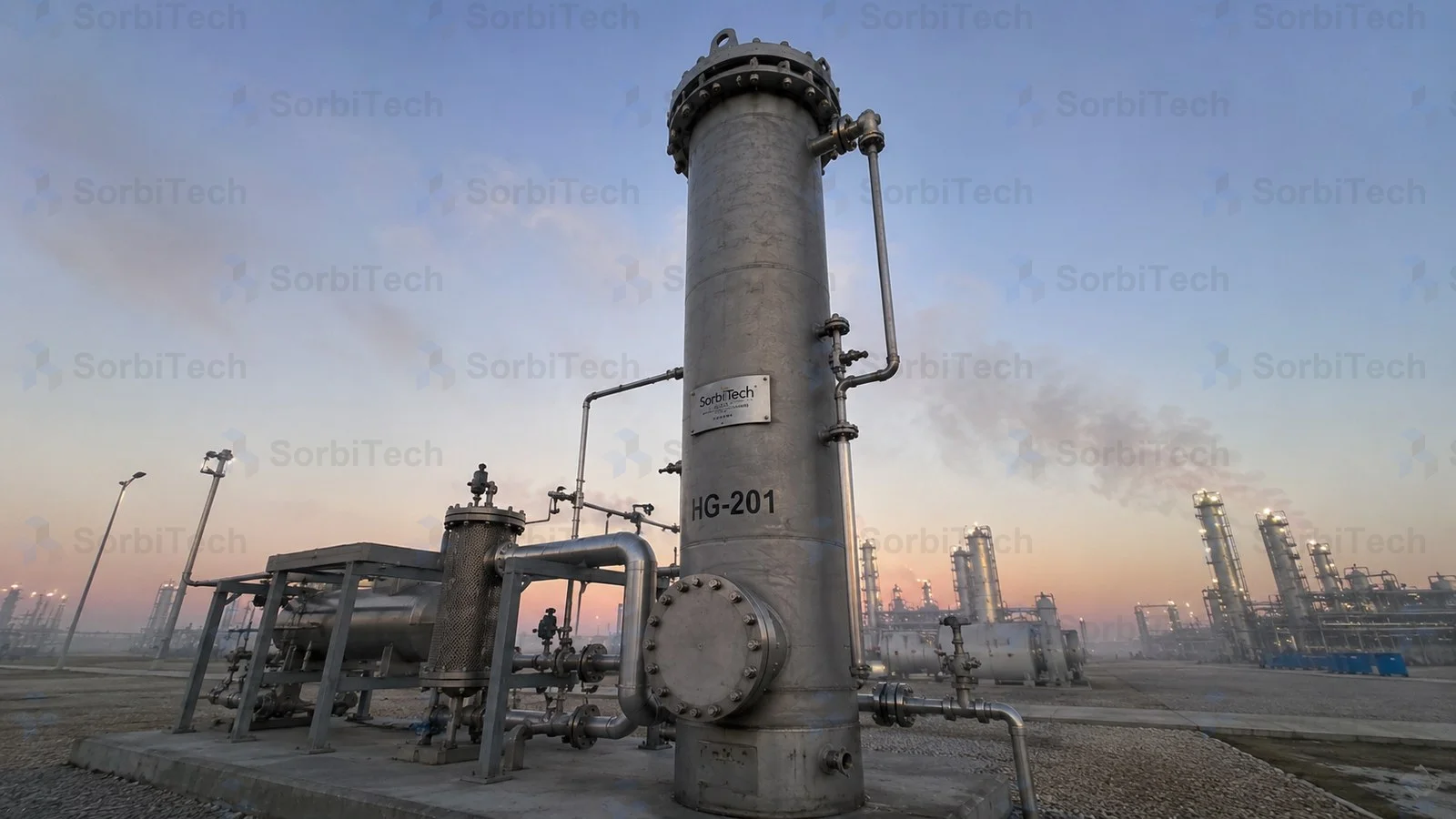
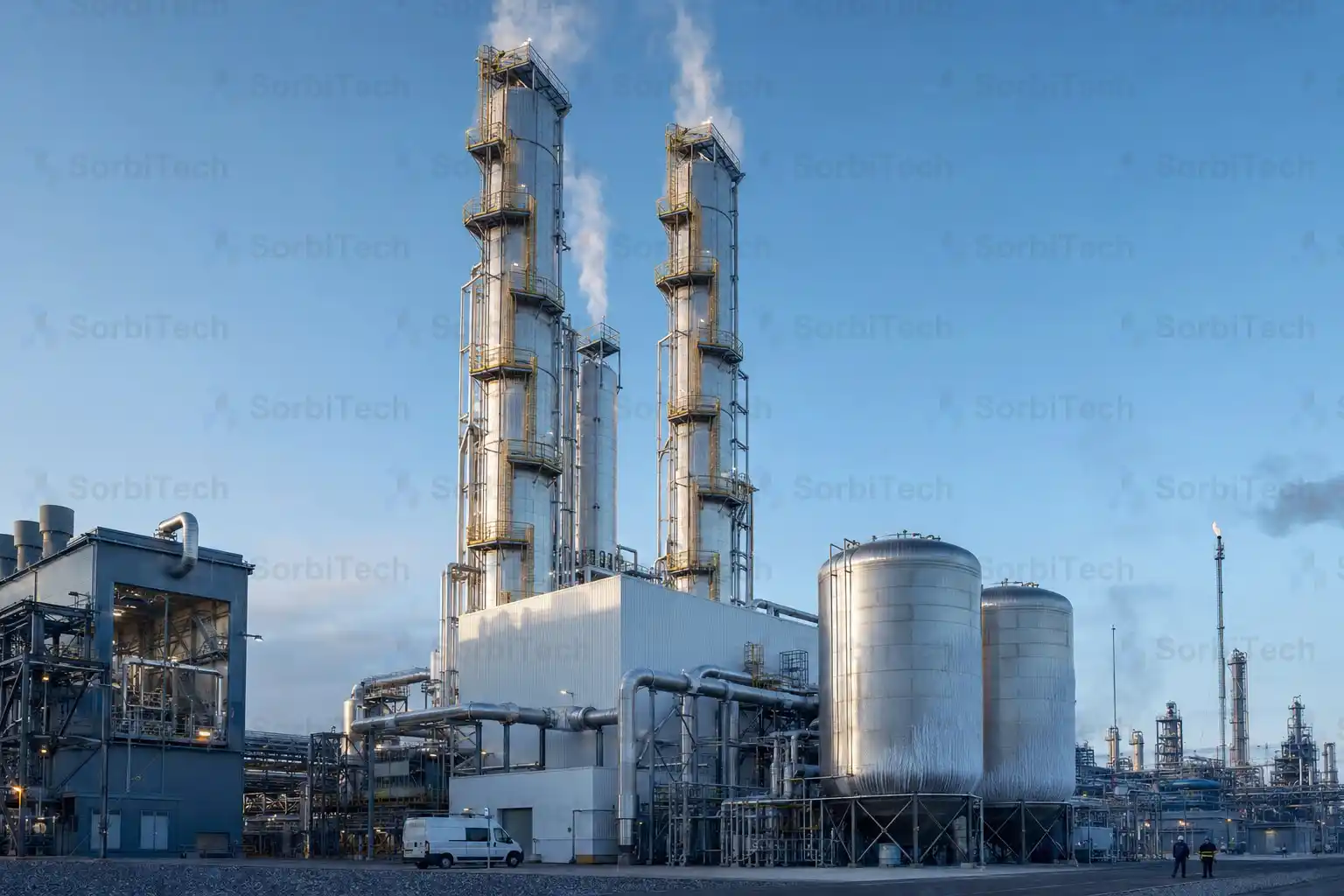
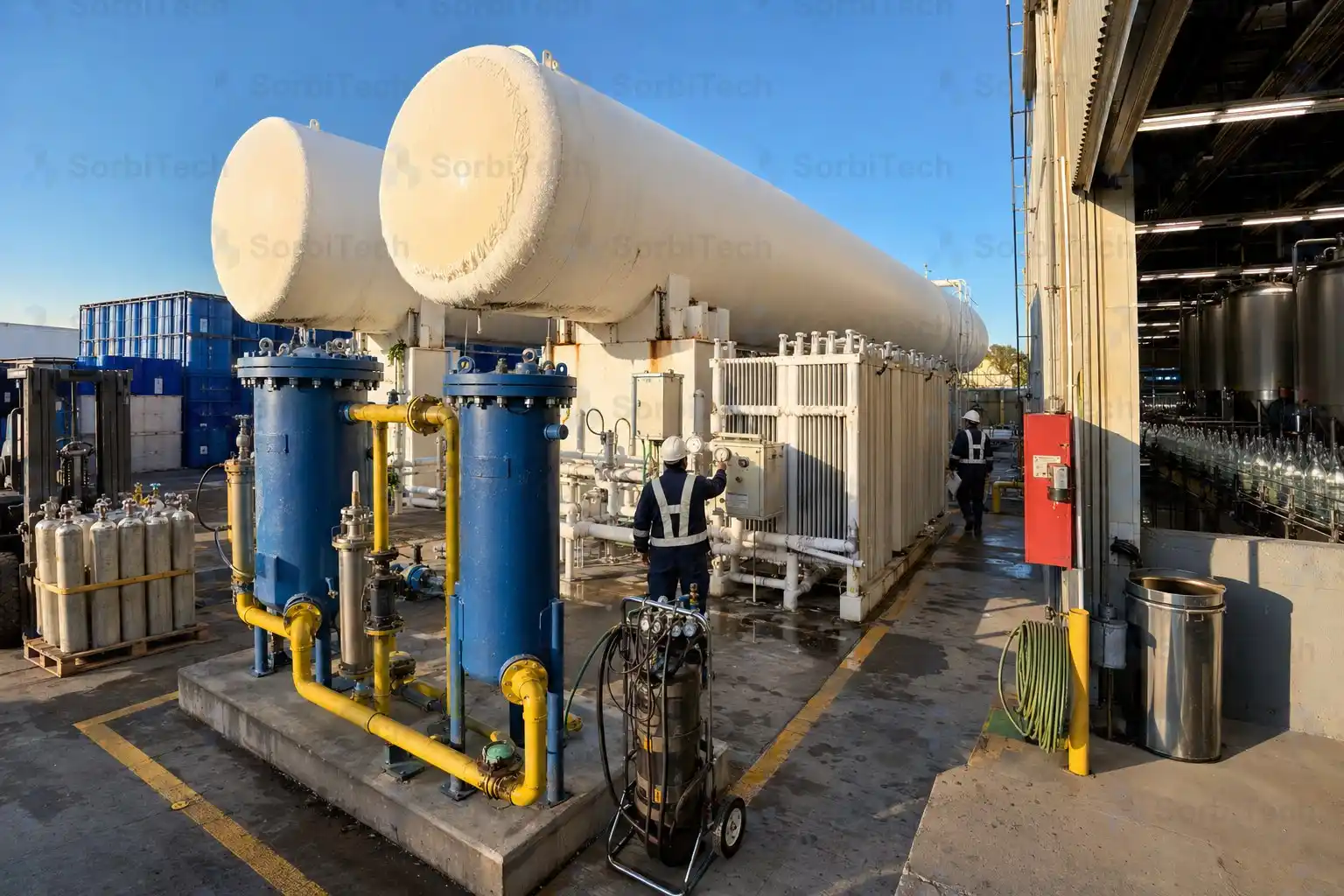
SorbiTech Natural Gas Dehydration TSA Twin Tower Molecular Sieve Dryer
Applications

Gas Treatment & Drying

Applications 14 process duties
Outlet dew point down to minus 90 °C
Cycle types TSA and PSA
Manufacturing ISO 9001:2015
Application Theme · Engineered by SorbiTech

Drying, sweetening, and pressure swing duties for upstream gas treating, refining, and on site gas generation.

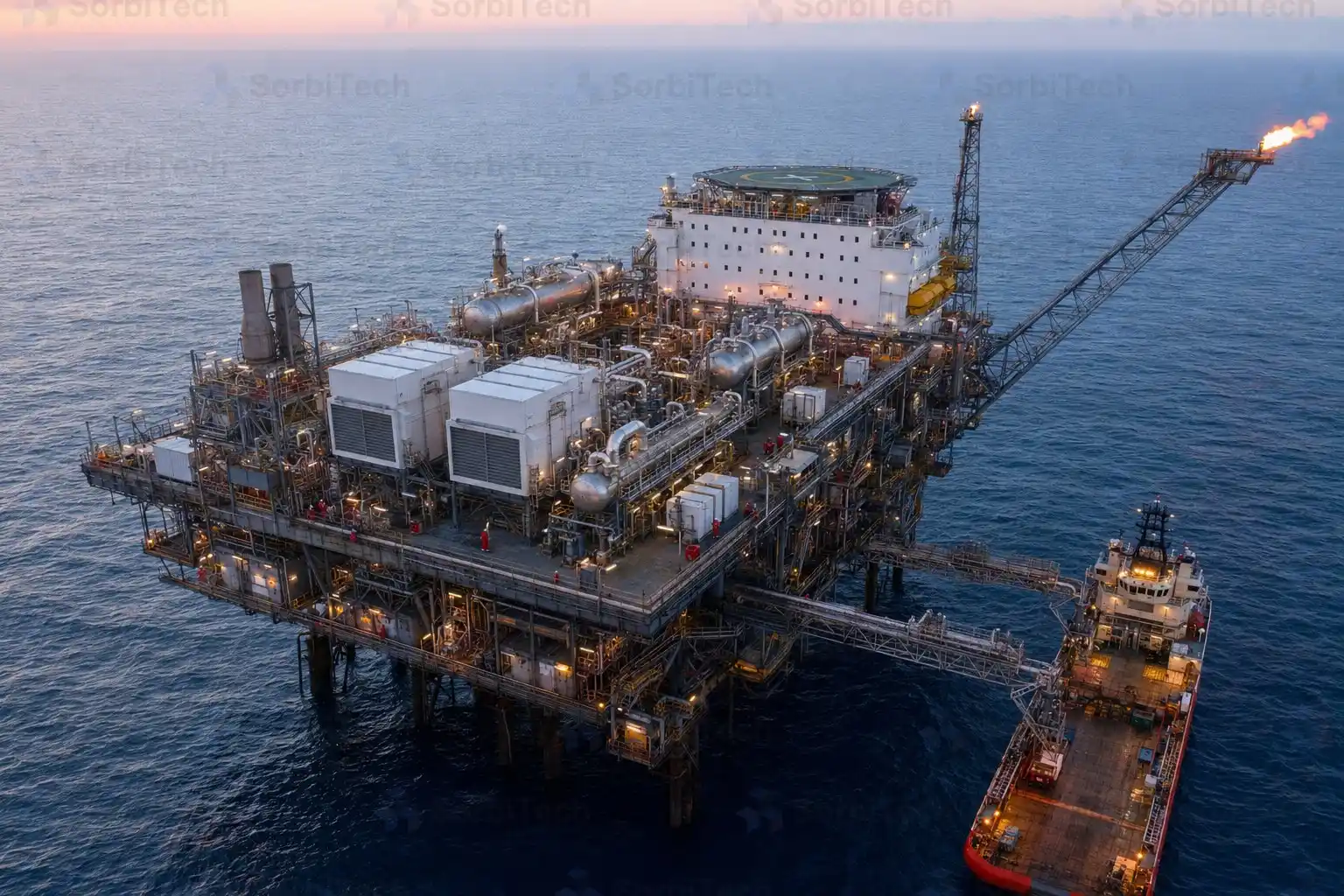
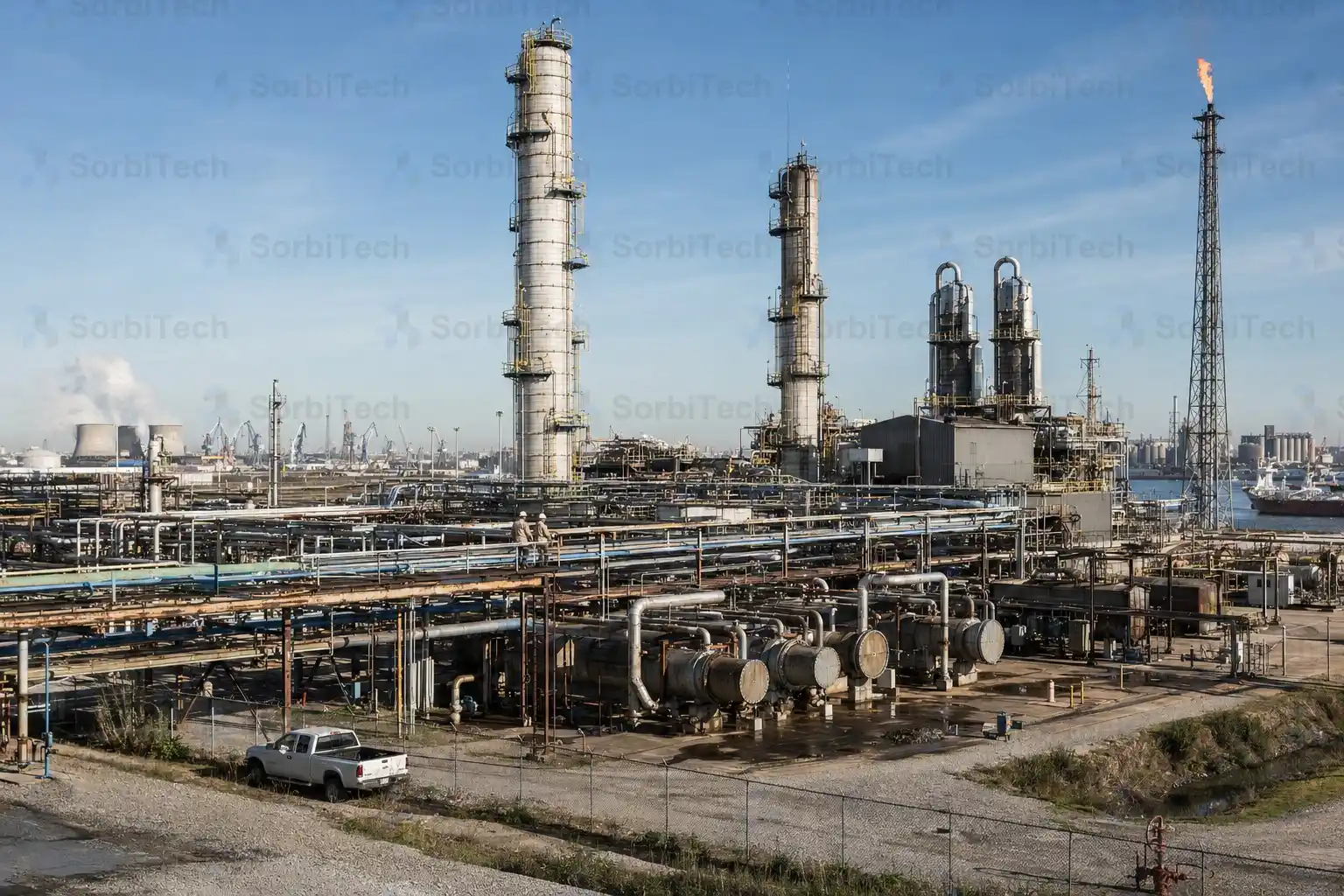
Gas treatment covers the full range of adsorption duties on gaseous streams: water removal, acid gas removal, hydrocarbon recovery, and pressure swing separation. The fourteen applications in this theme span natural gas dehydration to cryogenic air pre purification, hydrogen recovery to biogas upgrading, and on site nitrogen and oxygen generation.

SorbiTech engineers the duty as one decision. The grade selection, the vessel design, the cycle parameters, and the regeneration energy budget close out together. The same engineering team that specifies the molecular sieve charge sizes the heater for the regeneration step and writes the operating procedure for the first start up.

Outlet specifications are documented in the contract. Water dew point, residual acid gas, hydrogen recovery rate, and nitrogen purity are confirmed during commissioning and held under a performance guarantee for the first campaign. The bed is supported through its service life under a single lifecycle agreement.

Mechanism

The adsorbent grade is selected for the duty. The cycle is engineered to match. Adsorption capacity, regeneration energy, and pressure drop close out as one specification.

8 to 16 h adsorption Cycle time
150 to 350 °C TSA · 6 to 8 bar PSA Regeneration
Process Description

Adsorption in Gas Service

In thermal swing adsorption the bed adsorbs at process temperature and pressure, then regenerates at elevated temperature using a slip stream of dry gas. Cycle times run from 8 to 16 hours. The molecular sieve and activated alumina grades are sized by water mass balance against the regeneration heat input.

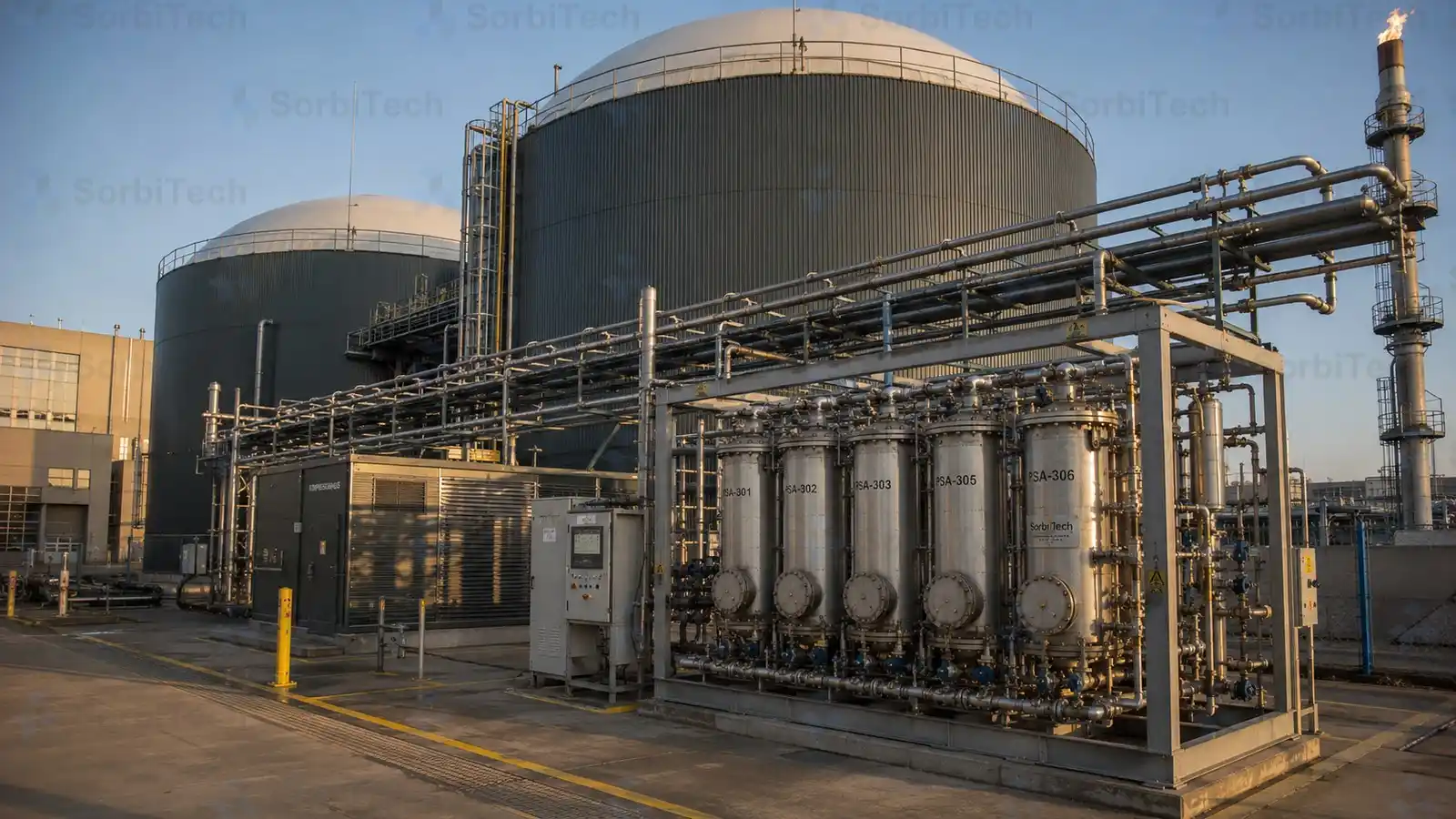
In pressure swing adsorption the bed cycles between high pressure adsorption and low pressure or vacuum regeneration. Cycle times are seconds to minutes. The carbon molecular sieve grade and the zeolite 13X grade are selected for the kinetic or equilibrium regime that fits the target separation: nitrogen from air, hydrogen from off gas, oxygen from air.

SorbiTech PSA Nitrogen Generation on Site N2 Generator Carbon Molecular Sieve
SorbiTech Delivery
Engineering & Delivery

One Engineering Package

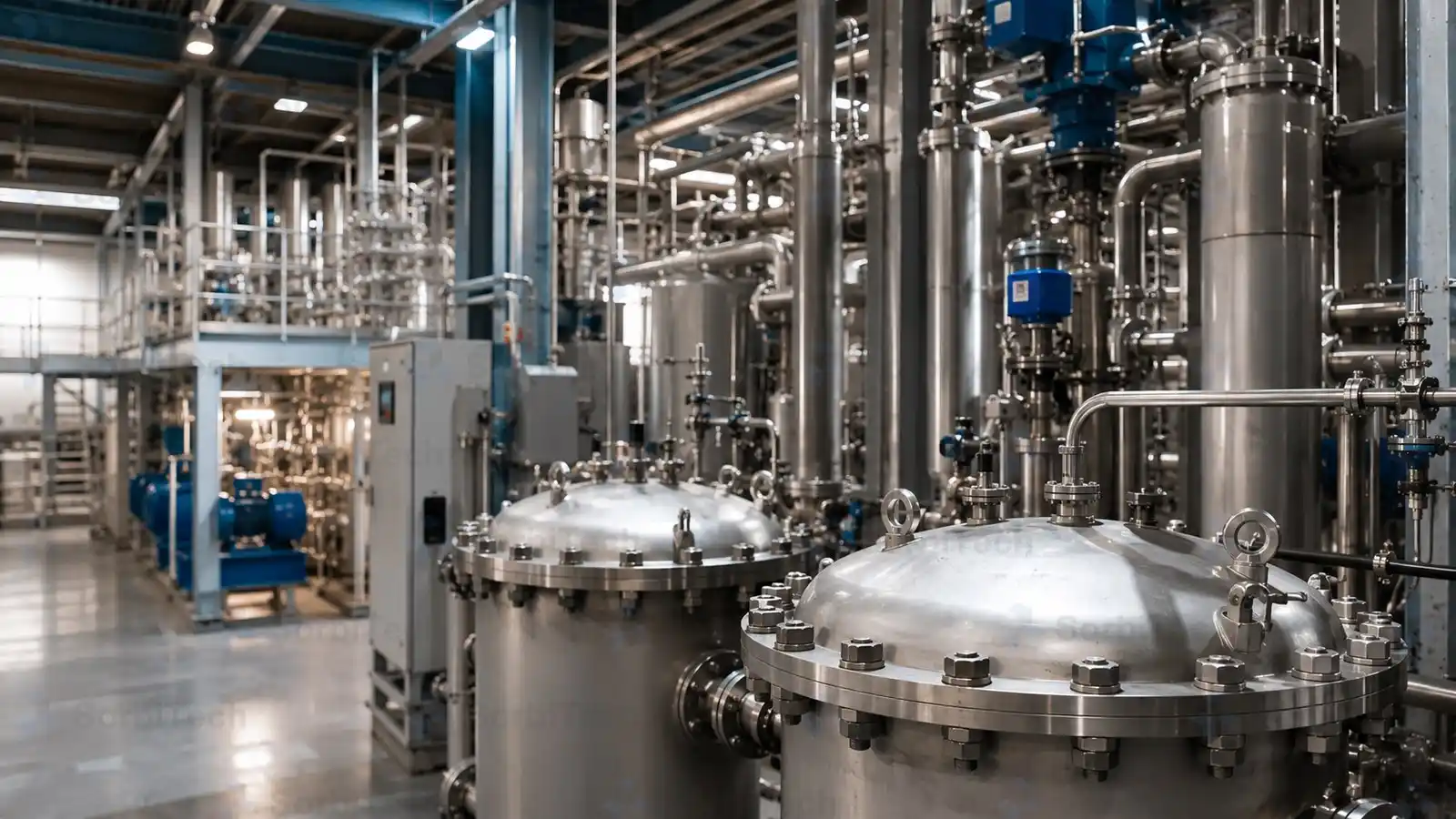
SorbiTech delivers gas treatment duties as one engineered package. The bed sizing, the vessel design, the cycle parameters, and the regeneration energy budget close out in a single engineering record. The mechanical scope covers the twin tower vessels, the heater, the cooler, the switching valves, and the PLC sequence controller, all built to ASME and PED with NACE materials when the duty calls for sour service.

The package ships with the adsorbent charge already specified, the certificate of analysis released against the lot, and the as built documentation prepared for the operator audit. SorbiTech commissions the unit, witnesses the first start up, logs the outlet specification, and signs the performance guarantee against the contracted duty.

Process Applications

Process duties in this theme

Each duty page carries the inlet specification, the recommended media or system, the cycle parameters, and the engineering selection guidance.

Beverage Carbon Dioxide Purification

Beverage Carbon Dioxide Purification

Pellet activated carbon guard bed for beverage grade carbon dioxide purification meeting ISBT (International Society of Beverage Technologists) specifications for carbonated soft drinks, beer, and sparkling water.

Solvent Vapor Recovery

Solvent Vapor Recovery

Solvent vapor recovery using twin tower pellet activated carbon adsorbers with steam or vacuum regeneration to capture and recover volatile organic solvents from process and printing vents.

Why SorbiTech

One supplier covers the chemistry, the vessel, and the EPC

Adsorption duties touch the media specification, the vessel design, and the project execution at the same time. SorbiTech engineers all three from the same record, with one performance guarantee against the contracted outlet condition.

Engineered, Not Traded

The grade shipped is the grade engineered into the vessel design. SorbiTech designs the unit, sizes the bed, and supplies the media as one decision.

Lot Traceability per Shipment

Every shipment carries a certificate of analysis covering iodine, water capacity, crush strength, attrition loss, and bulk density measured against the lot.

Lifecycle Service Contract

The bed is supported through its service life. Field sampling, performance audit, reactivation logistics, and end of life return under one agreement.

Cross Disciplinary Team

Process engineers, mechanical designers, and lifecycle specialists work the same project. The recommendation closes against duty data, not a catalogue page.

Selection Guide

Duty to recommended solution

Starting point for the engineering conversation. The final specification closes out after SorbiTech receives the inlet composition, the operating window, and the target outlet condition.

Duty or Target
Recommended Approach
Natural gas dehydration to pipeline dew point
TSA twin tower with 4A or 13X molecular sieve charge.
Cryogenic ASU pre purification of water and CO₂
TSA with 13X molecular sieve, 8 to 12 h cycle.
On site nitrogen generation from compressed air
PSA twin or three bed with carbon molecular sieve, 30 to 60 s half cycle.
Hydrogen recovery from refinery off gas
Layered PSA with 5A and 13X plus carbon sieve polish.
Compressed air drying to ISO 8573 Class 2
Heatless twin tower with activated alumina drying grade.
Engineering FAQ

Common Questions on Gas Treatment & Drying

What outlet specification should I target for natural gas dehydration?

Pipeline grade transmission specifies a water dew point of minus 10 °C at operating pressure. Cryogenic feed gas to an LNG train or NGL recovery needs minus 50 to minus 90 °C. The 4A grade serves the first; 13X is the standard for the second when the inlet has any sulphur to manage in the same bed.

How is the regeneration cycle sized?

The regeneration step removes the water and any co adsorbed acid gas loaded during adsorption. The heat duty equals the bed mass times the specific heat plus the latent heat of desorption. Regeneration time runs half to three quarters of adsorption time. The heater is sized to deliver the peak heat input with a 10 to 15 percent margin.

When does PSA become preferable to TSA?

When the cycle has to be fast and the energy budget for regeneration is constrained. PSA cycles run in seconds to minutes against vacuum or low pressure, with no external heat. Nitrogen, oxygen, and hydrogen separations sit naturally in the PSA regime.

What is the standard bed life under contracted service?

Three to five years on natural gas dehydration. Two to three years on hydrogen PSA. Eight to twelve years on on site nitrogen PSA where the feed air conditioning is in line and the cycle is held within design. Field samples at 12 months baseline the wear rate for the installation.

Is on site generation more economical than bulk delivery?

For continuous demand above 10 normal cubic metres per hour, on site PSA nitrogen breaks even against bulk liquid within 2 to 4 years on a typical industrial tariff. For intermittent demand below 5 Nm³/h, bulk liquid is usually cheaper. The breakeven point depends on the electricity rate and the demand profile.

Cannot Find Your Application?

Our 112-application database covers most industrial duties. Contact us to find the right solution.