
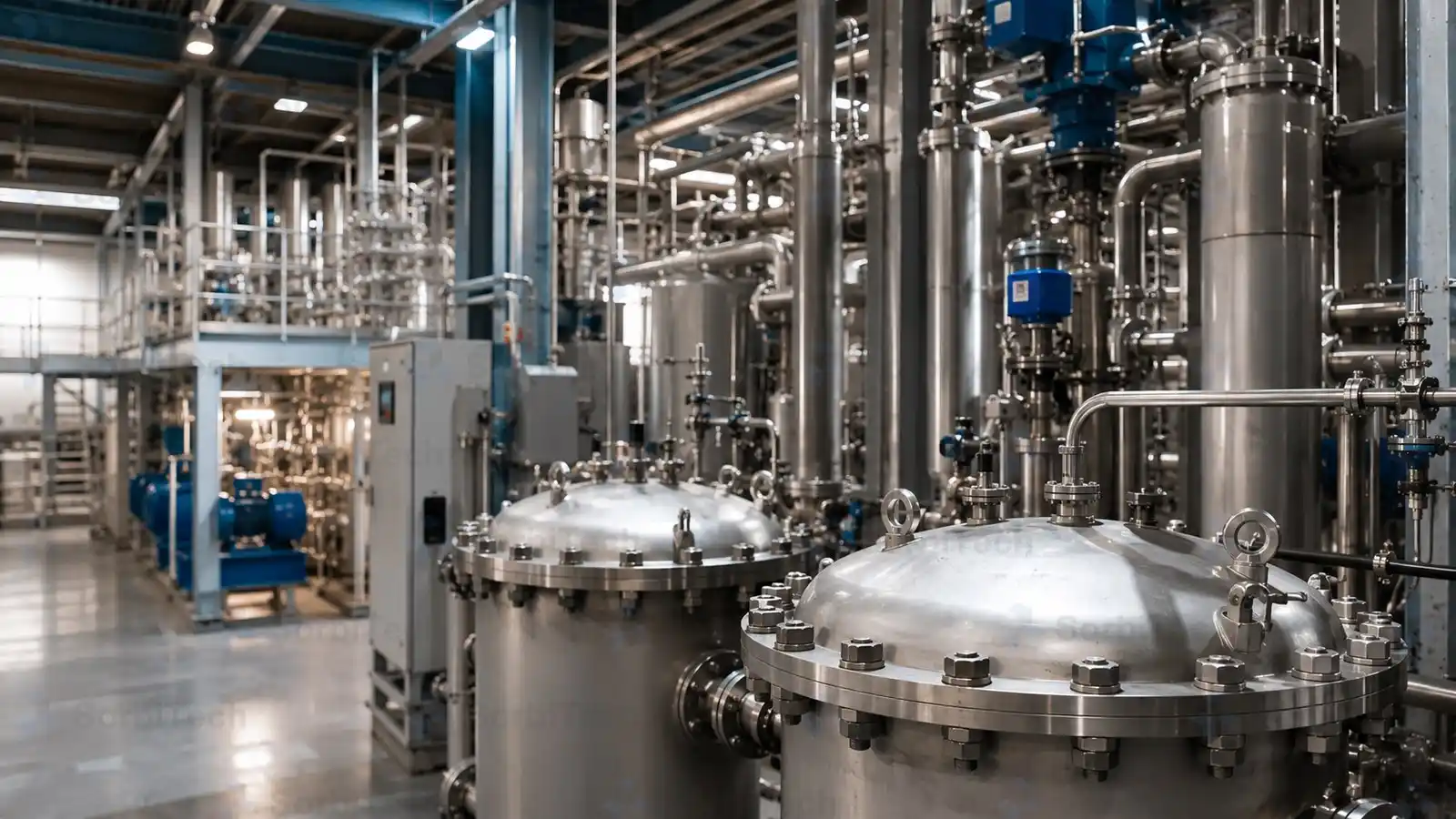
Ethanol Dehydration (Biofuel)
Breaking the ethanol water azeotrope using 3A molecular sieve to produce fuel grade anhydrous ethanol at 99.5 percent purity or higher for blending into gasoline.
Ethanol dehydration uses 3A molecular sieve in a pressure swing adsorption cycle to break the ethanol water azeotrope (95.6 percent ethanol) and produce anhydrous ethanol at 99.5 percent or higher purity. The 3 Å pore admits water alone; ethanol passes through, eliminating the ethanol loss that a 4A bed would cause.
Breaking the Ethanol Water Azeotrope
Hydrous ethanol from fermentation distillation reaches 95.6 percent ethanol at the azeotrope composition; further distillation does not increase the purity at atmospheric pressure. Fuel grade ethanol for blending into gasoline (E10, E85, E100) requires 99.5 percent or higher to prevent water phase separation in the fuel tank at low temperature. The SorbiTech ethanol dehydration train breaks the azeotrope by molecular sieve pressure swing adsorption.
3A Molecular Sieve Excludes Ethanol
The deciding feature is the 3 Å pore size of SorbiTech 3A molecular sieve. The pore admits water (2.6 Å) but excludes ethanol (4.4 Å) at the mouth of the pore. The bed holds water alone, so the product is essentially pure ethanol; the regeneration off gas is essentially pure water vapour with a trace of ethanol that is recycled to the distillation column. A 4A bed in the same service would adsorb both water and ethanol, lose net ethanol yield to the regeneration vent, and accumulate ethanol in the pores until capacity collapses.
Vapour Phase PSA Cycle
The standard configuration is vapour phase PSA. The hydrous ethanol vapour from the rectification column enters the bed at superheat conditions; water is adsorbed at pressure, ethanol vapour passes through to the product condenser. The bed is regenerated under vacuum or with a low pressure purge; the recovered water condenses with the entrained ethanol and returns to the rectification column. Twin or triple adsorbers run out of phase for continuous operation.
Delivery to Bioethanol Producers Globally
SorbiTech supplies 3A molecular sieve to bioethanol producers globally as a SorbiTech media supply contract or as part of a complete TSA dehydration package. The bed gives 4 to 6 years of service before replacement. Sector coverage is biofuel production, food and beverage grade ethanol, and pharmaceutical solvent grade ethanol.
Selection Guidance
3A molecular sieve in a vapour phase pressure swing adsorption cycle. The 3 Å pore admits water only; ethanol stays in the product. Twin or triple adsorber configuration depending on capacity. Bed life 4 to 6 years.
A Specified, Verified Solution
Define the duty
We capture your process conditions: flow, composition, pressure, temperature, and the target outlet specification.
Select media & configuration
Our engineers recommend the adsorbent grade and system type that meet the duty with margin.
Size & engineer
Bed sizing, vessel design, and cycle parameters are engineered to your case and documented for approval.
Commission & verify
We support loading, start up, and performance verification against the guarantee.
Recommended Products & Systems
Adsorbents & Media
-
01
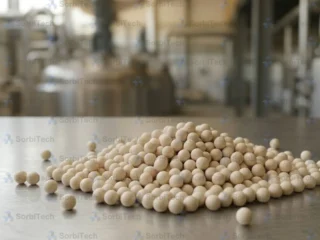 Adsorbent
Molecular Sieve 3A
Potassium form 3A zeolite, the size selective desiccant for streams that must not lose hydrocarbons to the bed.
Pore Ø
3 Å
Adsorbent
Molecular Sieve 3A
Potassium form 3A zeolite, the size selective desiccant for streams that must not lose hydrocarbons to the bed.
Pore Ø
3 Å
-
02
 Adsorbent
Carbon Molecular Sieve CMS 450HP
Ultra high purity carbon molecular sieve. 99.99999 percent (7N) N2, selective O2 and CO2 capture, 1.0 to 1.6 mm pellets, minimal fines, deoxo polishing…
Water Cap.
Feed must reach ISO 8573 class 1.4.1, deoxo polishing recommended for 7N %
Adsorbent
Carbon Molecular Sieve CMS 450HP
Ultra high purity carbon molecular sieve. 99.99999 percent (7N) N2, selective O2 and CO2 capture, 1.0 to 1.6 mm pellets, minimal fines, deoxo polishing…
Water Cap.
Feed must reach ISO 8573 class 1.4.1, deoxo polishing recommended for 7N %
-
03
 Adsorbent
Impregnated Activated Carbon
Sulfur, KI, or KOH impregnated activated carbon. Mercury below 10 ng per Nm3, H2S and mercaptan capture upstream of catalysts. 4 mm pellet or…
Water Cap.
Dry feed preferred, water displaces impregnant %
Adsorbent
Impregnated Activated Carbon
Sulfur, KI, or KOH impregnated activated carbon. Mercury below 10 ng per Nm3, H2S and mercaptan capture upstream of catalysts. 4 mm pellet or…
Water Cap.
Dry feed preferred, water displaces impregnant %
-
04
 Adsorbent
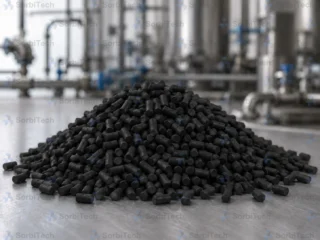
Pellet Activated Carbon
Extruded pellet carbon for gas phase duties: solvent recovery, vapour recovery, odour control, and mercury guard beds.
Form
3 mm or 4 mm extruded pellets
Adsorbent
Pellet Activated Carbon
Extruded pellet carbon for gas phase duties: solvent recovery, vapour recovery, odour control, and mercury guard beds.
Form
3 mm or 4 mm extruded pellets
-
05
 Adsorbent
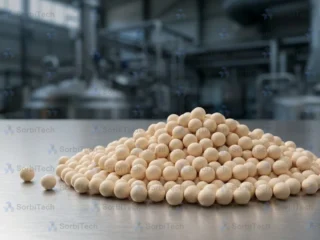
Molecular Sieve 5A
Calcium form 5A zeolite for n paraffin separation, hydrogen purification, and oxygen PSA generation.
Pore Ø
5 Å
Adsorbent
Molecular Sieve 5A
Calcium form 5A zeolite for n paraffin separation, hydrogen purification, and oxygen PSA generation.
Pore Ø
5 Å
-
06
 Adsorbent
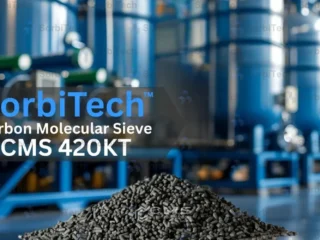
Carbon Molecular Sieve CMS 420KT
High efficiency carbon molecular sieve. Higher oxygen affinity under 7 to 12 barg, 1.2 to 1.8 mm pellets, Snowstorm Filling compatible, ASTM D4058 attrition…
Water Cap.
Feed must reach ISO 8573 class 1.4.1 %
Adsorbent
Carbon Molecular Sieve CMS 420KT
High efficiency carbon molecular sieve. Higher oxygen affinity under 7 to 12 barg, 1.2 to 1.8 mm pellets, Snowstorm Filling compatible, ASTM D4058 attrition…
Water Cap.
Feed must reach ISO 8573 class 1.4.1 %
Engineered Systems
-
01
 Equipment
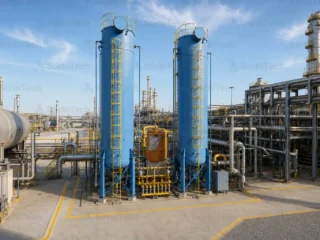
Twin Tower TSA Gas Dehydration Unit
Continuous duty temperature swing adsorption dehydration package for natural gas, engineered by SorbiTech to ASME VIII and PED, with an integrated regeneration heater and…
Capacity
0.5–200 MMSCFD (custom engineered)
Equipment
Twin Tower TSA Gas Dehydration Unit
Continuous duty temperature swing adsorption dehydration package for natural gas, engineered by SorbiTech to ASME VIII and PED, with an integrated regeneration heater and…
Capacity
0.5–200 MMSCFD (custom engineered)
-
02
 Equipment
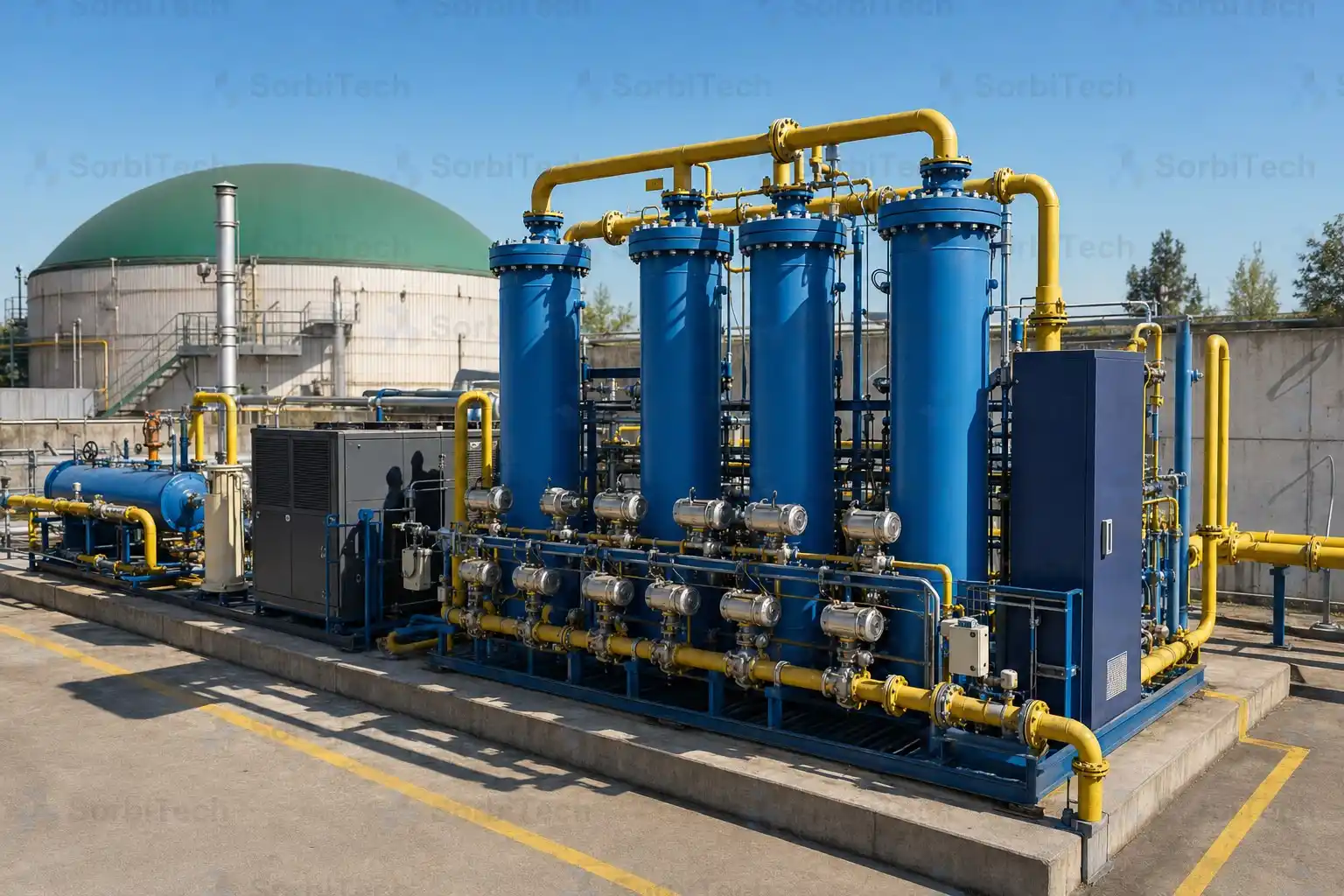
Biogas Upgrading Unit
PSA biogas upgrading unit using carbon molecular sieve to separate carbon dioxide from methane and deliver grid quality bio methane from anaerobic digester biogas…
Capacity
50–2,000 Nm³/h raw biogas
Equipment
Biogas Upgrading Unit
PSA biogas upgrading unit using carbon molecular sieve to separate carbon dioxide from methane and deliver grid quality bio methane from anaerobic digester biogas…
Capacity
50–2,000 Nm³/h raw biogas
-
03
 Equipment
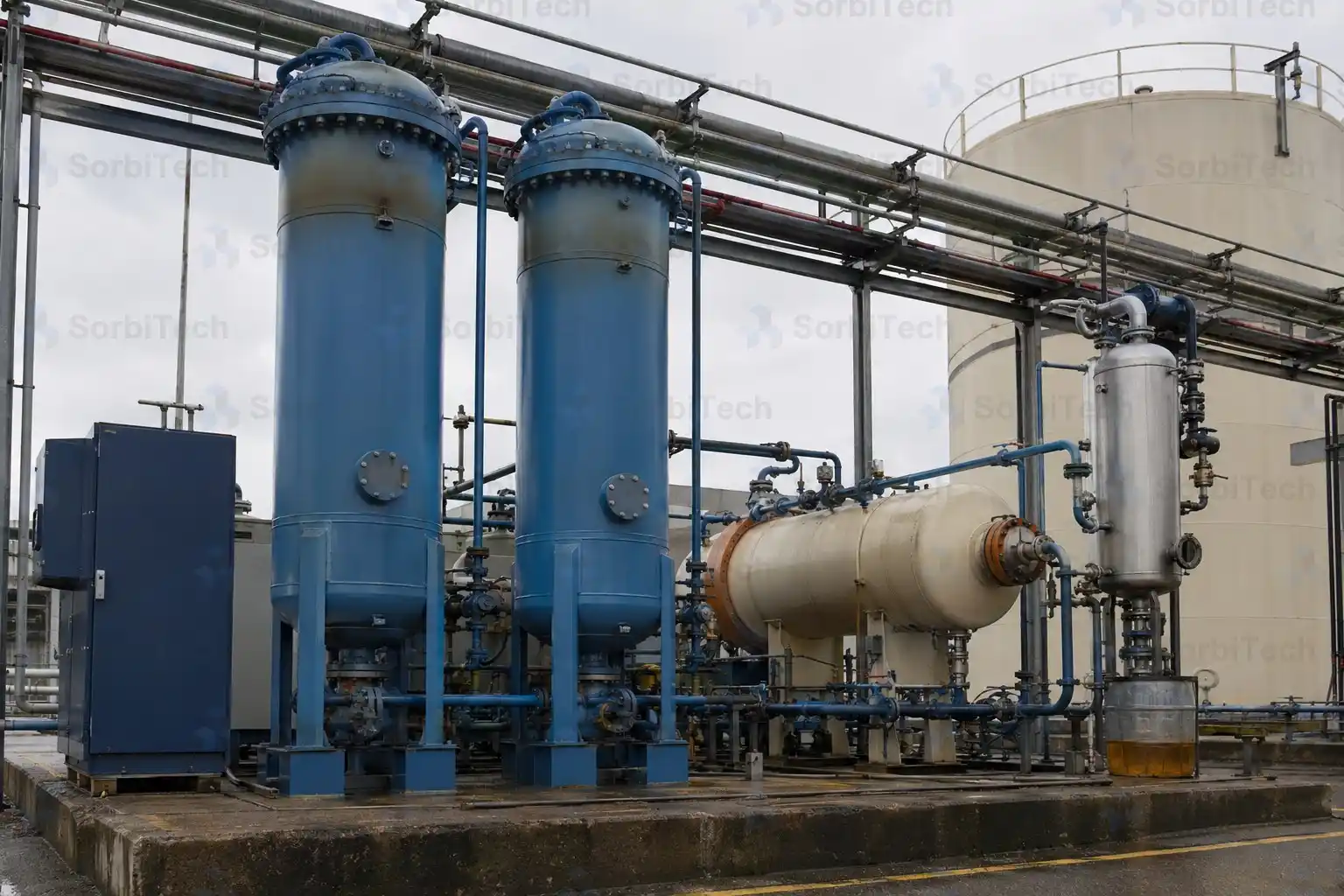
Vapour Recovery Unit (VRU)
Activated carbon vapour recovery unit for tank farms, loading racks, and process vents to capture and recover hydrocarbons before stack release.
Capacity
50–10,000 Nm³/h vent gas
Equipment
Vapour Recovery Unit (VRU)
Activated carbon vapour recovery unit for tank farms, loading racks, and process vents to capture and recover hydrocarbons before stack release.
Capacity
50–10,000 Nm³/h vent gas
-
04
 Equipment
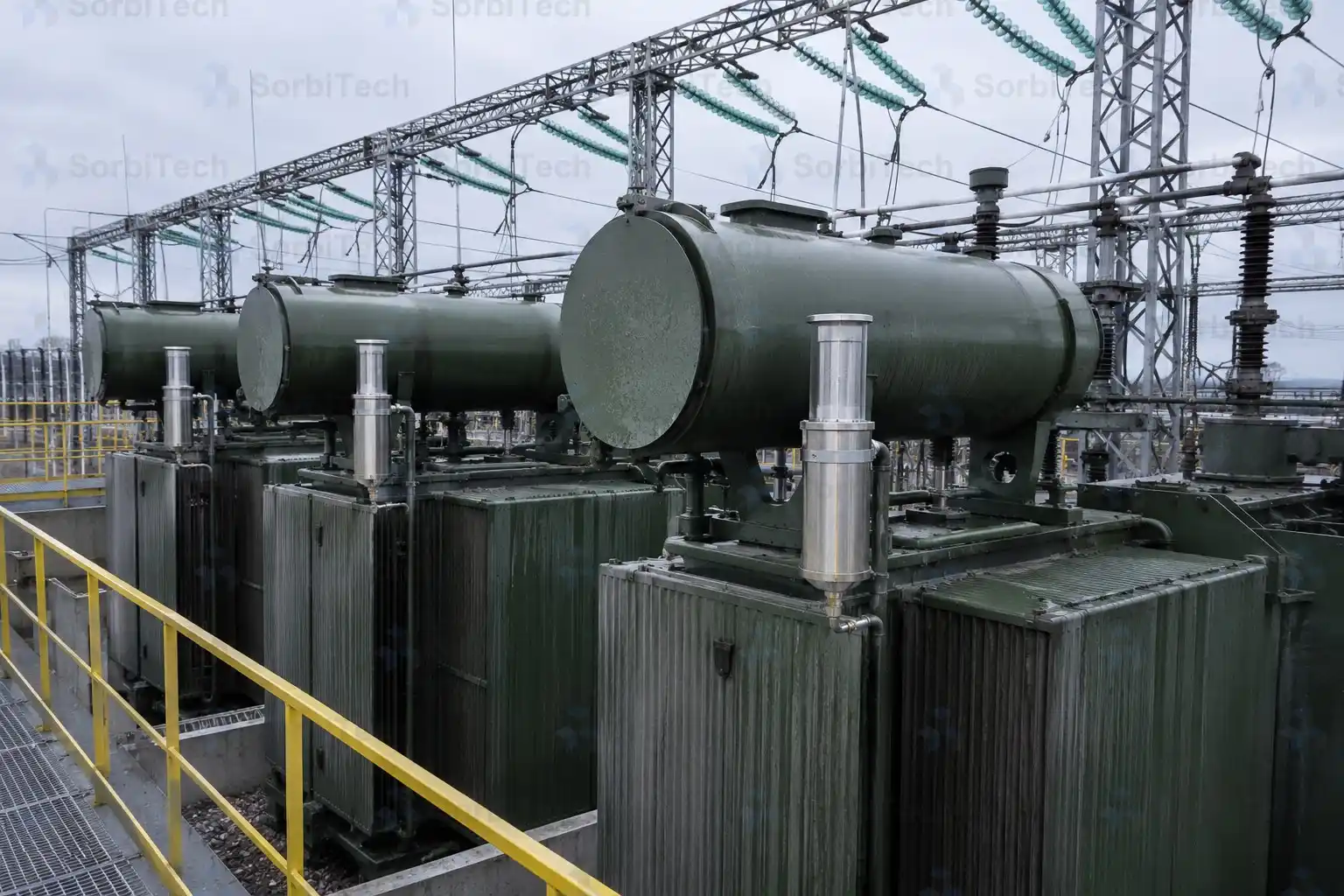
Transformer Breather Cartridge System
Pre packaged stainless steel transformer breather cartridge with indicating silica gel for grid transformer moisture protection across the high voltage transmission and distribution network.
Capacity
0.5–25 kVA transformer to 800 kV substation
Equipment
Transformer Breather Cartridge System
Pre packaged stainless steel transformer breather cartridge with indicating silica gel for grid transformer moisture protection across the high voltage transmission and distribution network.
Capacity
0.5–25 kVA transformer to 800 kV substation
-
05
 Equipment
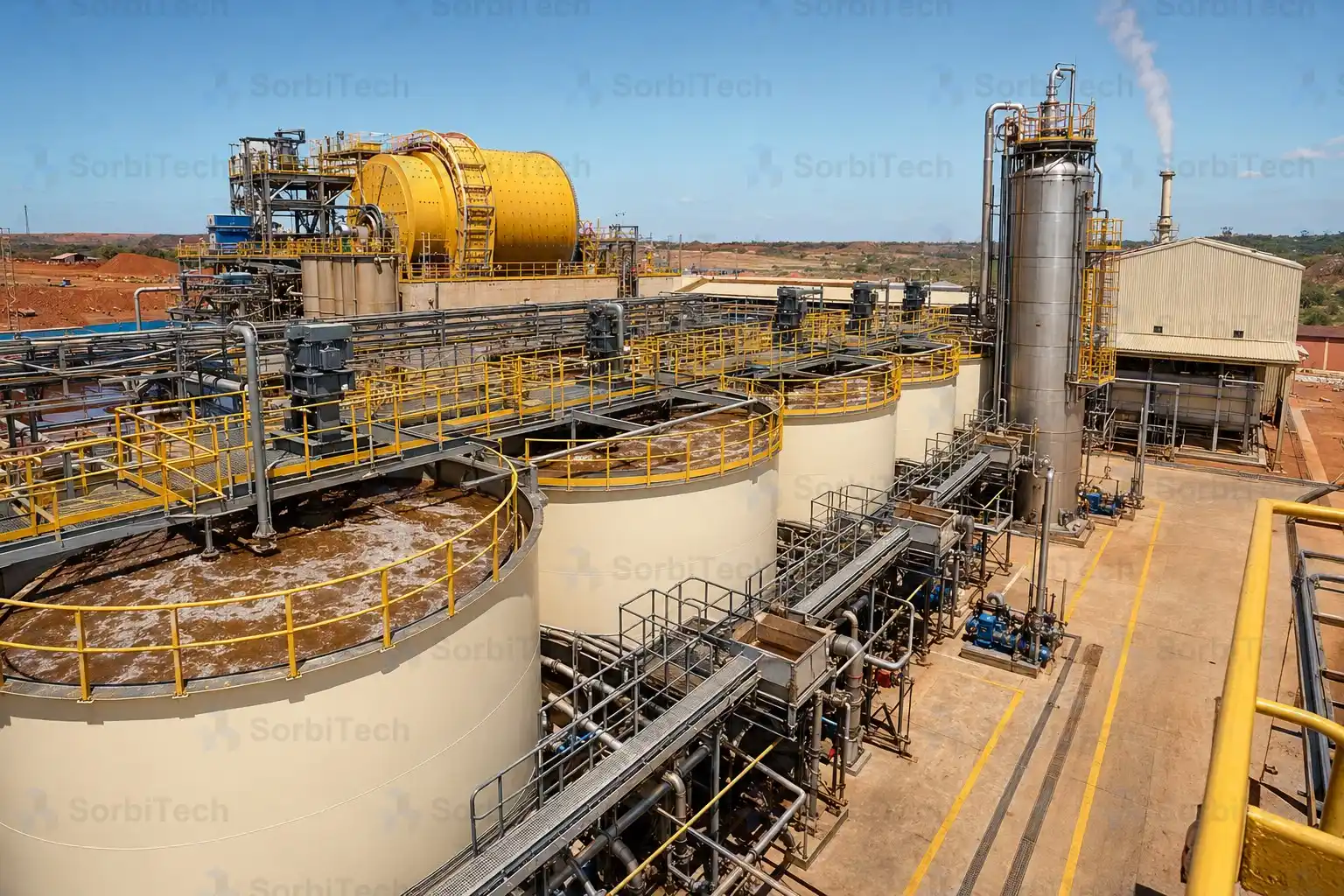
CIP CIL Gold Carbon Plant
Carbon in pulp (CIP) and carbon in leach (CIL) gold recovery plant using high activity coconut shell granular activated carbon to recover gold cyanide…
Capacity
10–200 t/h ore throughput
Equipment
CIP CIL Gold Carbon Plant
Carbon in pulp (CIP) and carbon in leach (CIL) gold recovery plant using high activity coconut shell granular activated carbon to recover gold cyanide…
Capacity
10–200 t/h ore throughput
-
06
 Equipment
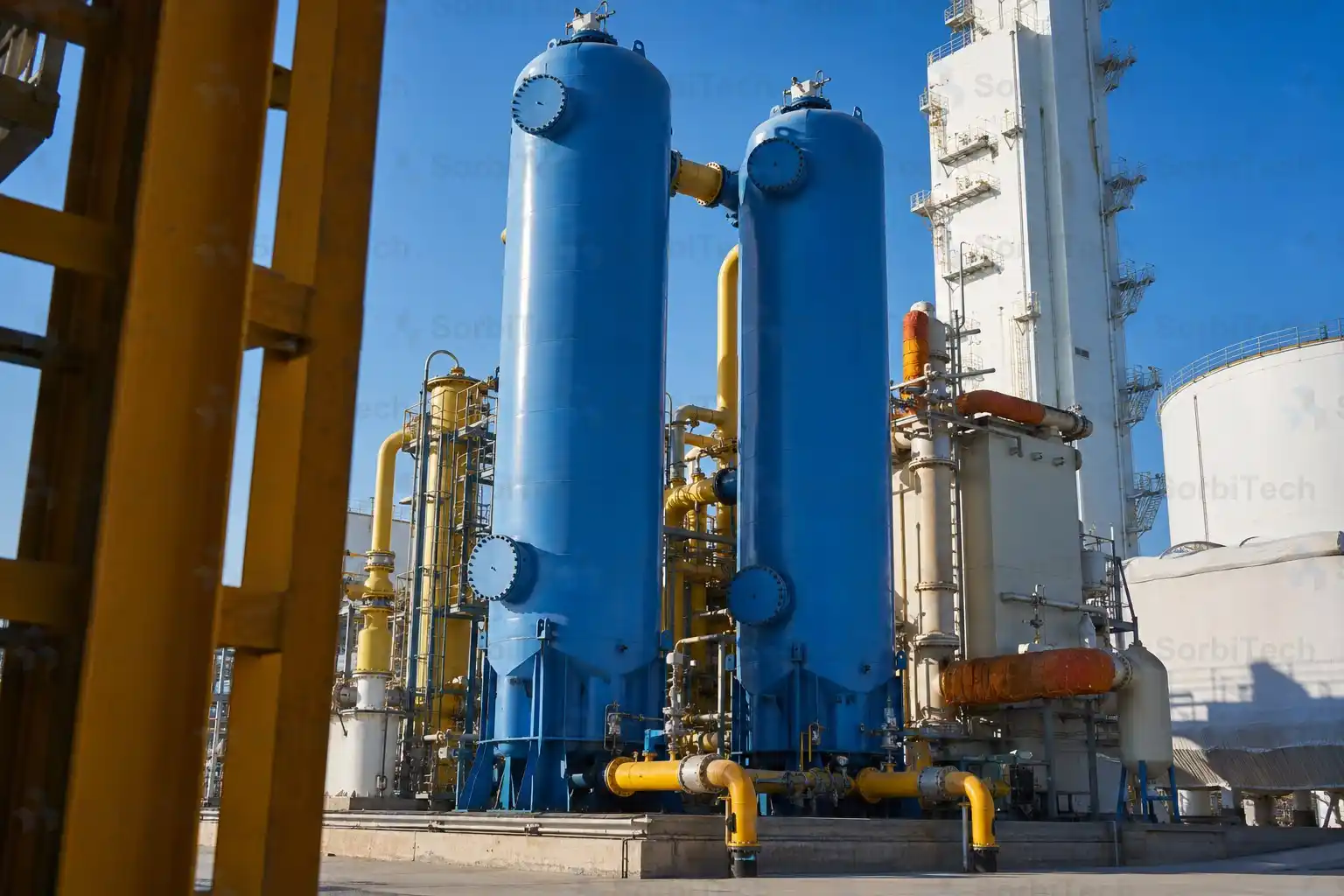
Cryogenic ASU Pre Purification Package
Front end TSA pre purification package for cryogenic air separation units removing water, carbon dioxide, and trace hydrocarbons before the cold box.
Capacity
5,000–500,000 Nm³/h air
Equipment
Cryogenic ASU Pre Purification Package
Front end TSA pre purification package for cryogenic air separation units removing water, carbon dioxide, and trace hydrocarbons before the cold box.
Capacity
5,000–500,000 Nm³/h air
Industries Using This Application
-
01
 Sector
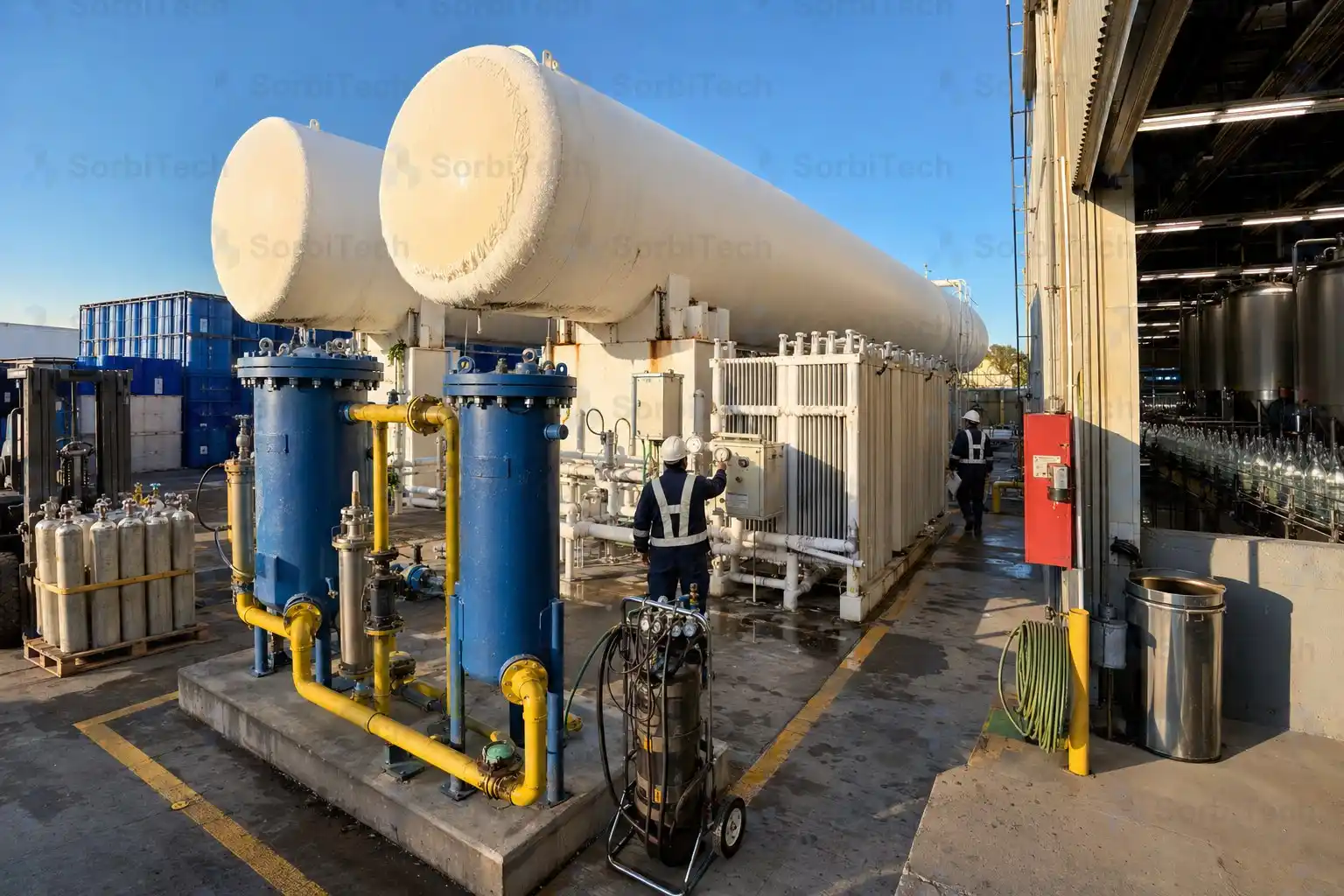
Food & Beverage
Sugar decolorization, edible oil bleaching, beverage CO₂ purification, and food grade adsorbent media for the food and beverage processing industry.
Sector
Food & Beverage
Sugar decolorization, edible oil bleaching, beverage CO₂ purification, and food grade adsorbent media for the food and beverage processing industry.
-
02
 Sector
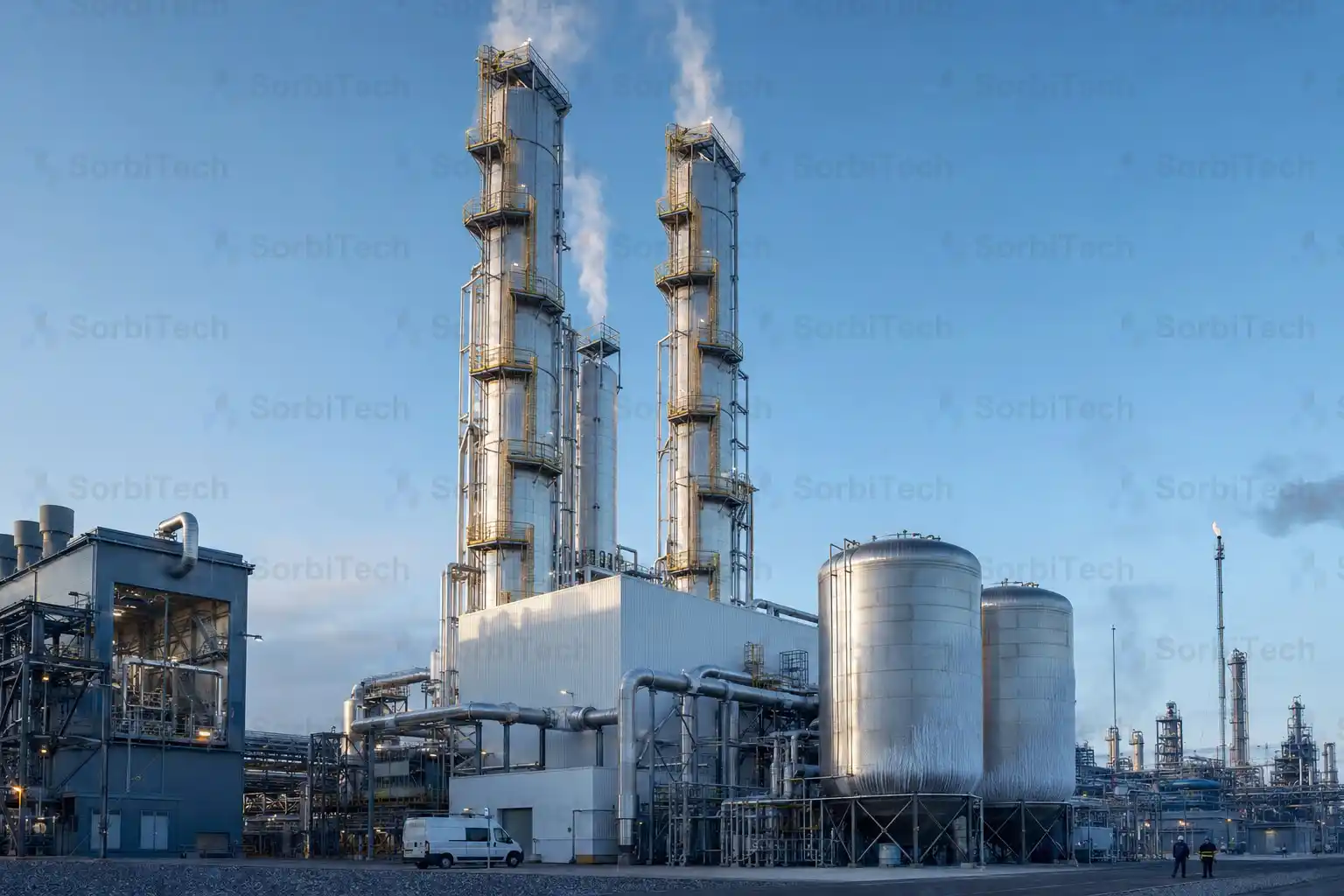
Industrial Gas & Air Separation
Molecular sieves and carbon molecular sieve plus PSA/TSA systems for nitrogen and oxygen generation and cryogenic air separation pre purification.
Sector
Industrial Gas & Air Separation
Molecular sieves and carbon molecular sieve plus PSA/TSA systems for nitrogen and oxygen generation and cryogenic air separation pre purification.
Specify a Solution for This Application
Provide your process conditions and our team will recommend the grade, configuration, and sizing.