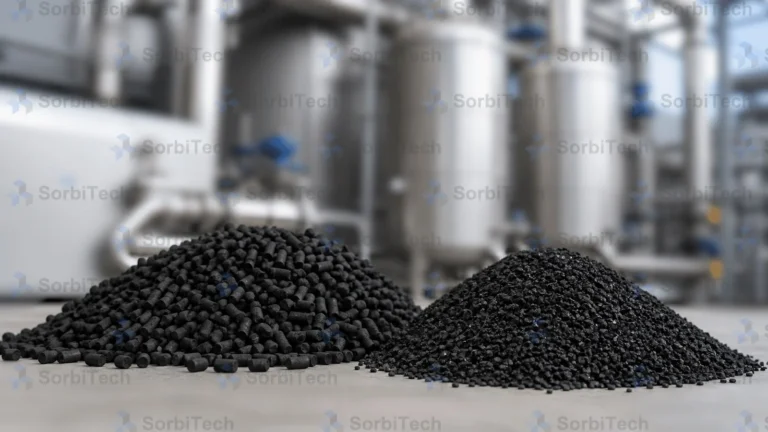
SorbiTech Activated Carbon Banner Industrial Adsorbent Portfolio
Products

Activated Carbon

Precursors Coal, coconut shell, lignite
Iodine number 800 to 1200 mg per gram
BET surface 800 to 1500 m²/g
Manufacturing ISO 9001:2015
Adsorbent Family · Manufactured to ISO 9001:2015

High surface area carbon adsorbents for dissolved organics, taste and odour compounds, free chlorine, and trace gaseous contaminants.

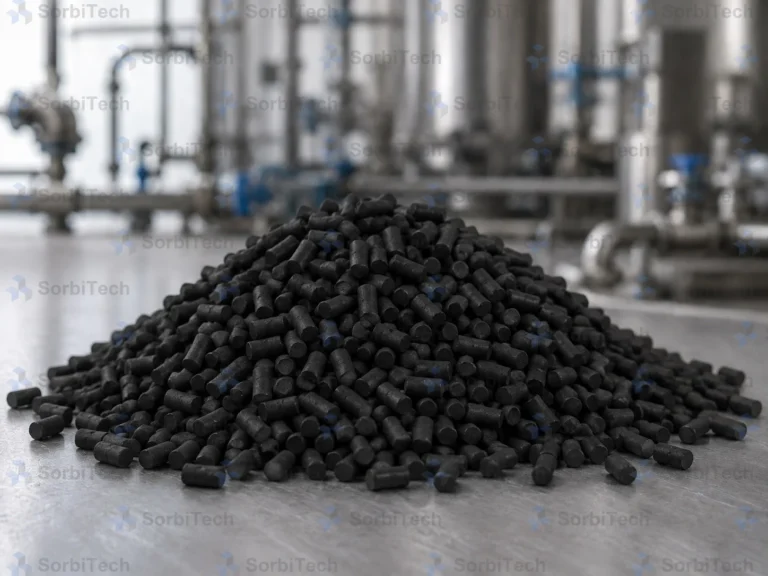
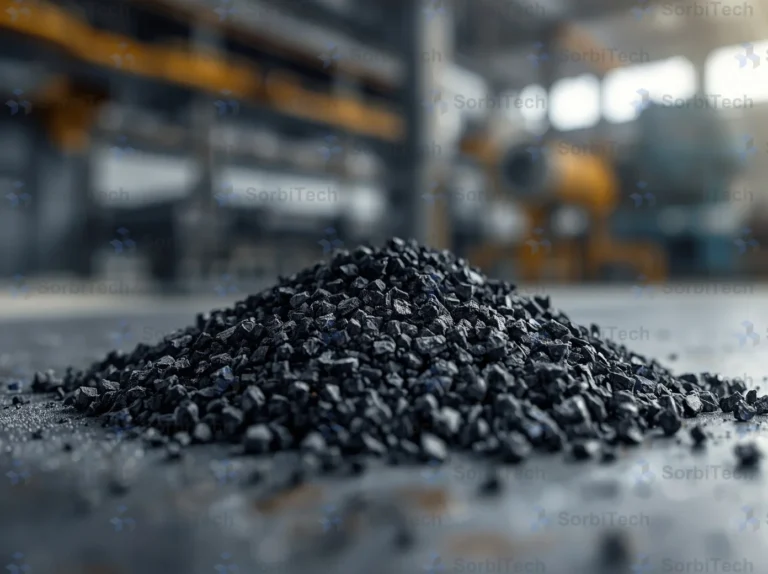
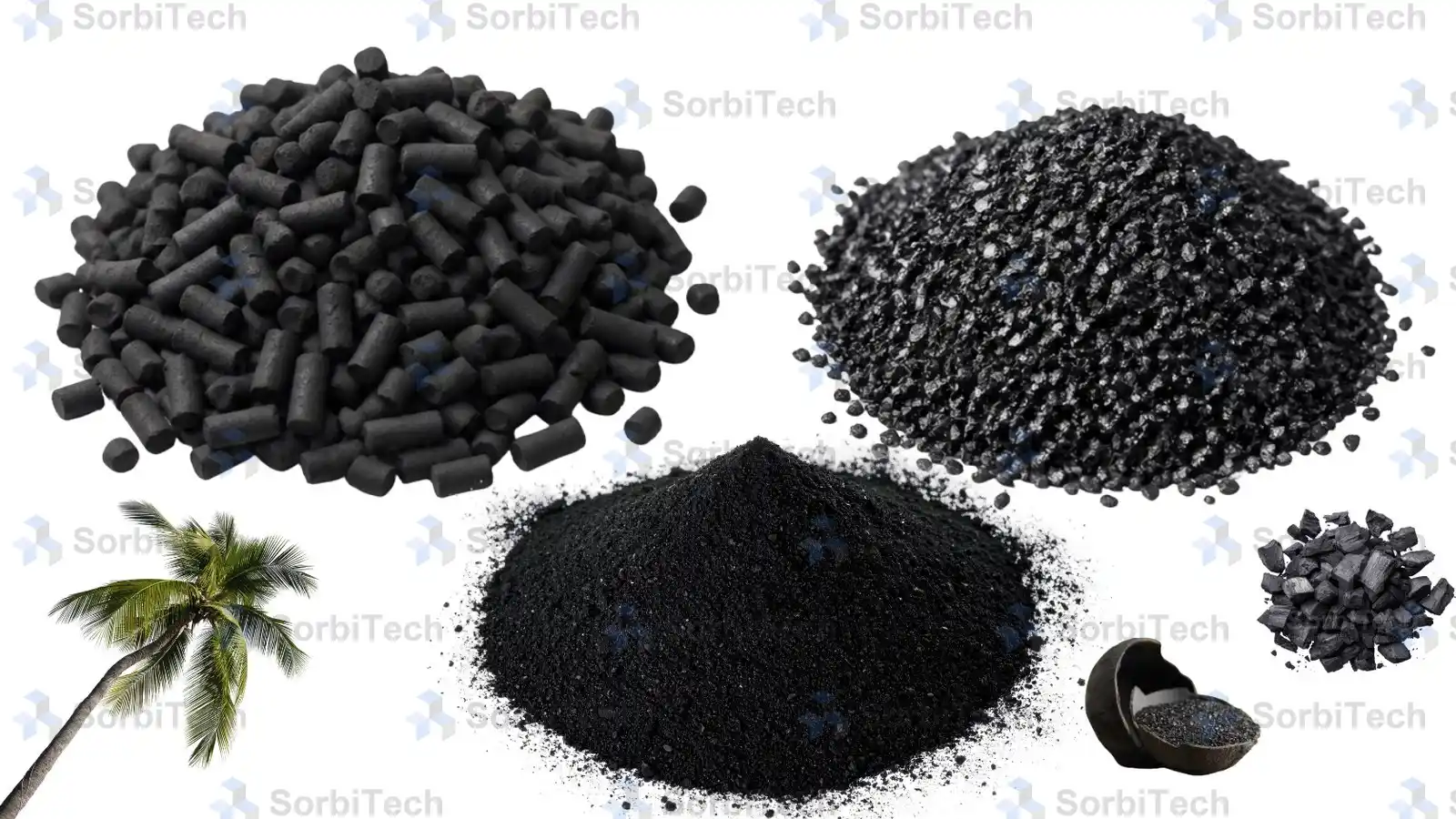
The activated carbon range spans the three precursor materials used in process service. Bituminous coal carbon for high mechanical strength and broad pore distribution. Coconut shell carbon for high micropore volume and low ash content. Lignite carbon for high macropore volume on liquid phase polishing duty. Each precursor is steam activated at 900 °C and screened to the target particle distribution.

Performance is set by the iodine number, the methylene blue number, the BET surface area, and the ash content. The standard supply runs from 800 to 1200 mg per gram iodine and 800 to 1500 square metres per gram BET. Pore structure is characterised by nitrogen isotherm and reported per lot.

Carbon is the surface chemistry adsorbent for the broadest range of duties on the SorbiTech portfolio. Where the contaminant is too small for molecular sieving but too large for ion exchange, where the duty is liquid phase polishing rather than gas drying, carbon is almost always the answer. Spent carbon is thermally reactivated at 850 to 900 °C and returned to 85 to 95 percent of virgin activity.

Mechanism

Adsorption is set by surface chemistry and pore architecture. Iodine for small molecules, methylene blue for large. The grade is matched to the contaminant distribution.

returns to 85 to 95 percent virgin Reactivation
typical 5 to 10 percent Loss per cycle
How It Works

Surface Adsorption and Pore Architecture

Adsorption on activated carbon is governed by van der Waals attraction between the target molecule and the carbon surface. The high BET surface area, between 800 and 1500 square metres per gram, gives the bed enormous adsorption capacity even at low equilibrium concentration. Pore architecture splits between micropores below 2 nm for small molecules, mesopores between 2 and 50 nm for larger species, and macropores above 50 nm that act as transport channels.

For water treatment the relevant property is iodine number, a proxy for micropore volume that correlates with dissolved organic capacity. For gas phase polishing the relevant property is methylene blue and butane working capacity, both of which reflect mesopore volume. The grade is chosen by matching pore distribution to molecular size and target effluent concentration.

SorbiTech Activated Carbon Raw Material Manufacturing ISO 9001
SorbiTech Manufacturing
Raw Material & Manufacturing

Manufactured from steam activated coal, coconut, or lignite

The activated carbon range is produced by SorbiTech from three precursor feedstocks. Bituminous coal under controlled ash and sulphur specification. Coconut shell from south Asian and African suppliers under fair trade documentation. Lignite coal from European mines. Each precursor is carbonised at 600 to 800 °C in a reducing atmosphere to drive off the volatiles.

The carbonised intermediate is then steam activated at 900 °C. Activation time and steam injection rate control the iodine number, the BET surface area, and the pore size distribution. The product is screened, washed, dried, and packaged. Every lot is sampled at the QC laboratory for iodine number, methylene blue number, ash content, moisture, and bulk density before release.

Grades in the Family

Available Grades and Specifications

Each grade is a defined product with its own technical data sheet, certificate of analysis, and engineering selection guidance. Open a grade for the full specification, applications, and lifecycle service notes.

SorbiTech Impregnated Activated Carbon H2S Acid Gas Mercury Removal
Grade

Impregnated Activated Carbon

Water cap.
Dry feed preferred, water displaces impregnant %
BET surface
Approx 900 to 1100 (BET, base carbon) m²/g
Form
4 x 8 mesh granule or 4 mm cylindrical pellet
Crush
Hardness above 90 percent N

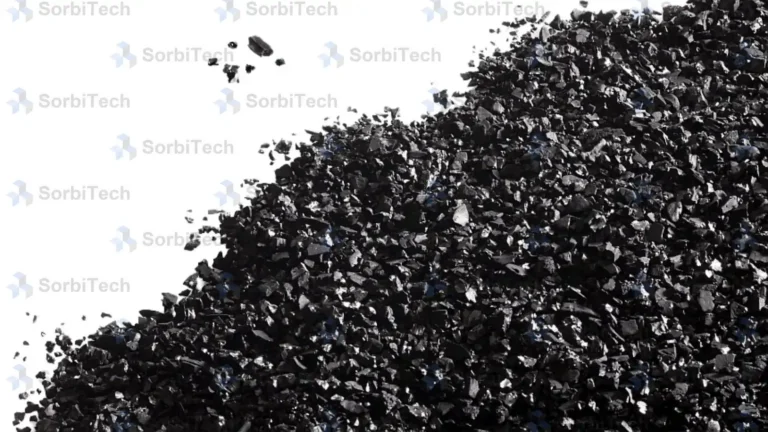
Sulfur, KI, or KOH impregnated activated carbon. Mercury below 10 ng per Nm3, H2S and mercaptan capture upstream of catalysts. 4 mm pellet or 4x8 mesh granule, 3 to 5 year mercury guard bed life.
SorbiTech Orapure Activated Carbon Coconut Shell Gold Recovery Cip Cil
Grade

OraPure Activated Carbon

Water cap.
Low moisture and ash at supply %
BET surface
1000 to 1200 (BET, iodine number above 1000 mg/g) m²/g
Form
8 x 16 mesh (1.18 to 2.36 mm), 6 x 16 mesh (1.18 to 3.35 mm), 6 x 12 mesh (1.70 to 3.35 mm)
Crush
Good hardness and attrition resistance, minimal platelet formation N

Coconut shell granular activated carbon for gold recovery. 6x12, 6x16, 8x16 mesh, iodine number above 1000 mg/g, optimised pore for high K value, thermal reactivation at 650 to 750 deg C.

Powdered Activated Carbon
Grade

Powdered Activated Carbon

BET surface
800–1100 (iodine no. ≥ 800 mg/g) m²/g
Form
200×325 mesh (45–75 µm)
Bulk density
0.40–0.55 g/ml

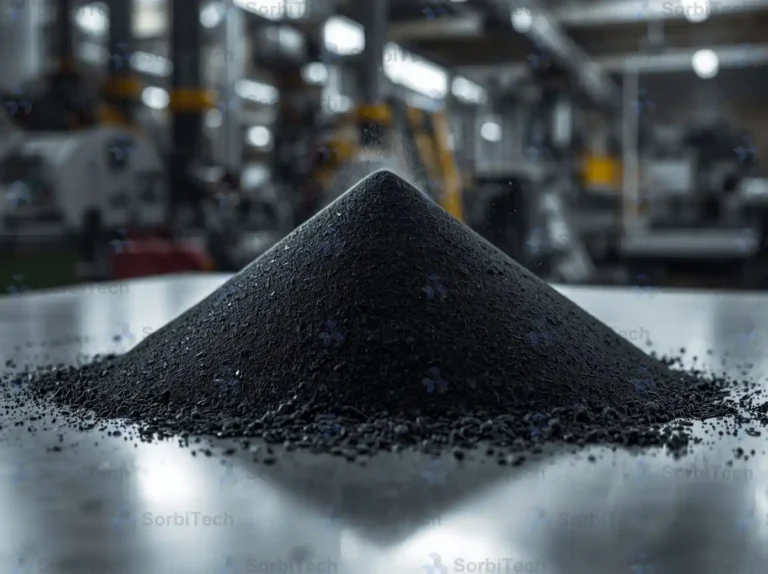
Fine powder carbon for slurry dosing in water treatment, sugar decolorization, pharmaceutical purification, and emergency contamination response.

Pellet Activated Carbon
Grade

Pellet Activated Carbon

BET surface
1050–1200 (iodine no. ≥ 1100 mg/g) m²/g
Form
3 mm or 4 mm extruded pellets
Crush
≥ 80 N/cm N
Bulk density
0.42–0.48 g/ml

Extruded pellet carbon for gas phase duties: solvent recovery, vapour recovery, odour control, and mercury guard beds.

Activated Carbon GAC 1240
Grade

Activated Carbon GAC 1240

BET surface
950–1050 (iodine no. ≥ 1000 mg/g) m²/g
Form
12 × 40 US mesh (0.42–1.70 mm)
Bulk density
0.48–0.52 g/ml

Coal based granular activated carbon for dechlorination, taste and odour, and dissolved organics in water.

Why SorbiTech

Engineered media, supported through the bed life

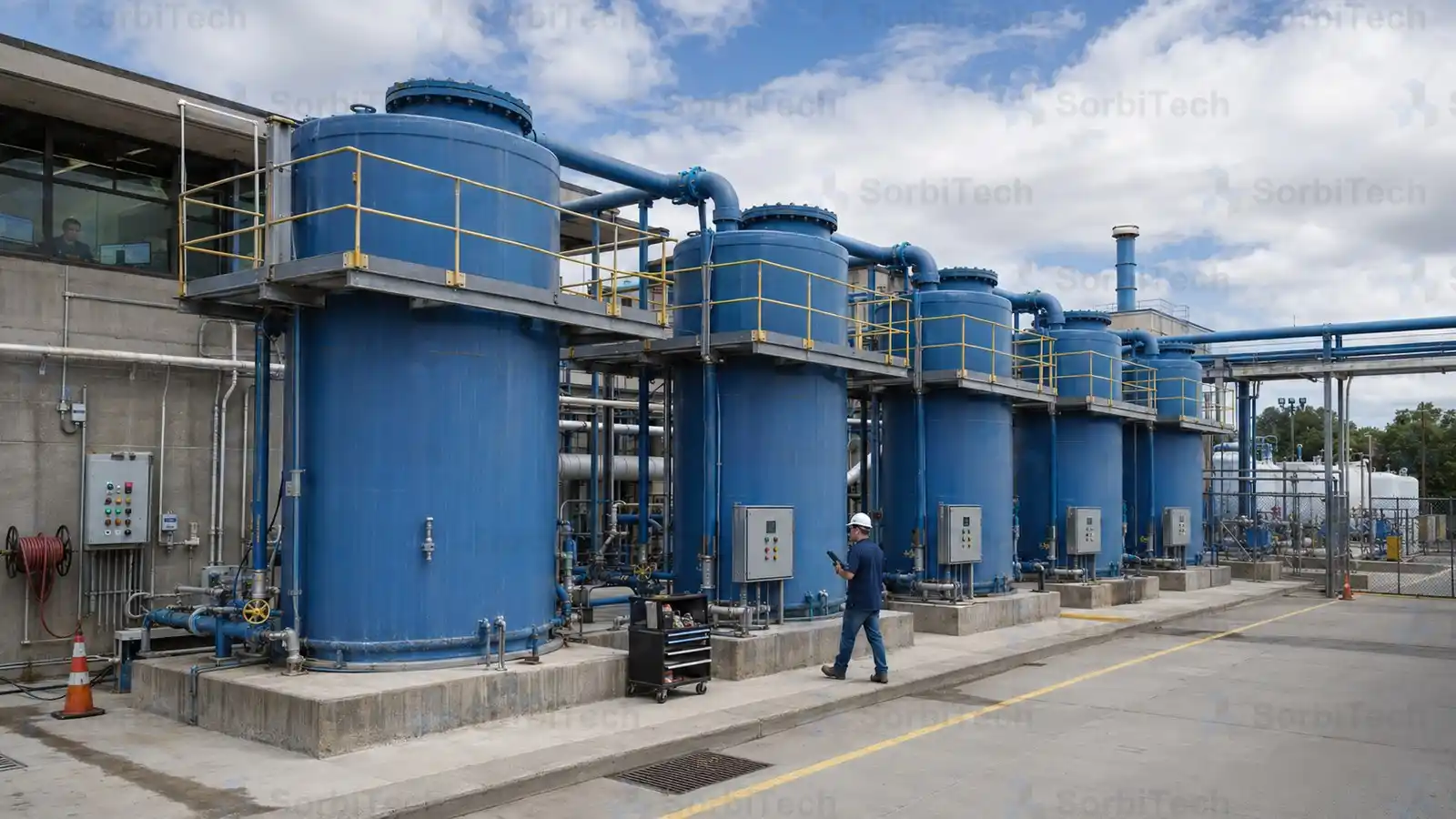
The SorbiTech group covers media supply, engineering design, lifecycle service, and quality documentation under a single accountability. The bead and the bed are one decision.

Engineered, Not Traded

The grade shipped is the grade engineered into the vessel design. SorbiTech designs the dryer, sizes the bed, and supplies the media as one decision.

Lot Traceability per Shipment

Every shipment ships with a certificate of analysis covering iodine number, water capacity, crush strength, attrition loss, and bulk density measured against the lot.

Lifecycle Service Contract

The bed is supported through its service life. Field sampling, performance audit, reactivation logistics, and end of life return are covered under one service agreement.

Cross Disciplinary Team

Process engineers, mechanical designers, and lifecycle specialists work the same project. The recommendation closes against duty data, not against a catalogue page.

Engineering Guidance

Which Grade for Which Duty

Starting point for grade selection. The final specification is closed out after the SorbiTech engineering team receives duty data, inlet composition, and the target outlet condition.

Duty or Target
Recommended Grade
Dissolved organic removal from water
Coconut shell GAC, iodine 1000 to 1200 mg per gram.
Heavy hydrocarbon removal from effluent
Coal based pellet, iodine 900 to 1000 mg per gram. Lower pressure drop on deep beds.
Decolorisation of liquid streams
Lignite based PAC. High mesopore volume captures large colour bodies.
Vapour phase solvent recovery
Coal based pellet with butane working capacity above 12 percent.
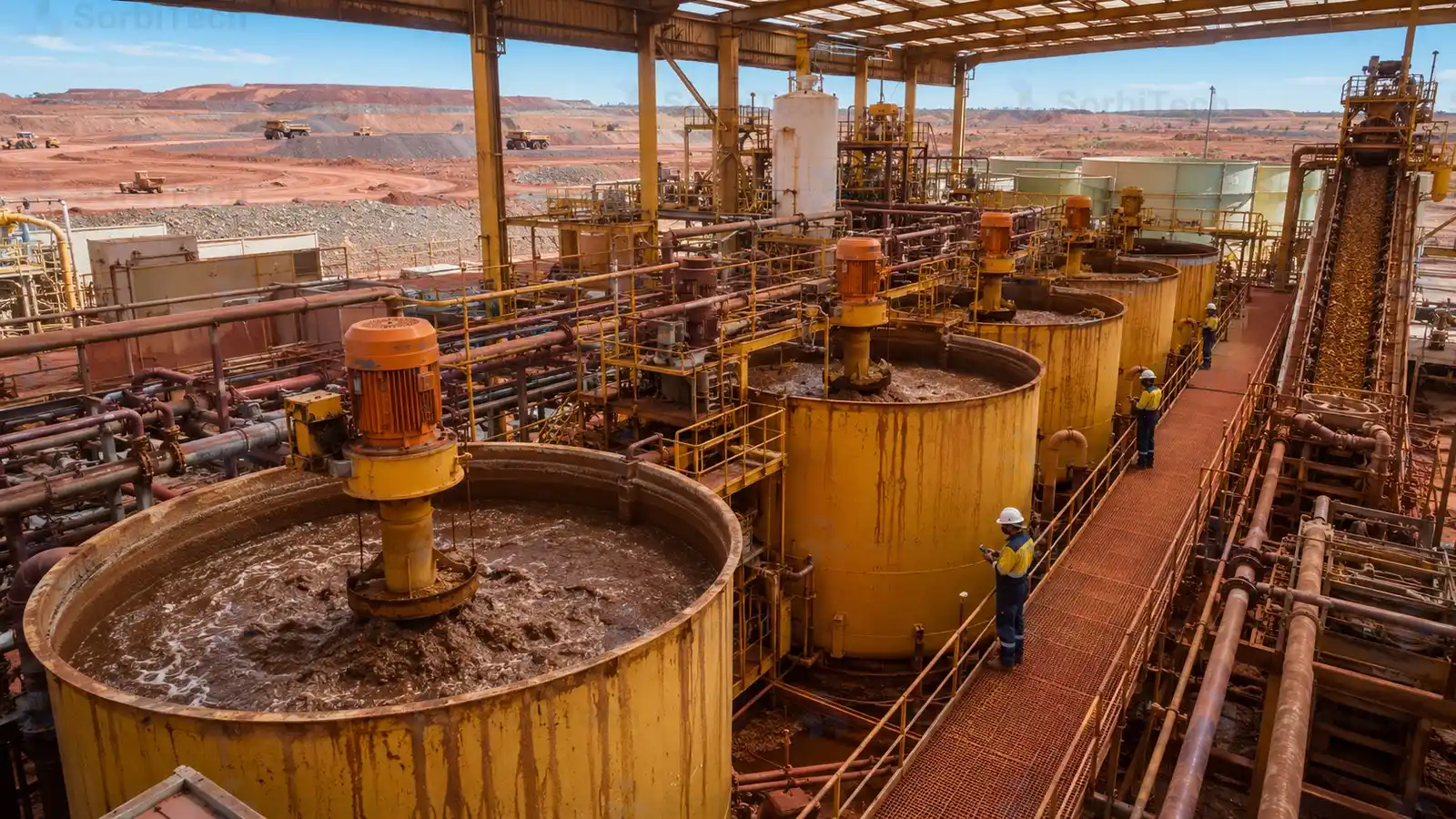
Gold cyanide adsorption in CIP and CIL
Coconut shell GAC, gold grade. High abrasion strength for slurry service.
Engineering FAQ

Common Questions on Activated Carbon

Which precursor should I choose for my duty?

Coconut shell for micropore dominant duties such as drinking water polishing and gold adsorption. Coal for broad pore distribution and high mechanical strength on gas phase and heavy organics. Lignite for macropore dominant duties such as decolorisation of large molecule colour bodies.

How is spent carbon regenerated?

Thermal reactivation at 850 to 900 °C in a multiple hearth or rotary furnace. Returns the carbon to 85 to 95 percent of virgin activity. Loss per cycle is typically 5 to 10 percent. Reactivation is the standard end of life pathway and reduces virgin make up.

What is the difference between iodine and methylene blue numbers?

Iodine number measures capacity for small molecules and correlates with micropore volume. Methylene blue number measures capacity for larger molecules and correlates with mesopore volume. A drinking water polishing grade has high iodine. A decolorisation grade has high methylene blue.

Is NSF/ANSI 61 certification available?

Yes. Standard coconut shell and coal based grades supplied for drinking water service are NSF/ANSI 61 eligible. Documentation is provided with the shipment. PFAS removal grades are qualified separately.

What service life should a carbon bed deliver?

Six months to three years depending on inlet contaminant load and target effluent quality. Carbon usage rate per cubic metre of treated water is the design metric, not bed life as a date. A field sample at three months confirms the rate against the design value.

Specify the Right Grade with the SorbiTech Engineering Team

Submit process duty data and receive a written recommendation with grade, sizing, packaging, and lead time.