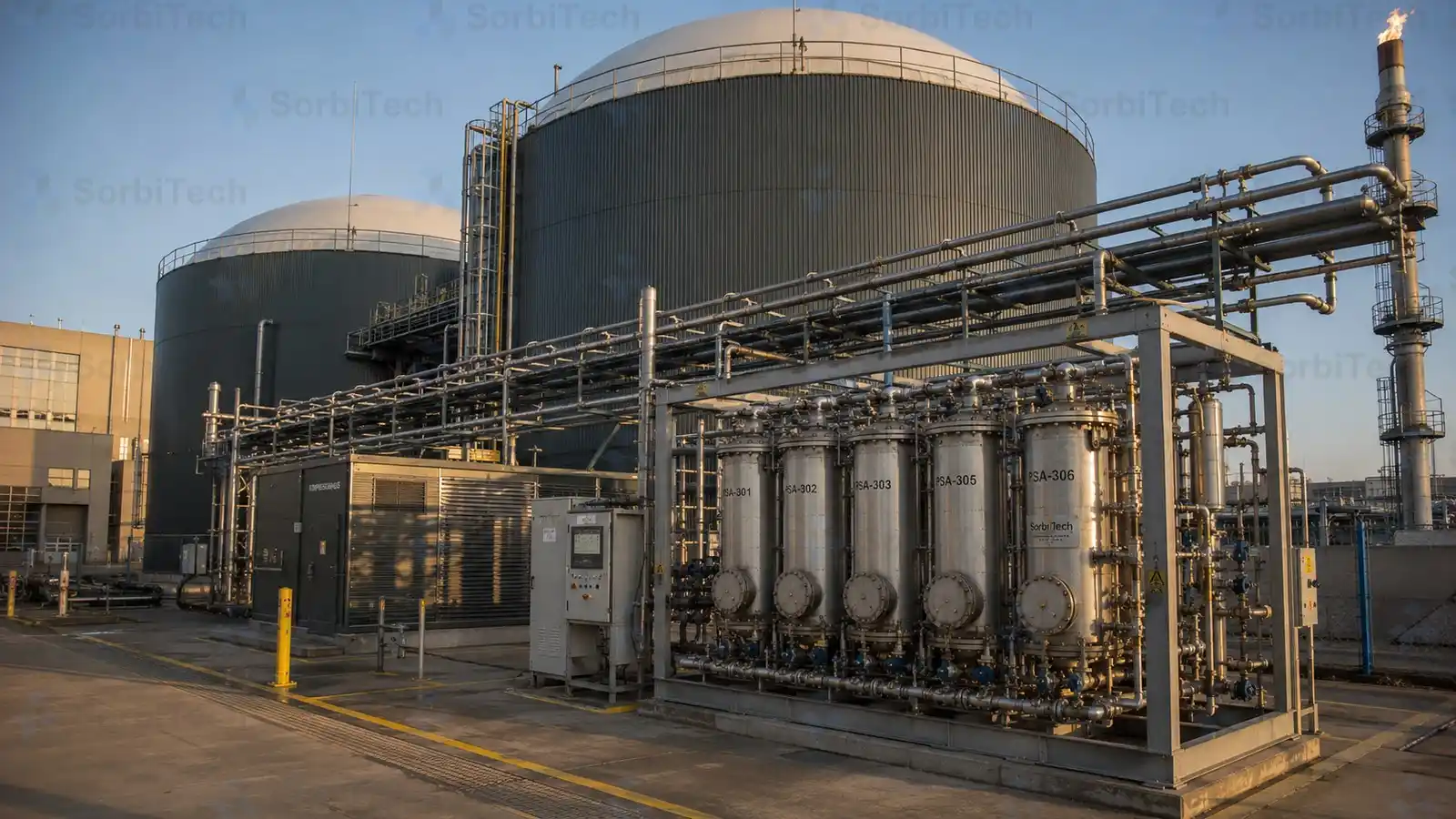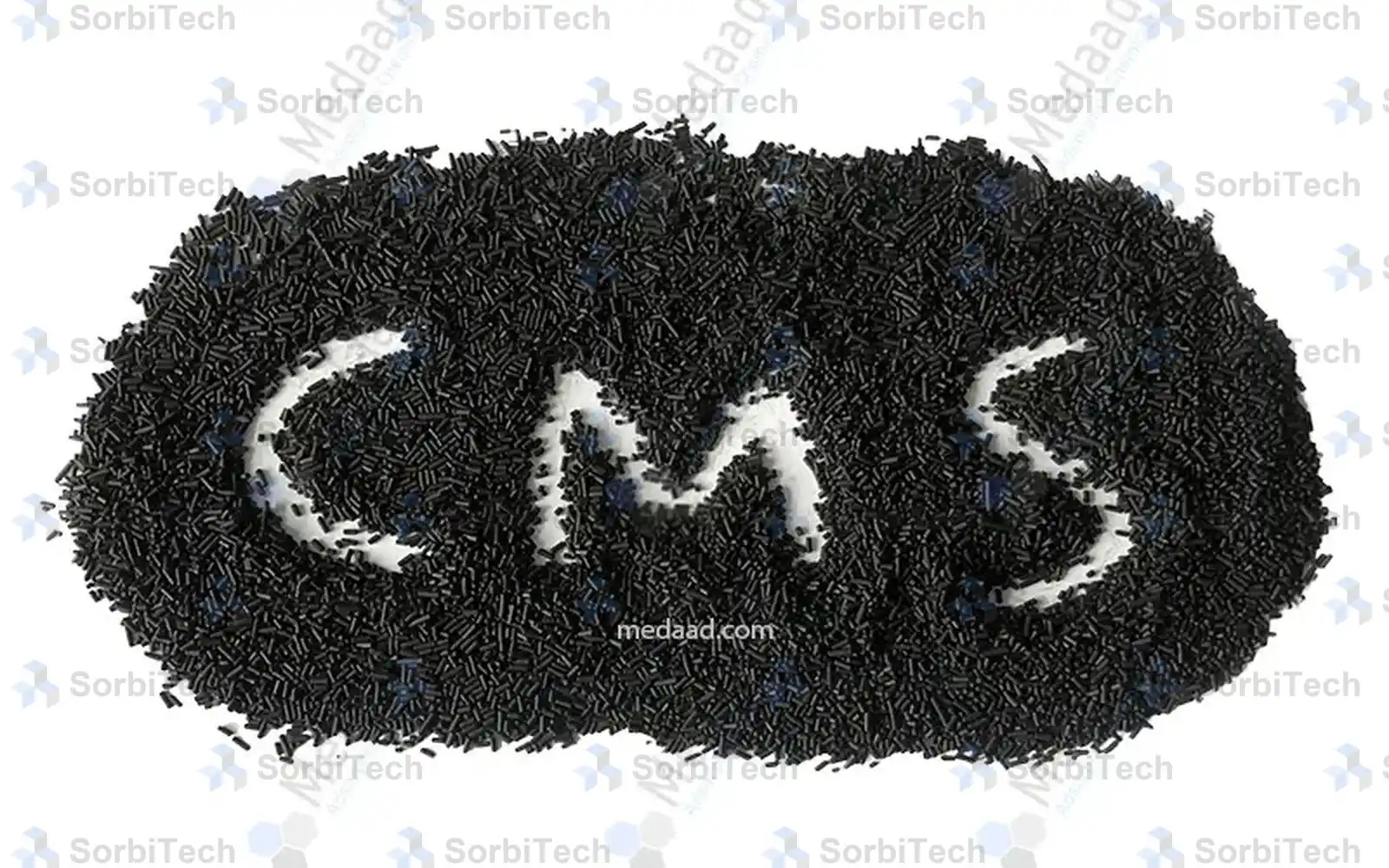
SorbiTech PSA Nitrogen Generation on Site N2 Generator Carbon Molecular Sieve
Products

Carbon Molecular Sieve

Grades available 2 (Nitrogen · Syngas)
Cycle pressure 6 to 8 bar
Bed life 8 to 12 years
Manufacturing ISO 9001:2015
Adsorbent Family · Manufactured to ISO 9001:2015

Kinetic adsorbent for on site nitrogen pressure swing generation, oxygen enrichment, and hydrogen recovery from refinery off gas.

The carbon molecular sieve range covers two application driven grades. The standard nitrogen grade with pore opening tuned to admit oxygen and reject nitrogen on the kinetic time scale of a PSA half cycle. The syngas grade with broader pore distribution for hydrogen recovery and oxygen enrichment duty. Each grade is supplied as cylindrical extrudates of 1.0 to 1.4 mm diameter, packed under nitrogen for installation in twin or three bed PSA generators.

Manufacturing follows controlled pyrolysis of a coal or coconut shell precursor, followed by a carbon deposition step that tunes the pore opening to the target kinetic diameter. The process is non reversible. Once the pore opening is set, the grade is fixed for the design duty. Every lot is sampled for nitrogen working capacity, oxygen breakthrough time, attrition loss, and bulk density before release.

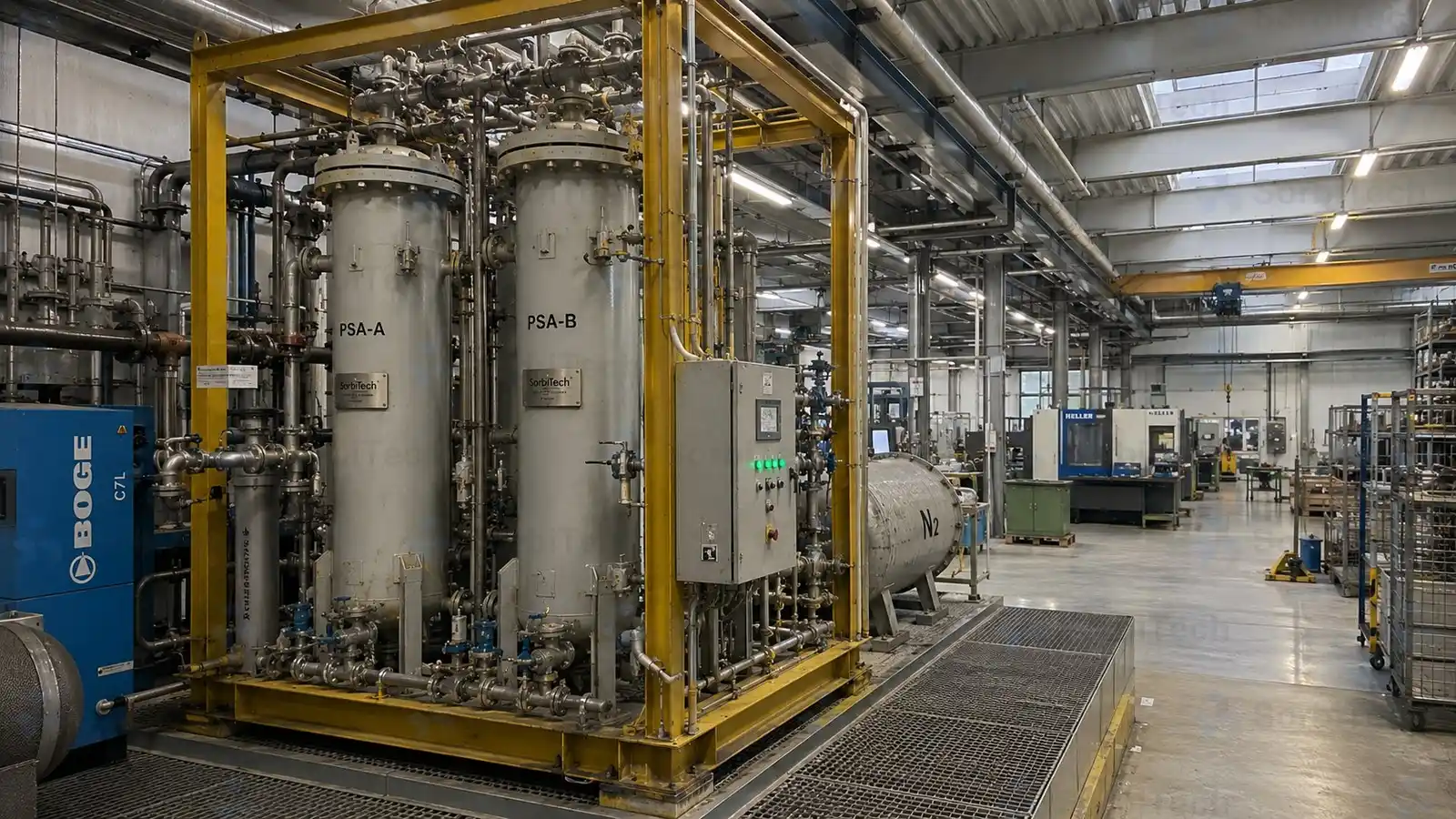
In service the carbon molecular sieve PSA generates nitrogen at 99 to 99.99 percent purity directly from compressed air. The generator footprint is small, the operating cost is low compared to liquid nitrogen delivery, and the technology suits any plant with a continuous nitrogen demand above 10 normal cubic metres per hour. Bed life under design conditions runs 8 to 12 years.

Mechanism

Oxygen at 3.5 Å enters the pore in milliseconds. Nitrogen at 3.6 Å takes seconds. The PSA half cycle exploits the diffusion rate difference, not the equilibrium.

30 to 60 seconds Half cycle
95 to 99.99 percent N₂ purity
How It Works

Kinetic Separation Inside the Carbon Pore

Kinetic separation on a carbon molecular sieve is driven by the different rates at which gas molecules diffuse into the pore network. Oxygen, with a kinetic diameter of 3.5 Å, diffuses into the tuned pore opening in milliseconds. Nitrogen, with a kinetic diameter of 3.6 Å, diffuses much more slowly. On the time scale of a PSA half cycle of 30 to 60 seconds, the oxygen is captured and the nitrogen product passes through.

This kinetic regime is what distinguishes the carbon sieve from the equilibrium driven zeolite sieves. Zeolite 13X separates on the size of the cage opening relative to the molecule. The carbon sieve separates on the diffusion rate inside a tuned pore. The two approaches yield different capacity curves, different cycle times, and different bed sizing rules.

Carbon Molecular Sieve N2 Grade
SorbiTech Manufacturing
Raw Material & Manufacturing

Manufactured by pyrolysis with carbon deposition tuning

The carbon molecular sieve range is produced by SorbiTech through controlled pyrolysis of a coconut shell or coal based precursor at 800 to 900 °C in an inert atmosphere. The carbonised intermediate has a broad pore distribution. The pore opening is then tuned by a carbon deposition step in which a light hydrocarbon decomposes inside the pore and narrows the entry channel to the target kinetic diameter.

The deposition is non reversible. Once the pore opening is set, the grade is fixed for the design duty. The standard nitrogen grade is tuned so oxygen at 3.5 Å enters in milliseconds while nitrogen at 3.6 Å takes seconds. Every lot is sampled at the QC laboratory for nitrogen working capacity, oxygen breakthrough time, attrition loss, and bulk density before release.

Grades in the Family

Available Grades and Specifications

Each grade is a defined product with its own technical data sheet, certificate of analysis, and engineering selection guidance. Open a grade for the full specification, applications, and lifecycle service notes.

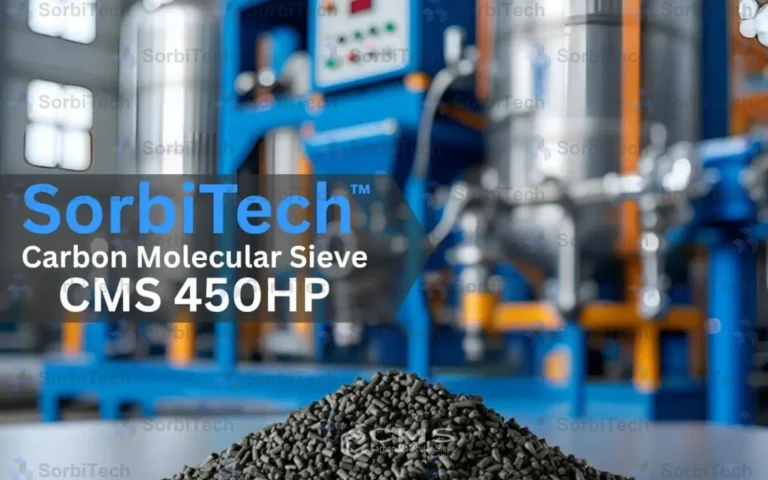
CMS 450hp
Grade

Carbon Molecular Sieve CMS 450HP

Water cap.
Feed must reach ISO 8573 class 1.4.1, deoxo polishing recommended for 7N %
BET surface
Approx 1200 (BET) m²/g
Form
1.0, 1.2, 1.4, or 1.6 mm cylindrical pellet
Crush
Robust pellet structure, minimal fines over service life N

Ultra high purity carbon molecular sieve. 99.99999 percent (7N) N2, selective O2 and CO2 capture, 1.0 to 1.6 mm pellets, minimal fines, deoxo polishing for critical service.
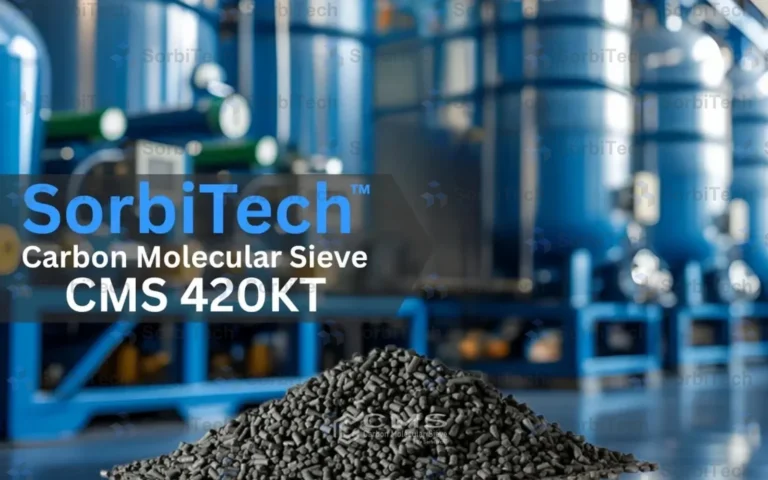
CMS 420kt
Grade

Carbon Molecular Sieve CMS 420KT

Water cap.
Feed must reach ISO 8573 class 1.4.1 %
BET surface
Approx 1150 (BET) m²/g
Form
1.2 mm to 1.8 mm cylindrical pellet (standard)
Crush
Excellent resistance to crushing and attrition N

High efficiency carbon molecular sieve. Higher oxygen affinity under 7 to 12 barg, 1.2 to 1.8 mm pellets, Snowstorm Filling compatible, ASTM D4058 attrition resistance verified.

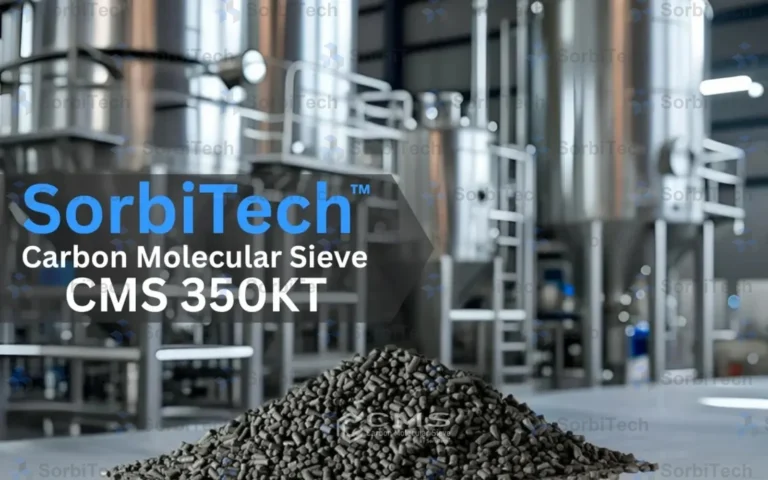
CMS 350kt
Grade

Carbon Molecular Sieve CMS 350KT

Water cap.
Moisture at supply below 1.0 percent, feed must reach ISO 8573 class 1.4.1 %
BET surface
Approx 1100 (BET) m²/g
Form
1.0 mm to 2.2 mm cylindrical pellet
Crush
High, robust pellet shape, low dust formation N

Rapid adsorption carbon molecular sieve. 40 to 90 second cycle at 7 to 10 barg, up to 99.99 percent N2, 1.0 to 2.2 mm pellets, low dust formation.

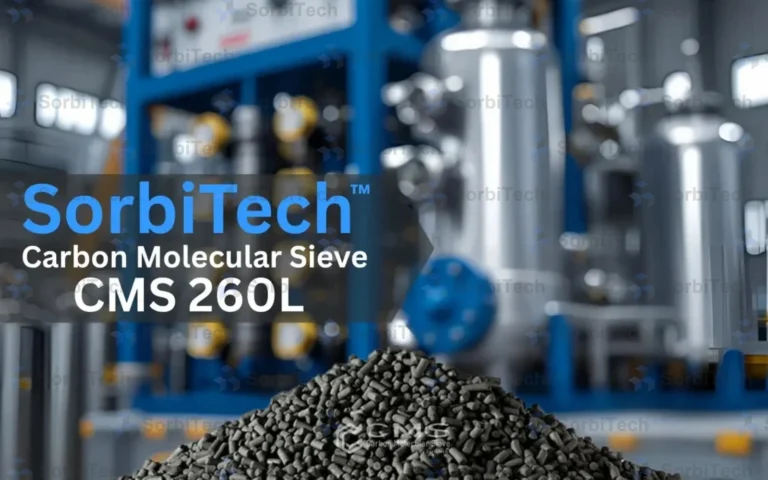
CMS 260l
Grade

Carbon Molecular Sieve CMS 260L

Water cap.
Intolerant of liquid water, feed must reach ISO 8573 class 1.4.1 %
BET surface
Approx 1050 (BET) m²/g
Form
1.2 mm, 1.5 mm, or 1.8 mm cylindrical pellet
Crush
Approx 45 N N

Affordable carbon molecular sieve. 1.2 to 1.8 mm pellets, sub 10 Angstrom pore, 95 to 99.9 percent N2 from compressed air at 7 to 10 barg.

Why SorbiTech

Engineered media, supported through the bed life

The SorbiTech group covers media supply, engineering design, lifecycle service, and quality documentation under a single accountability. The bead and the bed are one decision.

Engineered, Not Traded

The grade shipped is the grade engineered into the vessel design. SorbiTech designs the dryer, sizes the bed, and supplies the media as one decision.

Lot Traceability per Shipment

Every shipment ships with a certificate of analysis covering iodine number, water capacity, crush strength, attrition loss, and bulk density measured against the lot.

Lifecycle Service Contract

The bed is supported through its service life. Field sampling, performance audit, reactivation logistics, and end of life return are covered under one service agreement.

Cross Disciplinary Team

Process engineers, mechanical designers, and lifecycle specialists work the same project. The recommendation closes against duty data, not against a catalogue page.

Engineering Guidance

Which Grade for Which Duty

Starting point for grade selection. The final specification is closed out after the SorbiTech engineering team receives duty data, inlet composition, and the target outlet condition.

Duty or Target
Recommended Grade
On site nitrogen generation at 95 to 99.5 percent purity
Standard nitrogen grade, twin bed PSA, 30 to 60 second half cycle.
High purity nitrogen at 99.99 percent and above
Nitrogen grade with downstream deoxo polish, three bed PSA configuration.
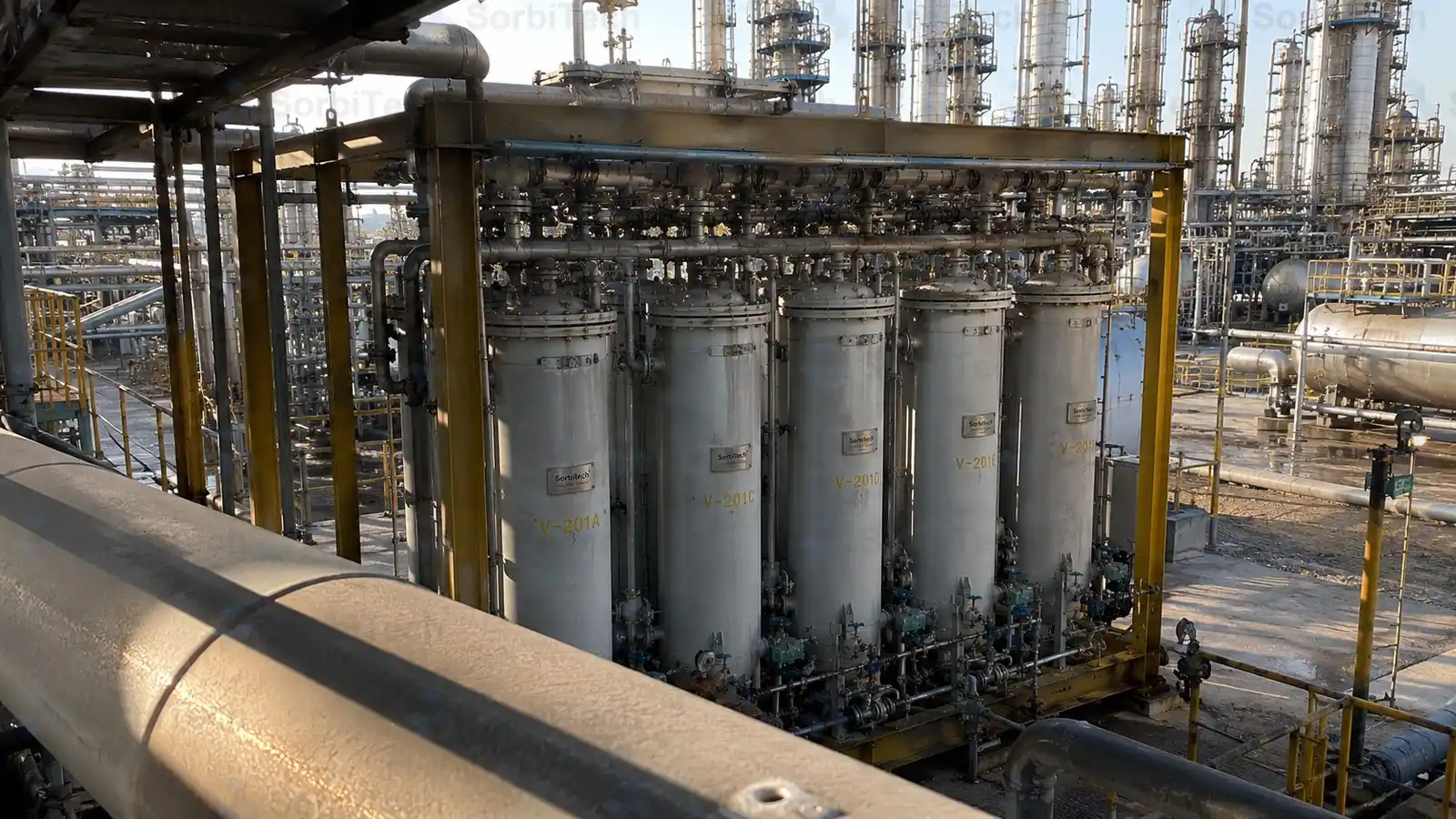
Hydrogen recovery from refinery or syngas off gas
Syngas grade with broader pore distribution, multi bed PSA cycle.
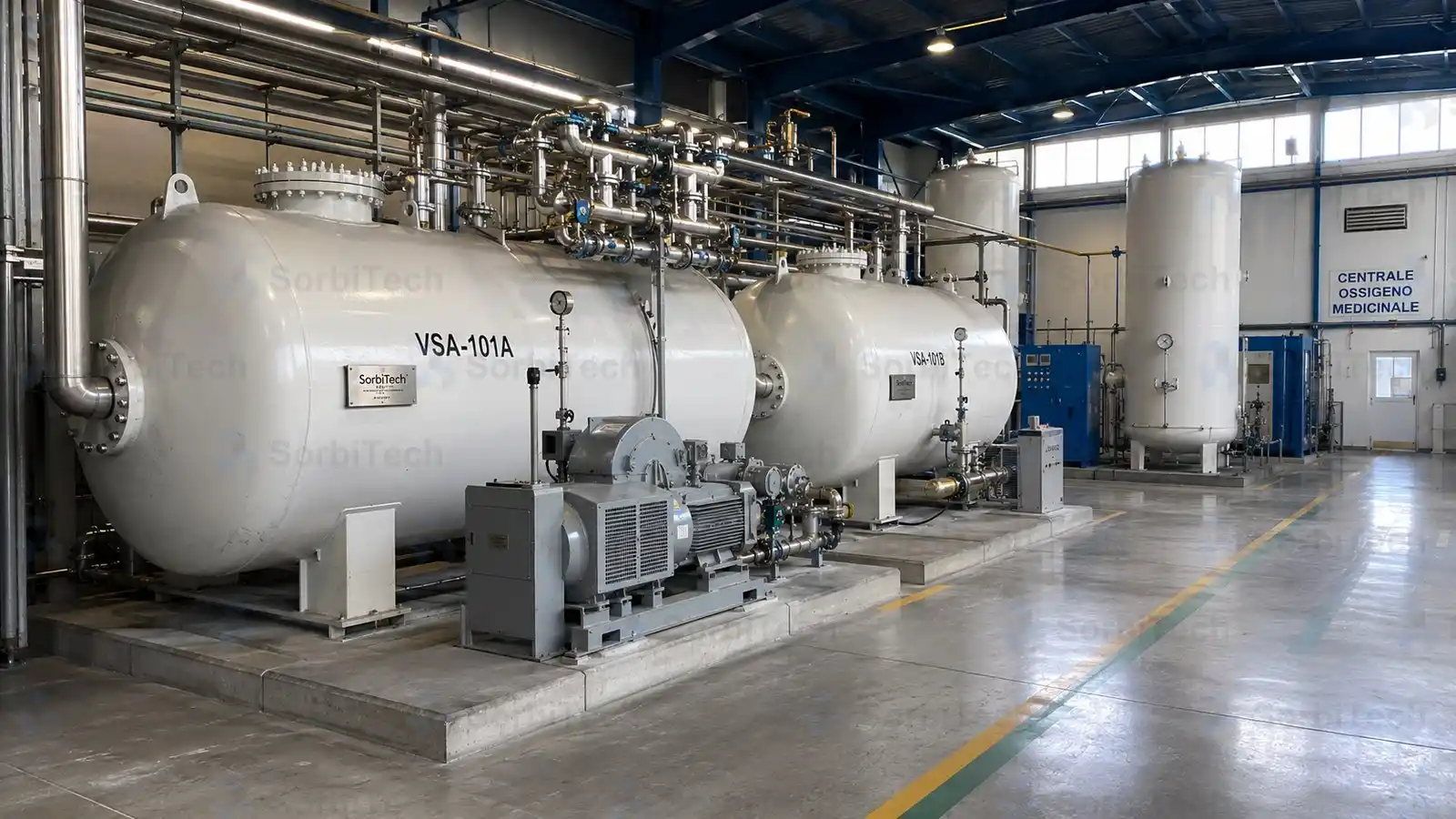
Oxygen enrichment for metallurgical or medical service
VSA configuration with zeolite 13X as the primary adsorbent, carbon sieve as polishing stage.
Engineering FAQ

Common Questions on Carbon Molecular Sieve

How long does the carbon sieve last in PSA service?

8 to 12 years under design conditions. Service life is shortened by oil carryover from the compressor, water saturation events from a failed dryer upstream, or operation outside the design pressure and temperature window. A pre filter and adsorption dryer upstream are mandatory.

What inlet specification does the generator require?

Compressed air at 6 to 8 bar, oil free or with downstream coalescing filtration, water dew point below 3 °C, particulates below 0.1 micron. The pre treatment train is sized to the generator capacity by the PSA package vendor.

What purity is achievable from a single stage PSA?

95 to 99.5 percent nitrogen by volume from a twin bed cycle. 99.99 percent and above requires a downstream deoxo polish where residual oxygen is catalytically reacted with hydrogen to form water, which is then removed by adsorption.

Can the carbon sieve be regenerated outside the PSA cycle?

No. The PSA cycle itself is the regeneration. The bed is pressurised for the adsorption step and depressurised for the regeneration step. There is no separate thermal regeneration. End of life is reached when the working capacity falls below the design value.

What is the difference between PSA and VSA for nitrogen and oxygen?

PSA cycles between high pressure adsorption and atmospheric regeneration. VSA cycles between atmospheric or low pressure adsorption and vacuum regeneration. PSA is the standard for nitrogen from carbon sieve. VSA is the standard for oxygen from zeolite 13X.

Specify the Right Grade with the SorbiTech Engineering Team

Submit process duty data and receive a written recommendation with grade, sizing, packaging, and lead time.