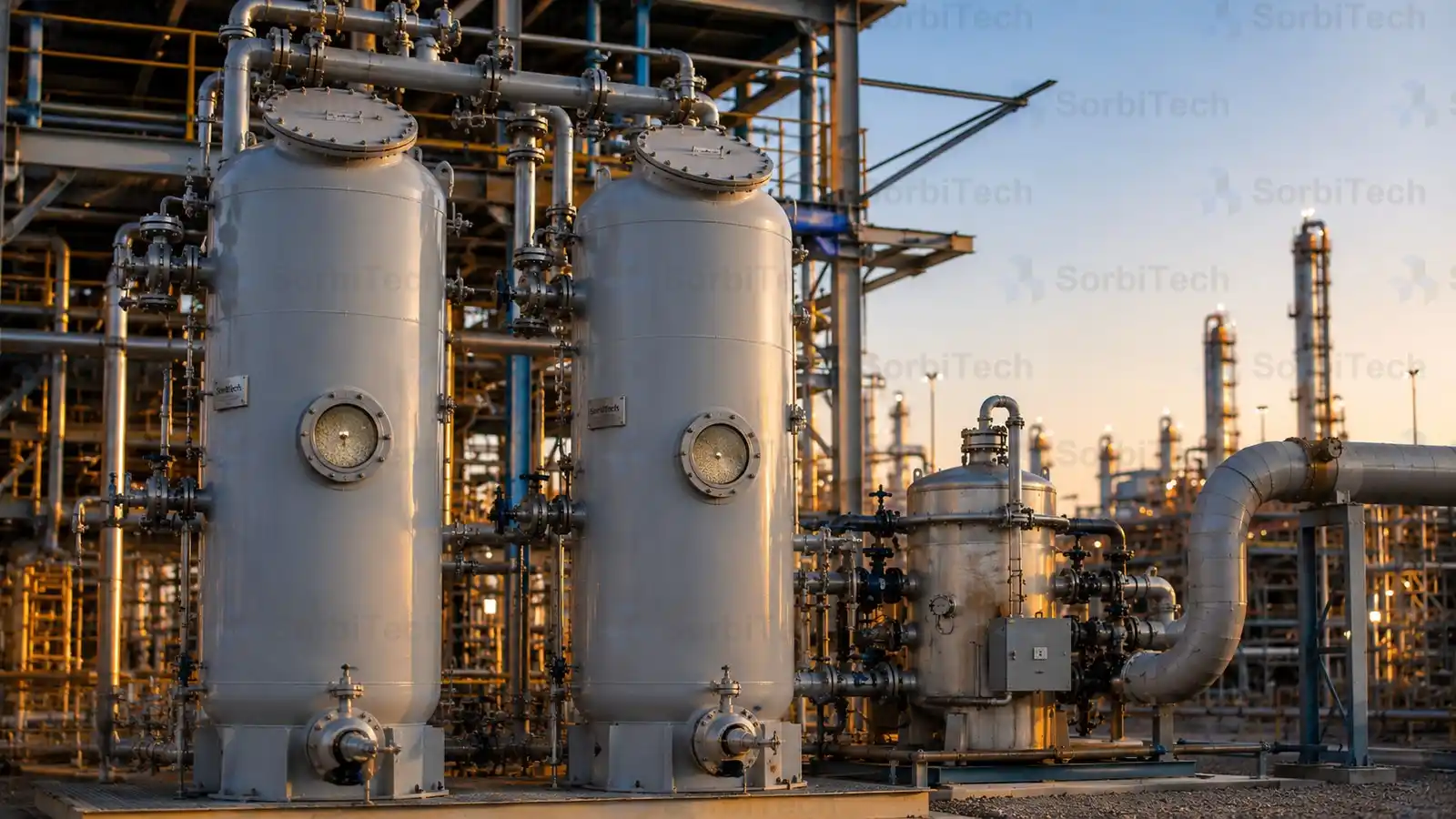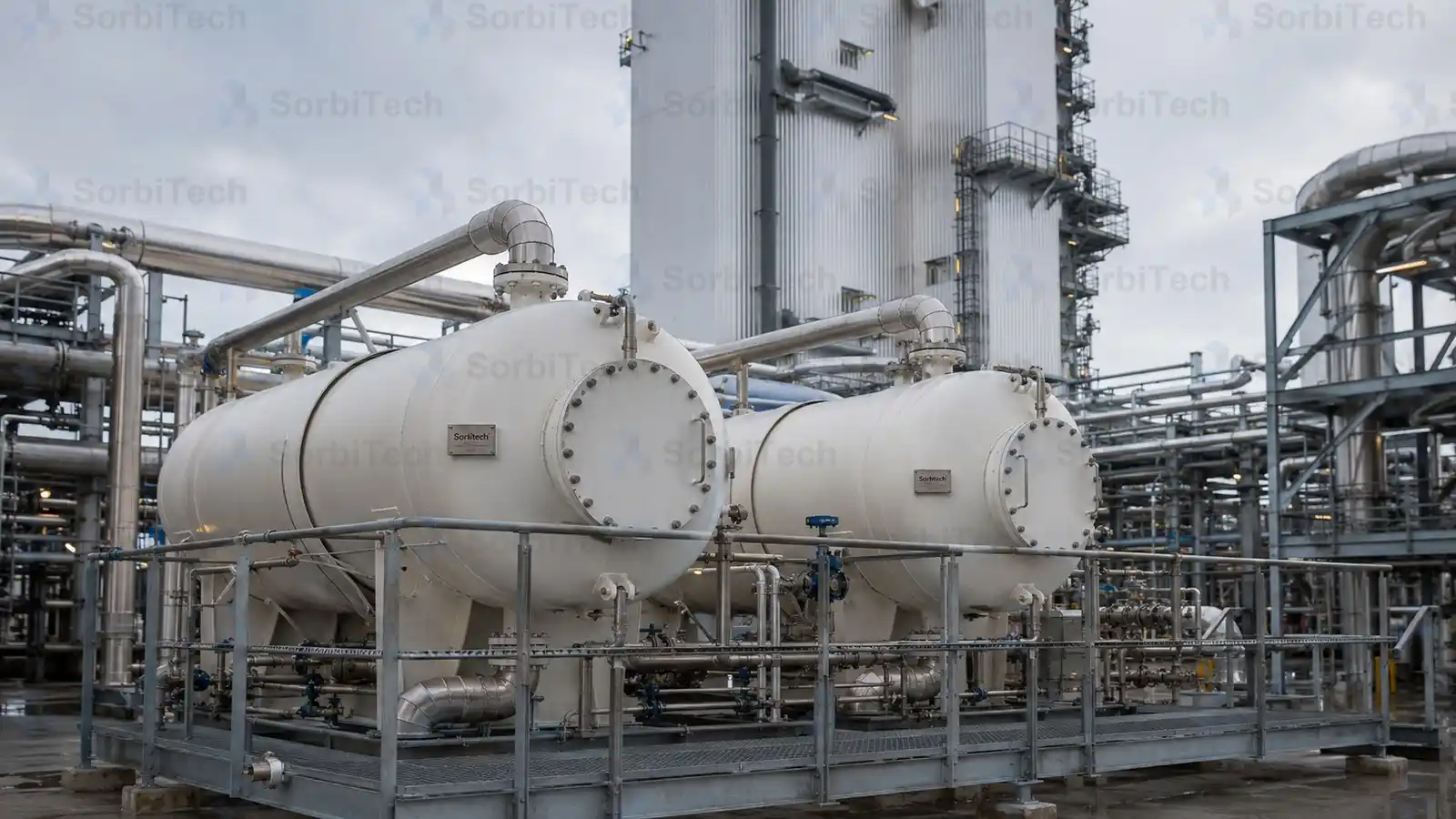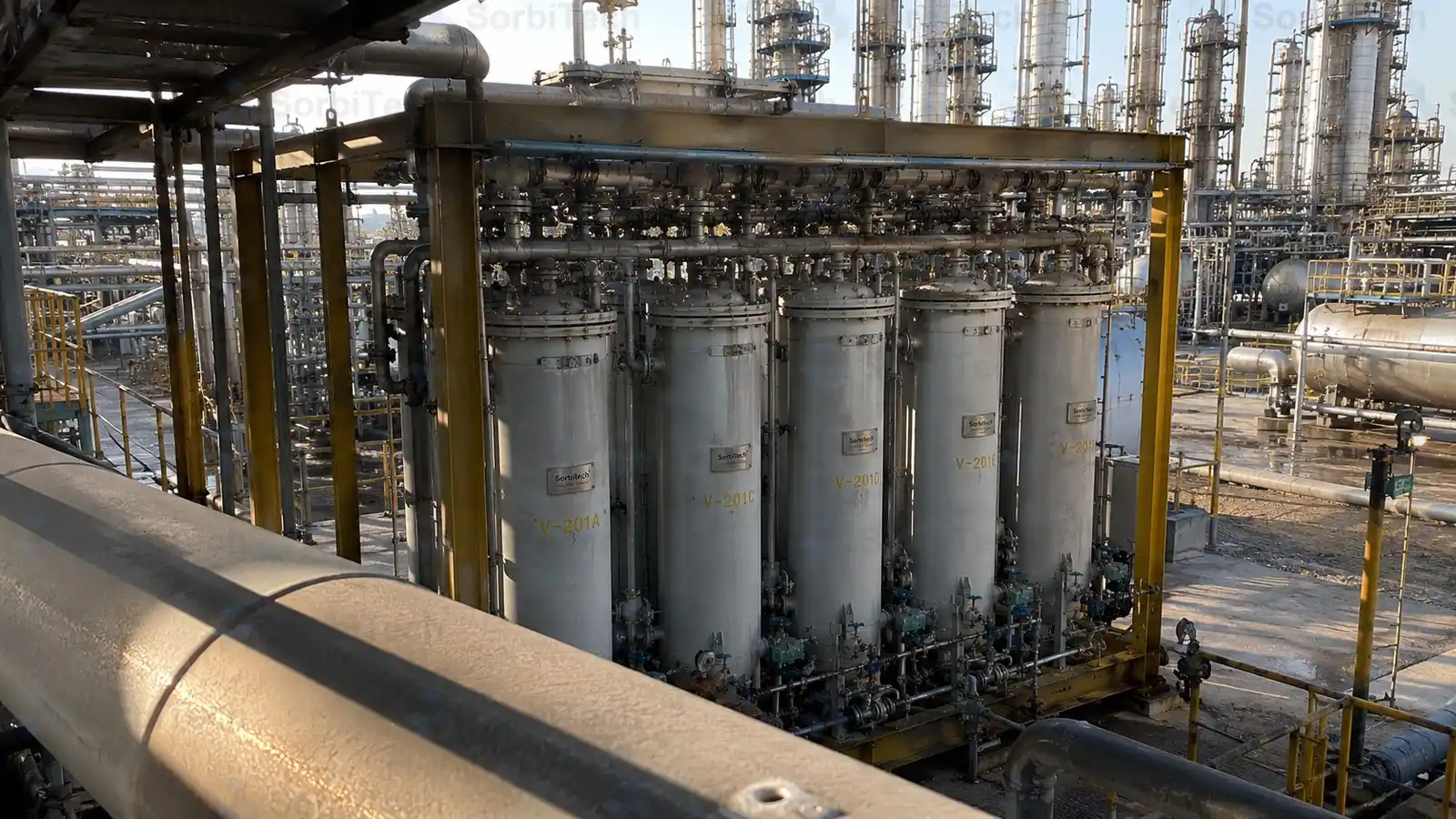
SorbiTech Natural Gas Dehydration TSA Twin Tower Molecular Sieve Dryer
Products

Molecular Sieves

Grades available 4 grades, 3A to 13X
Pore opening 3 to 10 Ångström
Regeneration 200 to 350 °C TSA
Manufacturing ISO 9001:2015
Adsorbent Family · Manufactured to ISO 9001:2015

Crystalline aluminosilicate adsorbents with uniform pore openings from 3 to 10 Ångström. Manufactured by SorbiTech under ISO 9001:2015.

The molecular sieve range covers the four canonical synthetic zeolites used in industrial adsorption. Type 3A in the potassium exchanged form, type 4A in the sodium form, type 5A in the calcium exchanged form, and type 13X in the faujasite crystal structure. Pore openings are precise to the Ångström, set during ion exchange and confirmed by water adsorption isotherm at the QC laboratory.

Manufacturing follows a fixed crystal growth recipe with downstream ion exchange to the target form, beading or pelletisation, calcination, and packing under nitrogen. Every lot is sampled for water capacity, crush strength, attrition loss, and bulk density before release. A certificate of analysis is issued with every shipment.

Inside an installed dryer the molecular sieve is the workhorse for hard drying duties where the outlet water specification falls below the equilibrium limit of silica gel or activated alumina. A typical adsorption cycle runs 8 to 16 hours. Thermal regeneration runs 4 to 8 hours at 200 to 350 °C depending on grade and cycle design.

Mechanism

The grade is selected so the target molecule adsorbs and everything else passes through. Size exclusion makes the family quantitative, not approximate.

above 1000 over kinetic diameter Selectivity
8 to 16 h adsorption · 4 to 8 h regen Cycle
How It Works

Size Selectivity at the Ångström

Adsorption on a molecular sieve is governed by the match between the effective kinetic diameter of the target molecule and the cage opening of the zeolite framework. Water at 2.6 Å passes into all four grades. Methanol at 3.6 Å passes into 4A and larger. Nitrogen and oxygen near 3.5 Å are admitted to 5A and 13X. Aromatic molecules above 5.5 Å pass only into 13X.

This size exclusion is what makes the family quantitative rather than approximate. The grade is selected so the target molecule adsorbs and everything else passes through. Co adsorption is minimal, regeneration is clean, and the adsorber is sized by water mass balance and not by trial. The same logic extends from gas drying to PSA separations.

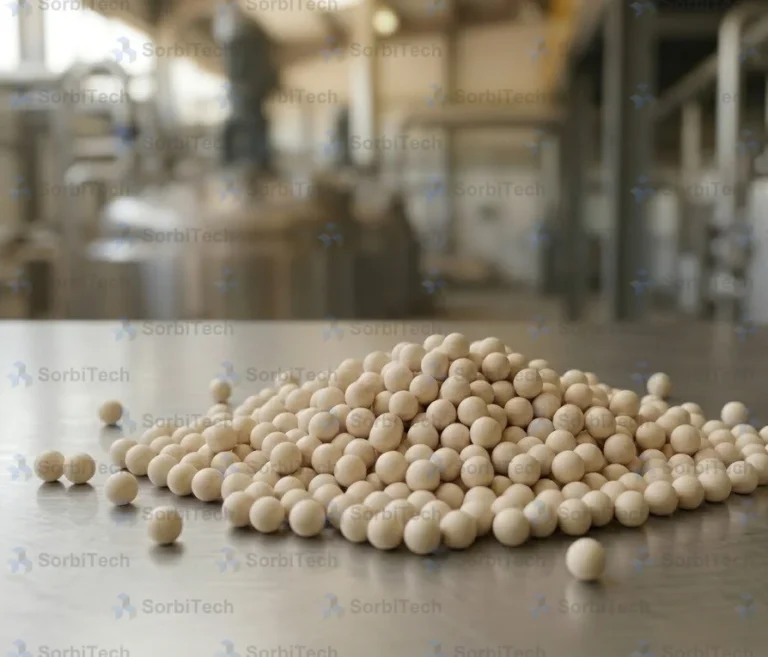
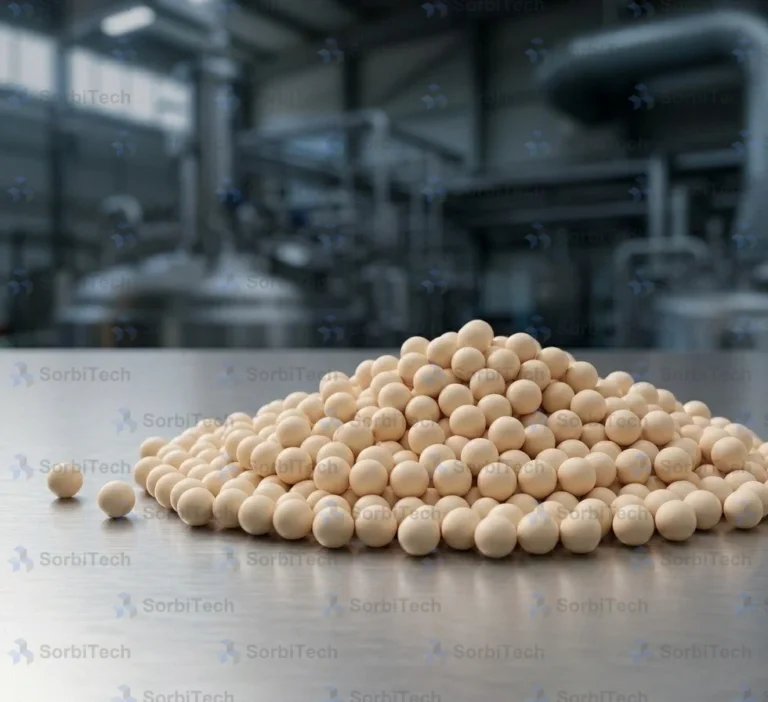
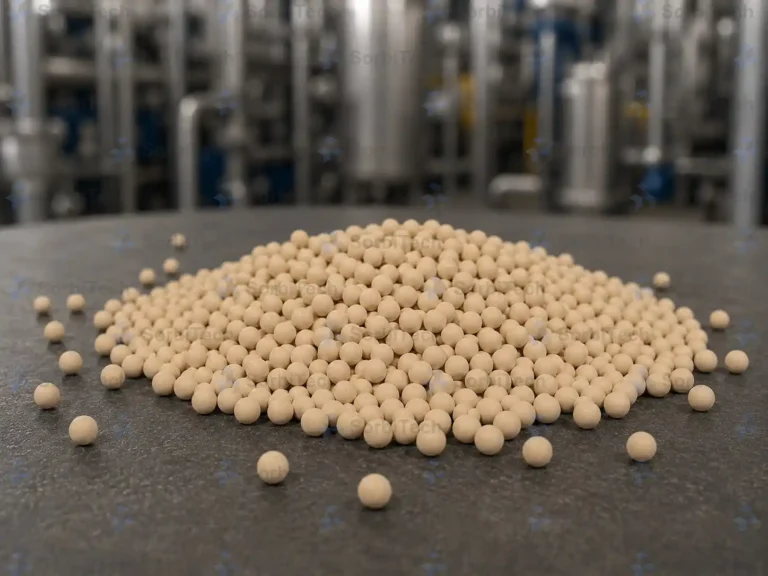
SorbiTech Molecular Sieve 4a Natural Gas Drying 4 Angstrom Zeolite
SorbiTech Manufacturing
Raw Material & Manufacturing

Manufactured from synthetic zeolite crystal

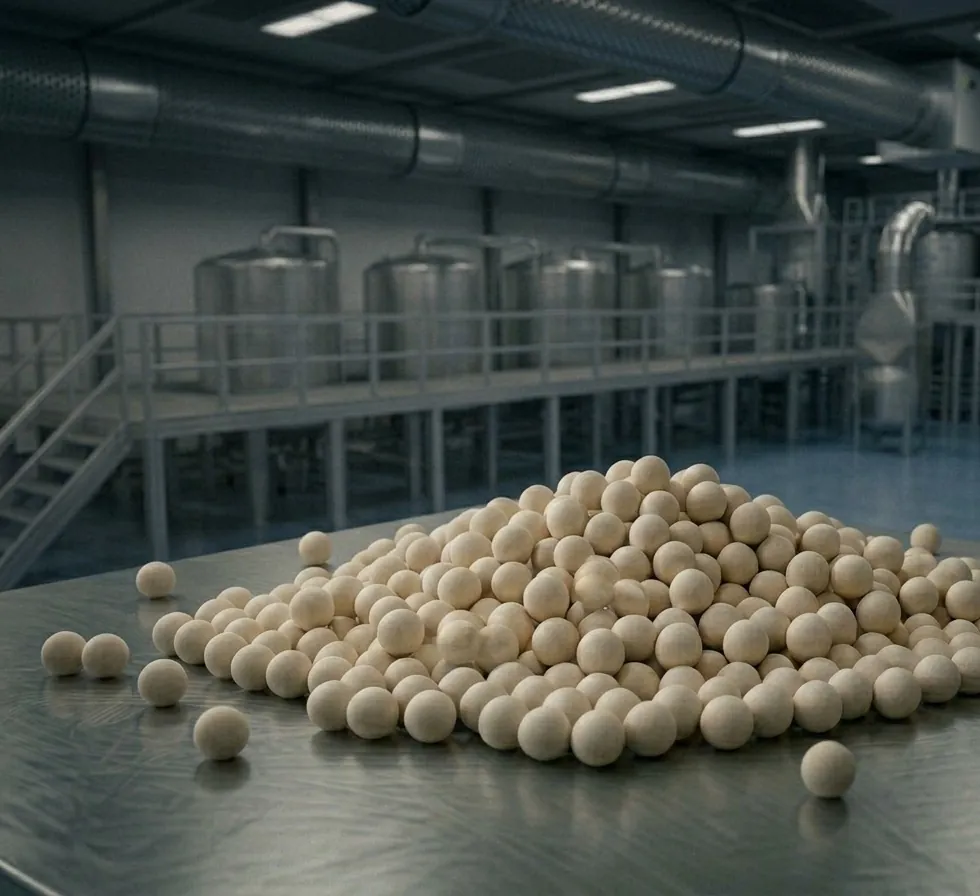
The molecular sieve range is produced by SorbiTech from synthetic aluminosilicate. Sodium aluminate and sodium silicate are precipitated at controlled temperature and alkalinity, then hydrothermally crystallised to form the cubic A or faujasite X framework. The synthesis route fixes the cage opening at 4 Å for the sodium form and 10 Å for the X form.

Downstream the crystal is ion exchanged to the target form. Potassium for type 3A, retained sodium for 4A, calcium for 5A. Beading or pelletisation with a clay binder follows, then calcination above 500 °C to remove binder volatiles and water of synthesis. Every lot is sampled at the QC laboratory for water capacity, crush strength, attrition loss, and bulk density before release.

Grades in the Family

Available Grades and Specifications

Each grade is a defined product with its own technical data sheet, certificate of analysis, and engineering selection guidance. Open a grade for the full specification, applications, and lifecycle service notes.

Molecular Sieve 5a
Grade

Molecular Sieve 5A

Pore
5 Å
Water cap.
≥ 21 %
BET surface
~700 m²/g
Form
1.6–2.5 mm beads

Calcium form 5A zeolite for n paraffin separation, hydrogen purification, and oxygen PSA generation.
Molecular Sieve 4a
Grade

Molecular Sieve 4A

Pore
4 Å
Water cap.
≥ 22 %
BET surface
~750 m²/g
Form
1.6–2.5 mm beads; 2.5–5.0 mm beads

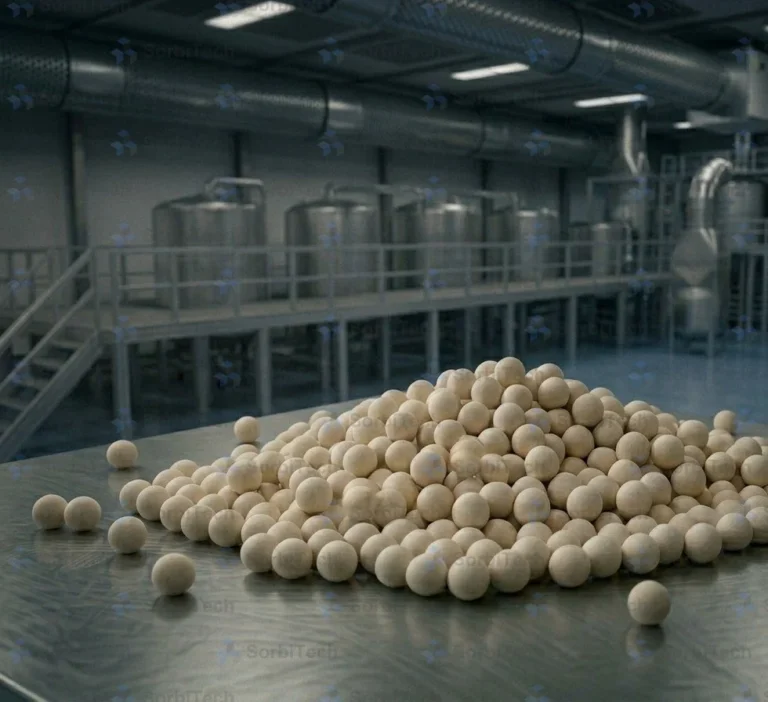
Sodium form 4A zeolite, the standard drying sieve for sweet methane, refrigerant streams, and insulating glass units.

Molecular Sieve 13x
Grade

Molecular Sieve 13X

Pore
10 Å
Water cap.
≥ 24 %
BET surface
~800 m²/g
Form
1.6–2.5 mm / 2.5–5.0 mm beads

Sodium form 13X zeolite for cryogenic air pre purification and combined drying and sweetening.

Molecular Sieve 3a
Grade

Molecular Sieve 3A

Pore
3 Å
Water cap.
≥ 22 %
BET surface
~750 m²/g
Form
1.6–2.5 mm beads (4×8 mesh available)

Potassium form 3A zeolite, the size selective desiccant for streams that must not lose hydrocarbons to the bed.

Why SorbiTech

Engineered media, supported through the bed life

The SorbiTech group covers media supply, engineering design, lifecycle service, and quality documentation under a single accountability. The bead and the bed are one decision.

Engineered, Not Traded

The grade shipped is the grade engineered into the vessel design. SorbiTech designs the dryer, sizes the bed, and supplies the media as one decision.

Lot Traceability per Shipment

Every shipment ships with a certificate of analysis covering iodine number, water capacity, crush strength, attrition loss, and bulk density measured against the lot.

Lifecycle Service Contract

The bed is supported through its service life. Field sampling, performance audit, reactivation logistics, and end of life return are covered under one service agreement.

Cross Disciplinary Team

Process engineers, mechanical designers, and lifecycle specialists work the same project. The recommendation closes against duty data, not against a catalogue page.

Engineering Guidance

Which Grade for Which Duty

Starting point for grade selection. The final specification is closed out after the SorbiTech engineering team receives duty data, inlet composition, and the target outlet condition.

Duty or Target
Recommended Grade
Bulk water removal from saturated gas
13X. High capacity, low cost per pound of water removed.
Drying to a water dew point below minus 40 °C
4A or 13X, selected by particle size and pressure drop budget.
Ethanol or methanol drying without co adsorption
3A. Rejects the alcohol, admits only water.
PSA separation by molecular size
5A for hydrogen recovery, 13X for nitrogen and large molecule duty.
Acid gas polishing of LPG and refined products
13X selective grades, regenerated by hot gas purge.
Engineering FAQ

Common Questions on Molecular Sieves

What pore opening should I select for my duty?

Match the kinetic diameter of the molecule you want to admit. Water at 2.6 Å fits all four grades, so choose by the largest molecule you do not want to adsorb. Reject methanol with 3A. Reject hydrocarbons above C2 with 4A. Admit larger molecules with 5A or 13X.

How is the bed regenerated?

Thermal swing using a slip stream of dry gas heated to 200 to 350 °C. Regeneration time is typically half to three quarters of the adsorption time. Pressure swing is also used in PSA service, but the bed must be sized for the lower working capacity at the swing pressure.

What service life should I expect?

Three to five years on natural gas dehydration. Two to three years on ethanol drying. One to two years on liquid phase service or where contaminants accelerate framework collapse. A field sample at 12 months establishes the wear rate for the installation.

Are crush strength and attrition loss reported per lot?

Yes. Both are tested by the SorbiTech in line QC laboratory on every release. Crush strength is measured by single bead compression. Attrition loss is measured by ASTM D 4058 rotating drum. Both values appear on the certificate of analysis.

What bulk density should the dryer designer plan for?

660 to 720 kg per cubic metre for bead grades, 680 to 740 for pellet. Higher density means more mass per unit volume of installed bed, but also more pressure drop. The dryer designer chooses the form and density to fit the cycle time and vessel envelope.

Specify the Right Grade with the SorbiTech Engineering Team

Submit process duty data and receive a written recommendation with grade, sizing, packaging, and lead time.