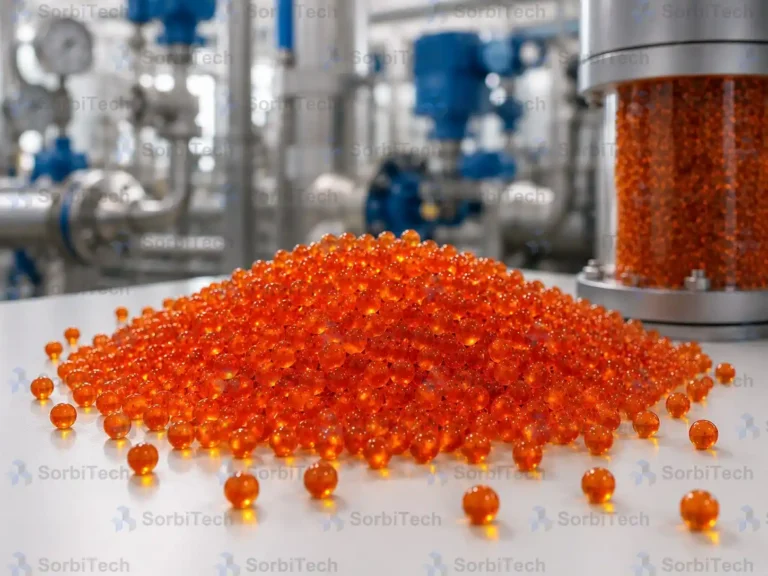
Silica Gel Orange
- Water cap.
- ≥ 30 percent at 80 percent RH %
- BET surface
- 650–800 m²/g
- Form
- 2–5 mm beads
- Bulk density
- 0.72–0.78 g/ml
Cobalt free indicating silica gel for REACH compliant transformer breathers and packaged goods desiccation.
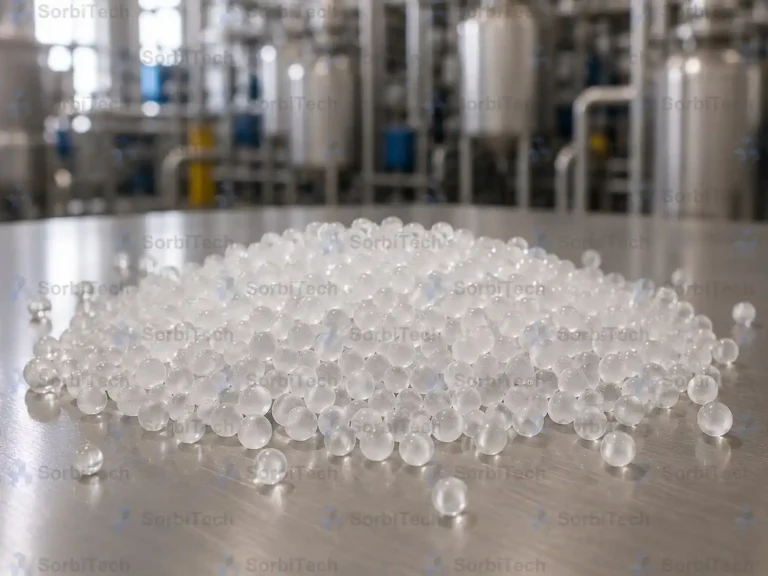
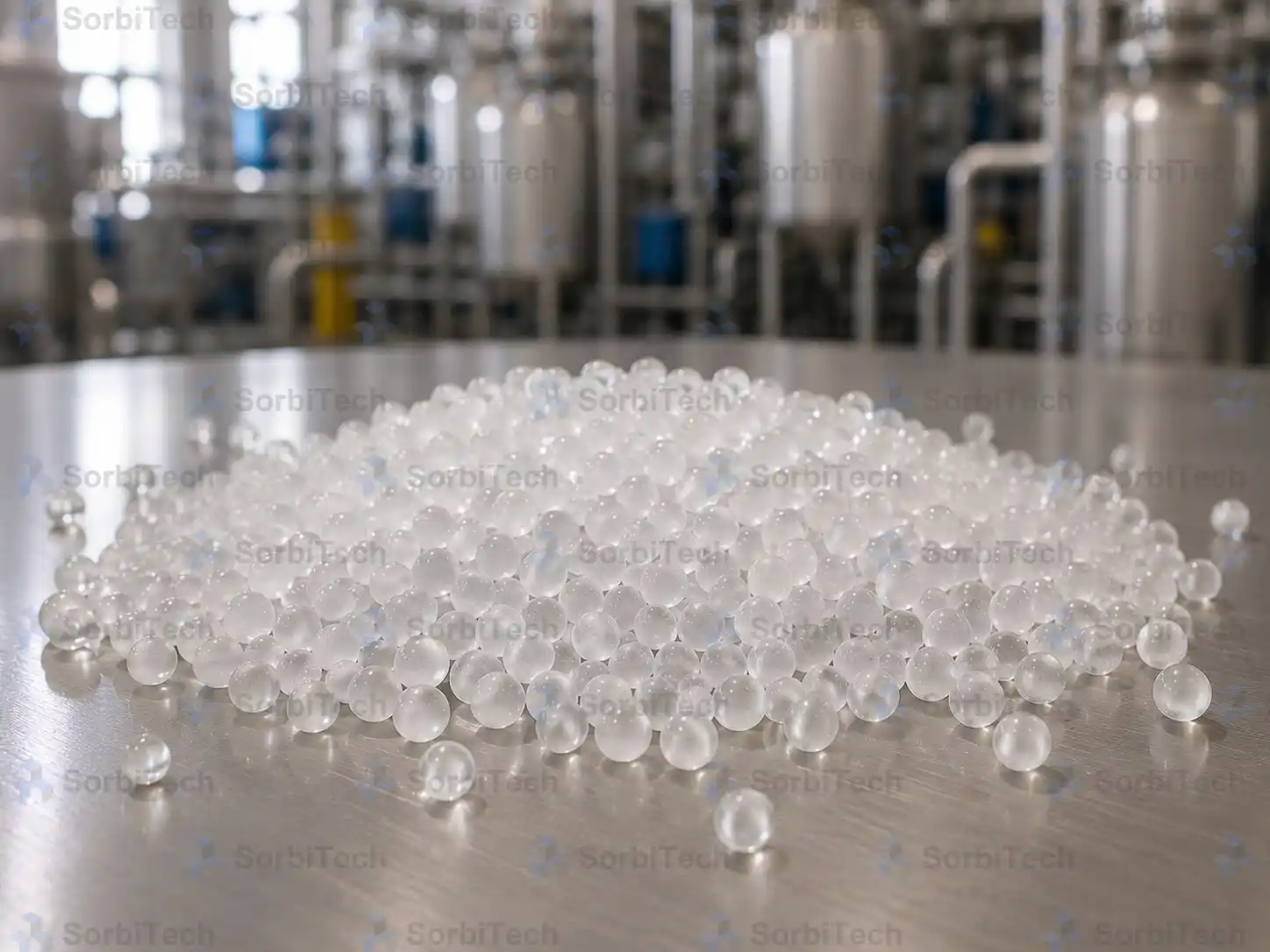
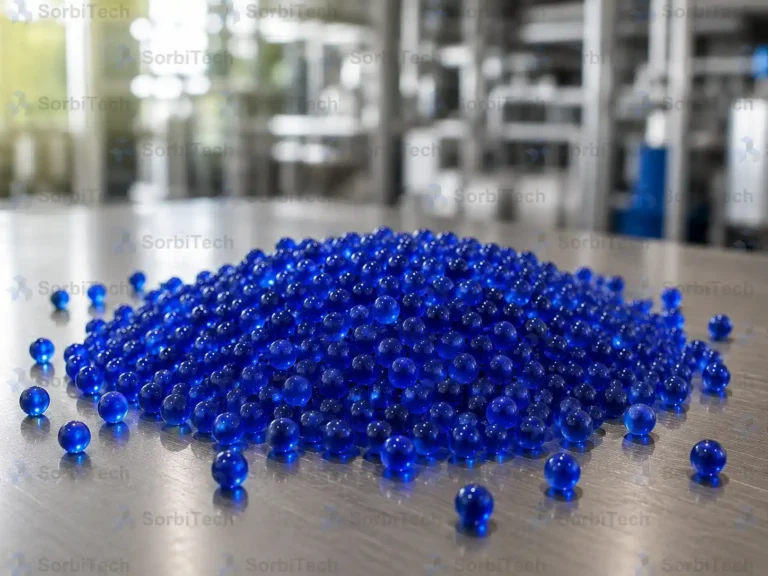
The silica gel range covers three indicator chemistries on a single amorphous silicon dioxide carrier. White silica gel for industrial drying without colour change. Blue indicating silica gel impregnated with cobalt chloride, blue when dry and pink when saturated. Orange indicating silica gel impregnated with methyl violet, orange when dry and green when saturated. The orange variant is the cobalt free option preferred for European and pharmaceutical service.
Manufacturing uses sulfuric acid neutralisation of sodium silicate, controlled gel ageing, washing, drying, and sieving to the target particle distribution. The pore structure is set during gel ageing and confirmed by water vapour isotherm. Each lot is sampled for water capacity at 20 °C and 60 percent relative humidity, attrition loss, and bulk density before release.
In service the silica gel bed is the soft drying option, with capacity that ramps linearly with relative humidity and not with absolute water concentration. Regeneration is mild, between 120 and 180 °C, suitable for waste heat recovery and energy efficient dryer designs. The bed survives multiple cycles without loss of capacity if the regeneration temperature is held below 200 °C.
Capacity ramps steeply between 30 and 60 percent relative humidity, then saturates. The bed is sized by inlet humidity, not by outlet specification alone.
Adsorption on silica gel proceeds by capillary condensation of water inside the gel pore network. The pore distribution is centred around 22 to 26 Å with a narrow spread, giving an adsorption isotherm that ramps steeply between 30 and 60 percent relative humidity. Below 20 percent the capacity is modest. Above 70 percent the capacity saturates around 38 to 42 percent by weight.
The mechanism explains the design rules for the dryer. Silica gel suits duties where the inlet humidity is high and the outlet specification is mild, such as instrument air drying to a pressure dew point above minus 40 °C. For deep drying below this dew point the equilibrium limit of silica gel is reached and molecular sieve becomes the correct choice.
The silica gel range is produced by SorbiTech by acid neutralisation of sodium silicate. Sulfuric acid is added to the silicate solution at controlled rate and temperature, precipitating amorphous silicic acid gel. The gel is aged in the mother liquor under controlled conditions to develop the target pore size distribution.
After ageing the gel is washed, dried at 110 to 150 °C, and screened to the bead or granular cut. The white grade ships as the base product. The blue indicating grade carries a cobalt chloride impregnation. The orange indicating grade carries a methyl violet impregnation for cobalt free service. Every lot is sampled at the QC laboratory for water capacity at 20 °C and 60 percent relative humidity, attrition loss, and bulk density.
Each grade is a defined product with its own technical data sheet, certificate of analysis, and engineering selection guidance. Open a grade for the full specification, applications, and lifecycle service notes.
Cobalt free indicating silica gel for REACH compliant transformer breathers and packaged goods desiccation.
Non indicating amorphous silica desiccant for compressed air drying and bulk packaged goods desiccation.
Cobalt chloride indicating silica gel for transformer breathers and visual moisture monitoring.
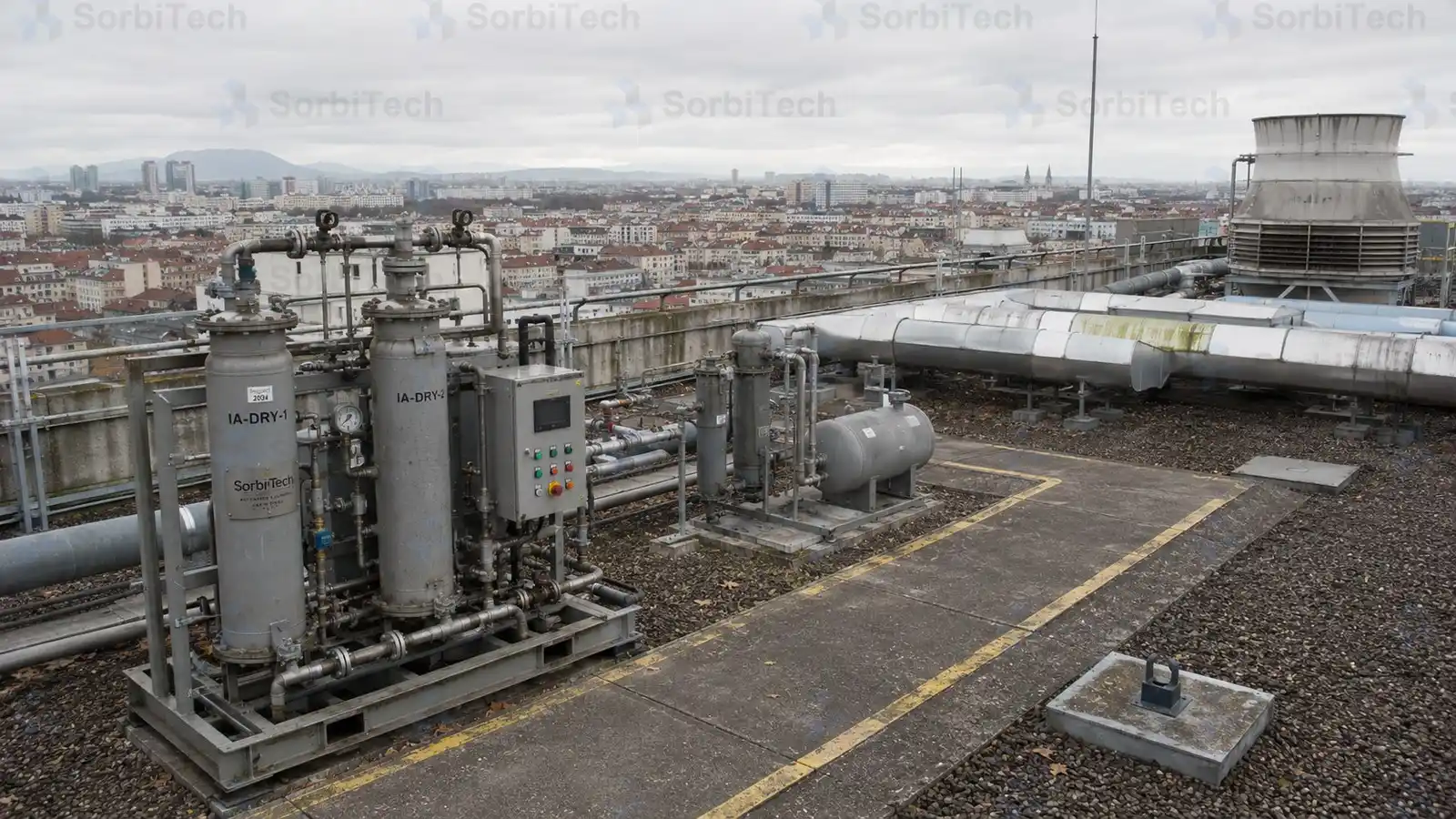
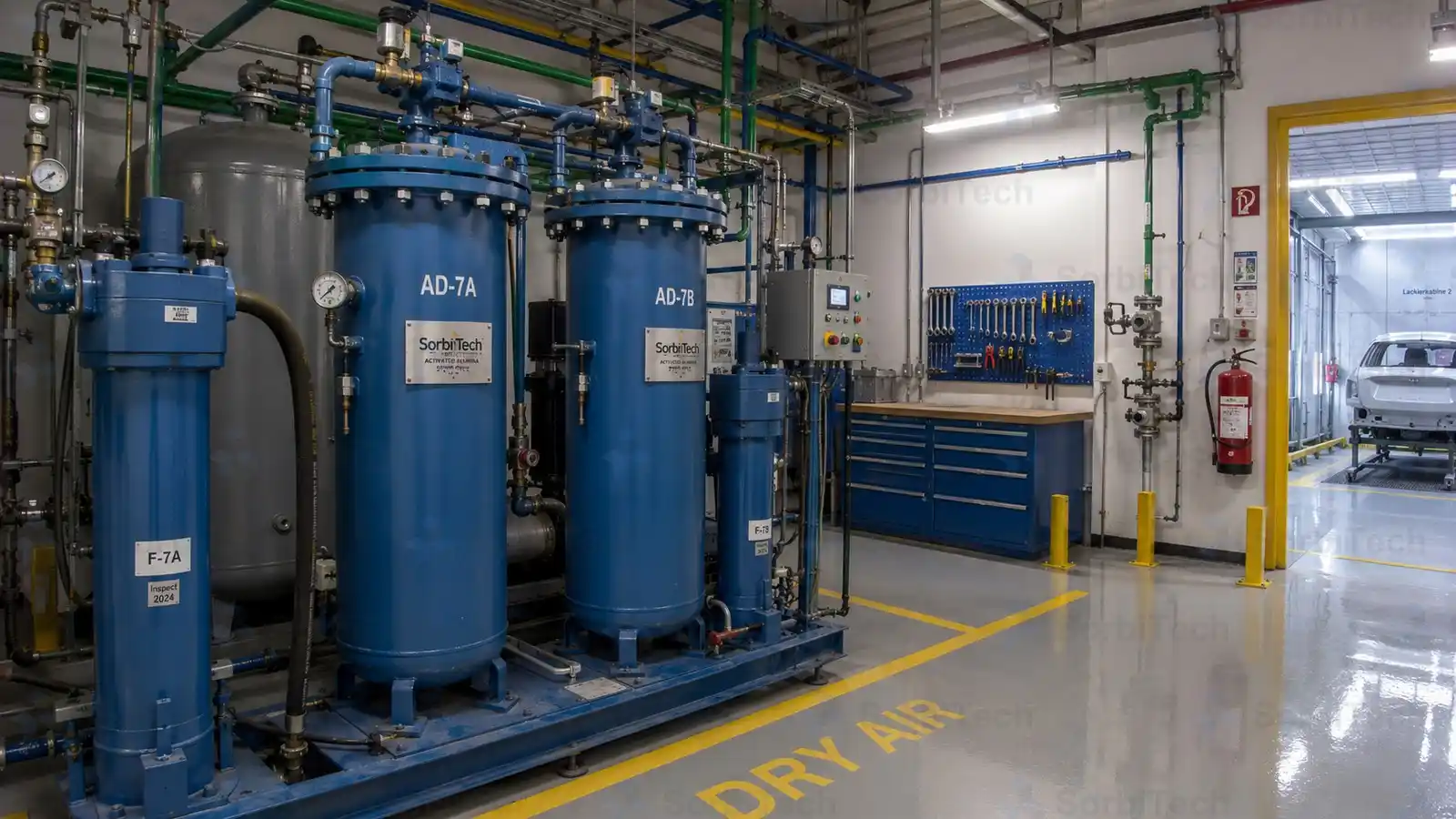
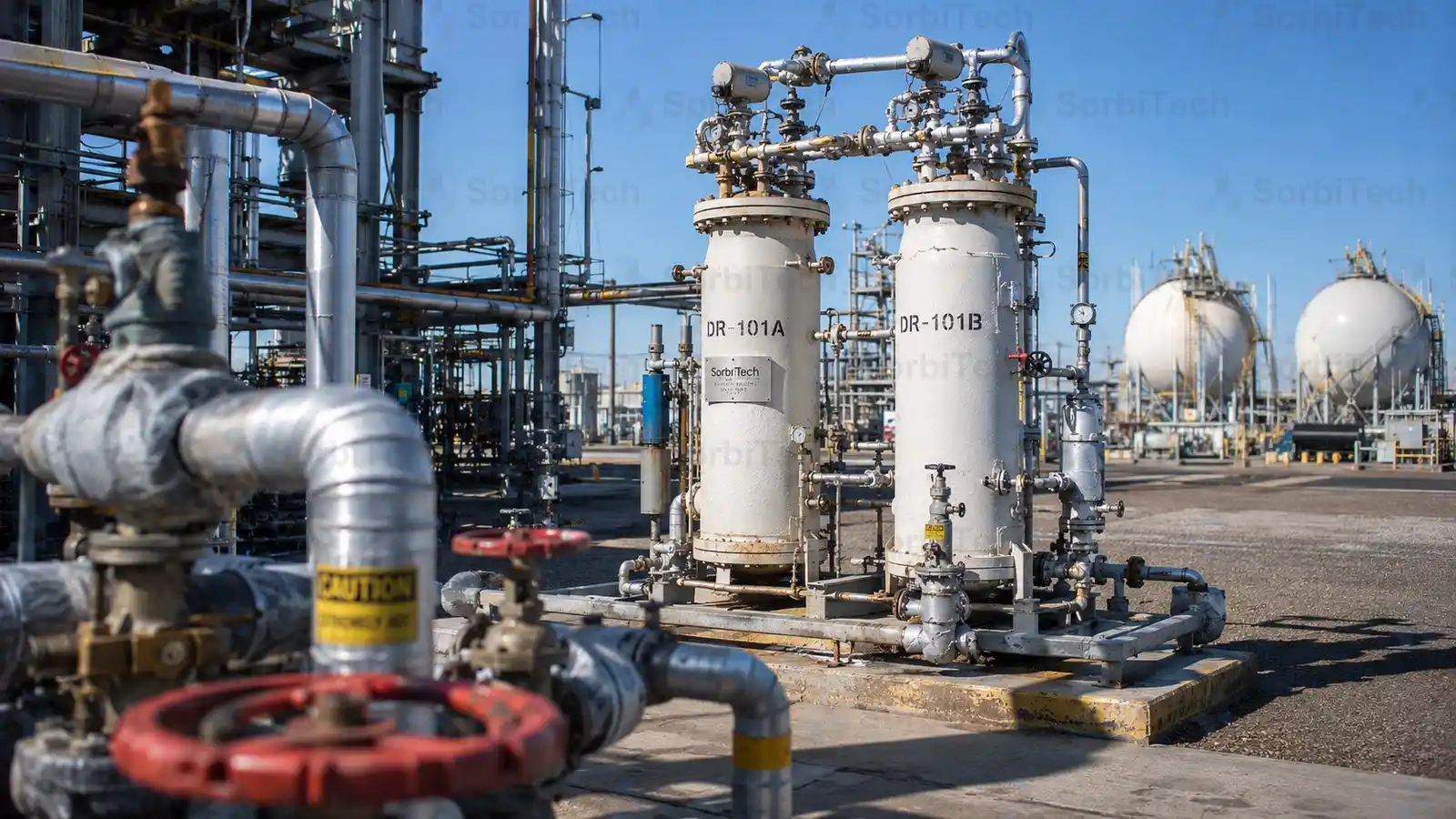
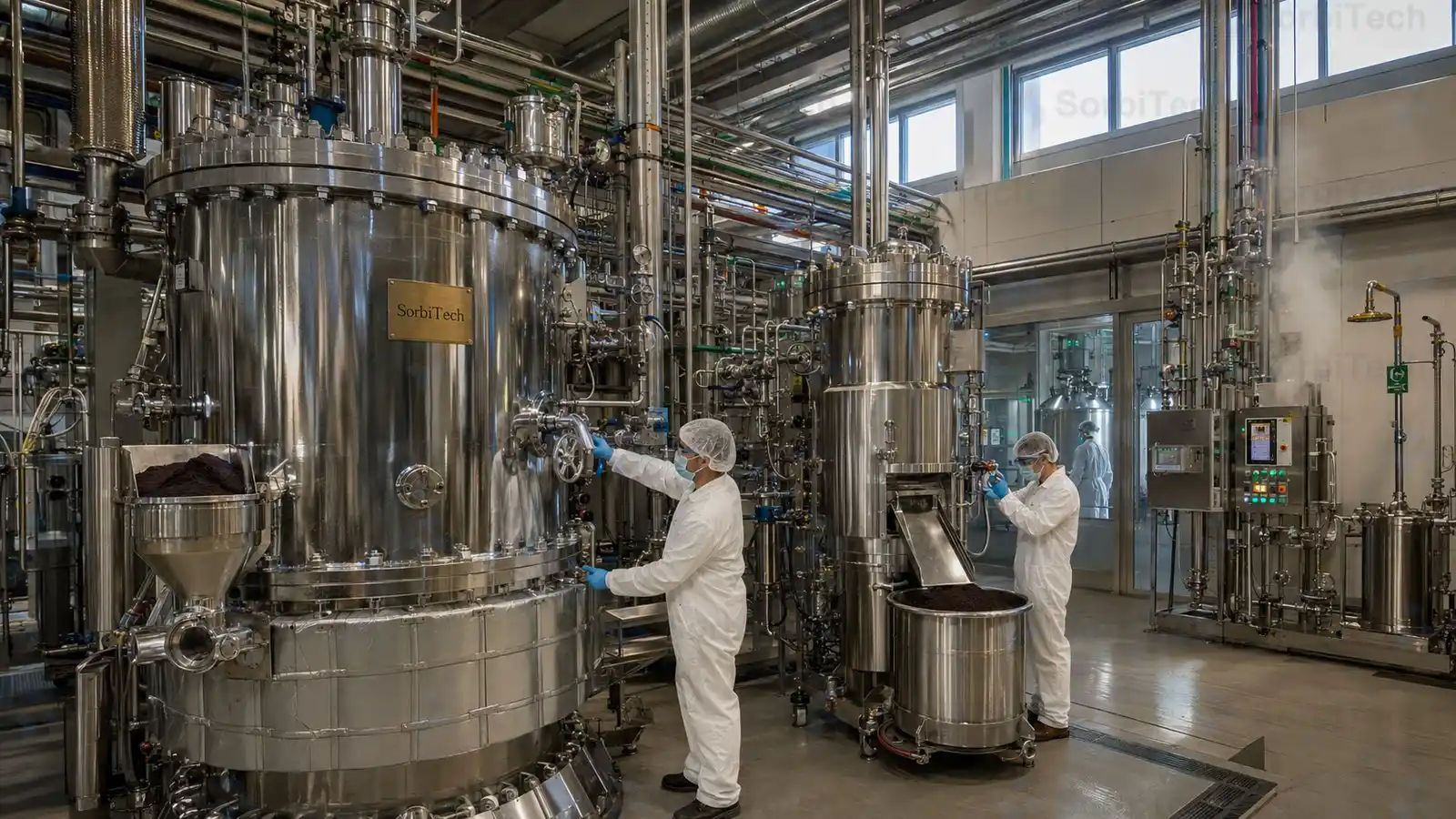
Representative process applications where the SorbiTech engineering team has scoped, sized, or supplied the bed. Each tile links to the full application page.
The SorbiTech group covers media supply, engineering design, lifecycle service, and quality documentation under a single accountability. The bead and the bed are one decision.
The grade shipped is the grade engineered into the vessel design. SorbiTech designs the dryer, sizes the bed, and supplies the media as one decision.
Every shipment ships with a certificate of analysis covering iodine number, water capacity, crush strength, attrition loss, and bulk density measured against the lot.
The bed is supported through its service life. Field sampling, performance audit, reactivation logistics, and end of life return are covered under one service agreement.
Process engineers, mechanical designers, and lifecycle specialists work the same project. The recommendation closes against duty data, not against a catalogue page.
Starting point for grade selection. The final specification is closed out after the SorbiTech engineering team receives duty data, inlet composition, and the target outlet condition.
Choose silica gel when the inlet humidity is high, the outlet dew point requirement is mild, and the regeneration energy budget is tight. Choose molecular sieve when the outlet dew point requirement is below minus 40 °C or when the inlet humidity is so low that silica gel capacity falls off the isotherm.
Cobalt chloride blue indicator is restricted in some jurisdictions because cobalt is classed as a category 1B carcinogen. Methyl violet orange indicator is the cobalt free alternative and is the preferred chemistry for European, pharmaceutical, and food adjacent service.
120 to 180 °C for full water release without damage to the gel structure. Below 120 °C the regeneration is incomplete. Above 200 °C the surface area degrades and the working capacity falls. A dryer designed for waste heat regeneration sits comfortably in this window.
Around 8 to 12 percent by weight at 20 percent relative humidity and 25 °C. Capacity ramps steeply through the middle of the isotherm and saturates at 38 to 42 percent above 70 percent relative humidity. Bed sizing should use the inlet humidity not the outlet humidity.
Indicator chemistries restore their dry colour on regeneration at 120 to 150 °C. The colour change is reversible across many cycles. End of life is reached when the gel no longer fully returns to the dry colour after regeneration, signalling pore structure damage.
Submit process duty data and receive a written recommendation with grade, sizing, packaging, and lead time.
Tell us briefly what you need. Our technical team responds within one business day.
Request the TDS / datasheet. We send it on email after a brief review.