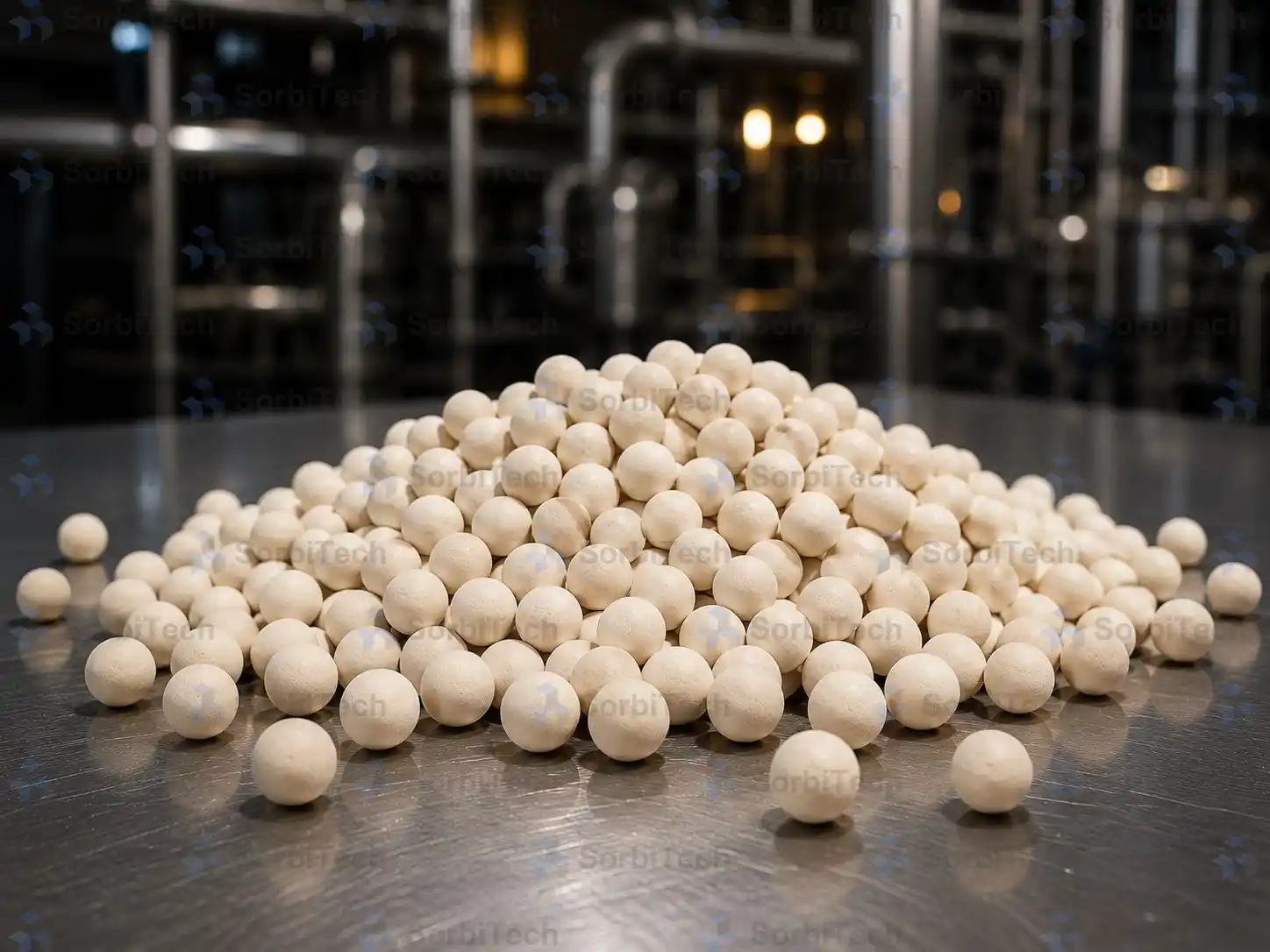
Activated Alumina Impregnated
- BET surface
- 280–340 m²/g
- Form
- 3–5 mm spheres · 1.6–3.2 mm spheres
- Crush
- ≥ 120 (per sphere) N
- Bulk density
- 0.75–0.85 g/ml
Promoter loaded activated alumina for hydrogen sulphide, chloride, and Claus tail gas guard duty.
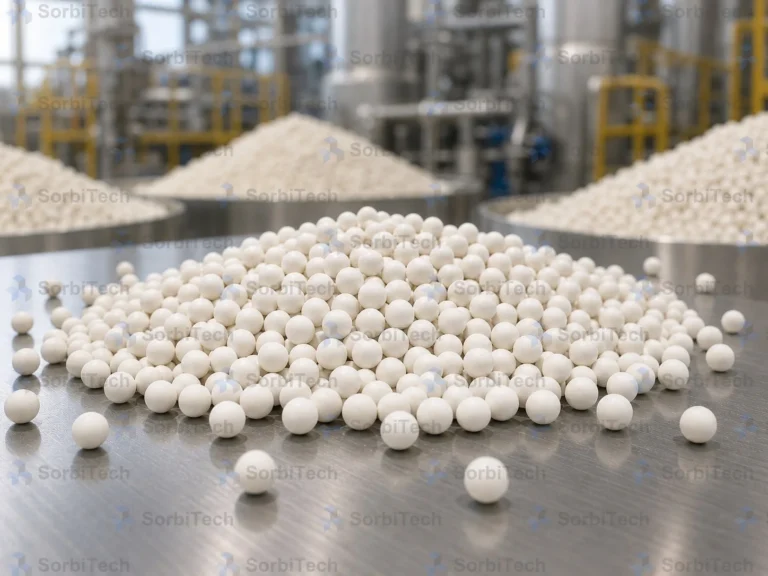
The activated alumina range covers three application driven grades on a single gibbsite derived precursor. The standard drying grade for compressed air and gas dehydration. The defluoridation grade with controlled chemistry for fluoride uptake in drinking water service. The impregnated grade with caustic or acid loading for hydrogen sulphide, hydrogen fluoride, and arsine removal from gas streams.
Manufacturing uses controlled calcination of aluminium trihydrate to produce the activated transitional aluminas with surface area between 320 and 360 square metres per gram. Beading or pelletisation, screening, and packing follow. Every lot is sampled for crush strength, attrition loss, water capacity, and bulk density before release.
In service the activated alumina bed is the high mechanical strength option, with single bead crush strength typically above 160 newtons and attrition loss below 0.3 percent under ASTM D 4058 test. The strength suits deep beds, high velocity dryers, and frequent pressure cycling. Regeneration runs at 200 to 250 °C, between silica gel and molecular sieve on the energy scale.
Physical adsorption for drying duty. Surface hydroxyl exchange for fluoride and hydrogen fluoride. One precursor, two adsorption mechanisms.
For drying duty the activated alumina mechanism is physical adsorption of water on the high surface area pore network, similar to silica gel but with broader pore distribution and higher mechanical strength. The water isotherm ramps less steeply than silica gel, giving lower peak capacity but higher capacity at low relative humidity.
For fluoride and hydrogen fluoride removal the mechanism is chemical, with fluoride ions exchanging onto the surface hydroxyl groups of the aluminium oxide. The defluoridation grade is engineered with controlled surface chemistry for this exchange. Regeneration uses dilute caustic followed by neutralisation, and the bed is returned to service for the next loading cycle.
The activated alumina range is produced by SorbiTech from gibbsite, the aluminium trihydrate precursor. Gibbsite is rapidly heated to 400 to 500 °C in a flash calciner to dehydrate the crystal lattice partially and develop the activated transitional alumina structure. The activated product has surface area between 320 and 360 square metres per gram and a broad pore distribution.
The activated alumina is formed into spherical beads of 3 to 6 mm diameter by rolling. For defluoridation duty the surface chemistry is fine tuned with a controlled rehydration step. For impregnated grades the bead is loaded with caustic or acid in solution and dried. Every lot is sampled at the QC laboratory for crush strength, attrition loss, water capacity, and bulk density.
Each grade is a defined product with its own technical data sheet, certificate of analysis, and engineering selection guidance. Open a grade for the full specification, applications, and lifecycle service notes.
Promoter loaded activated alumina for hydrogen sulphide, chloride, and Claus tail gas guard duty.
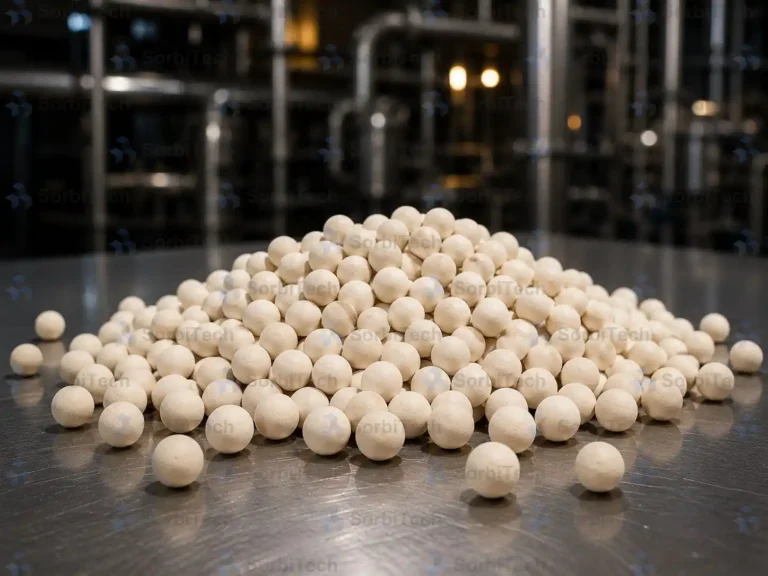
High capacity activated alumina for compressed air dryers, gas dehydration, and heatless desiccant systems.
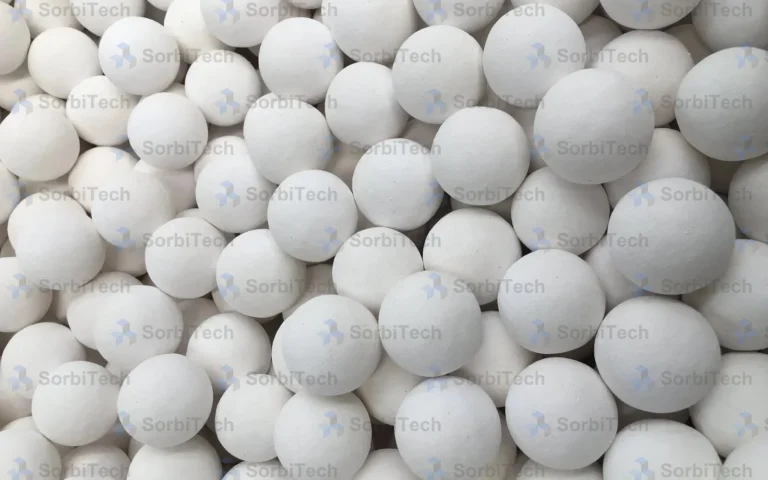
Smooth sphere activated alumina for compressed air and gas drying, fluoride removal, and guard bed duty.
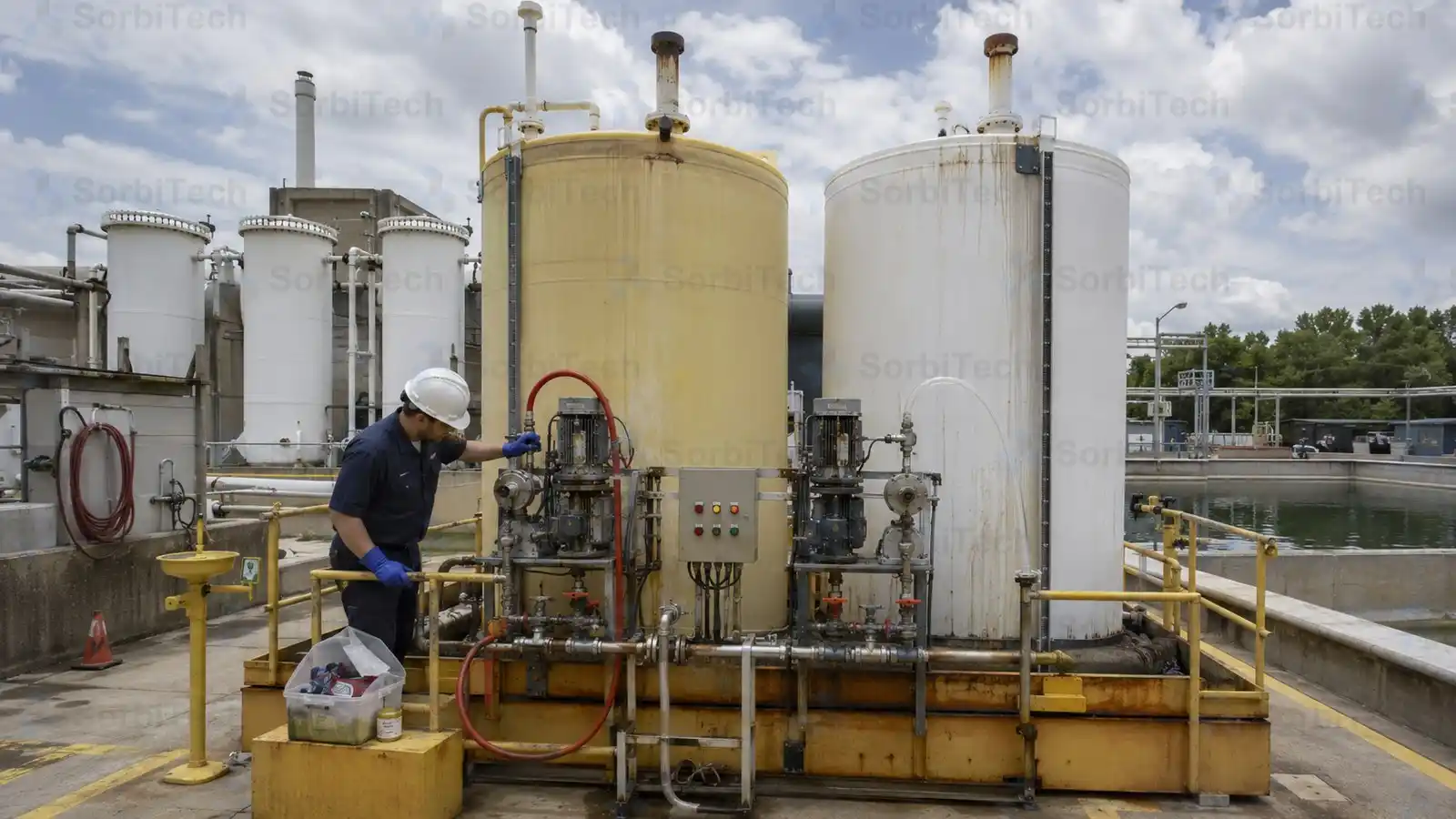
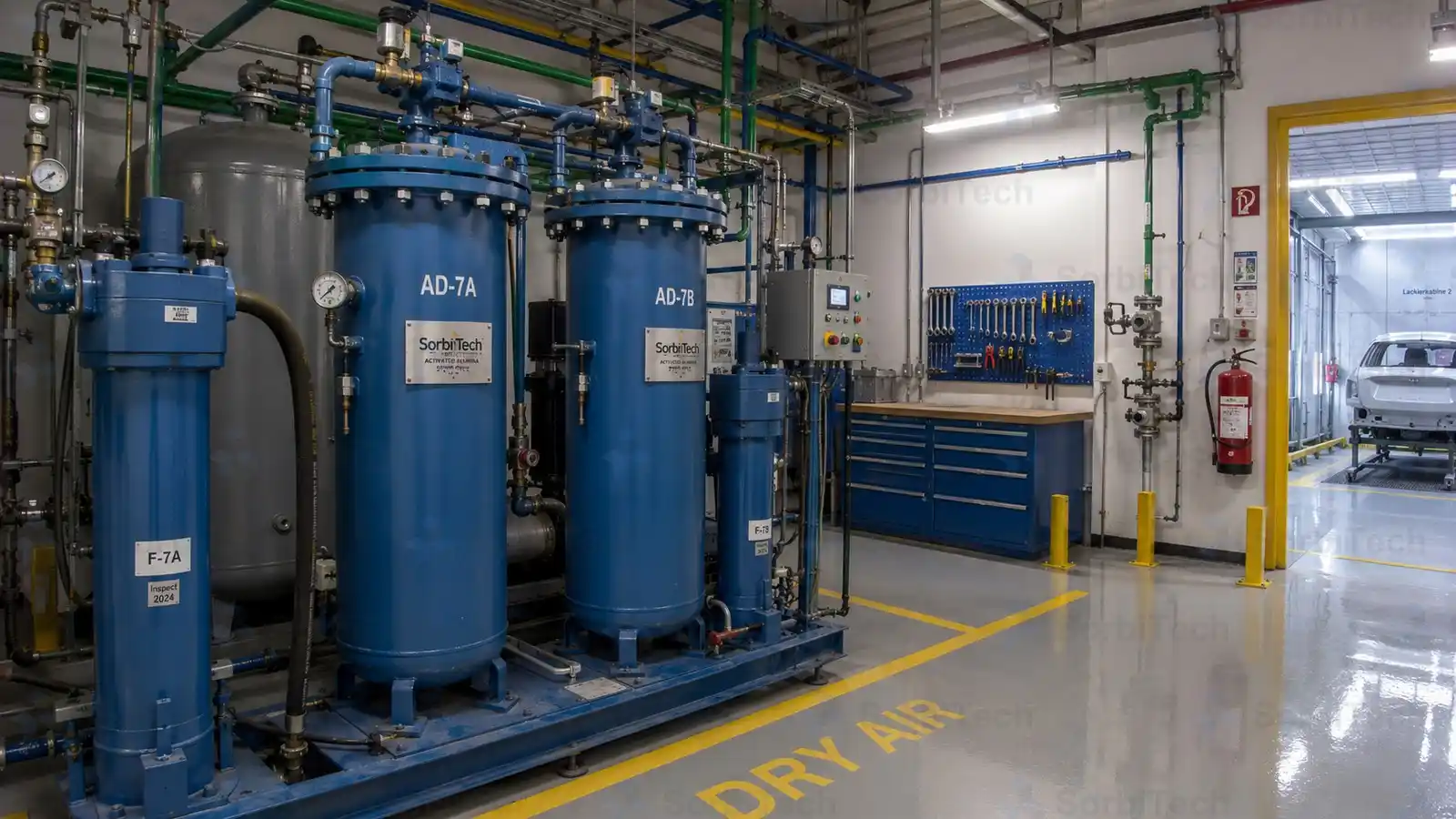
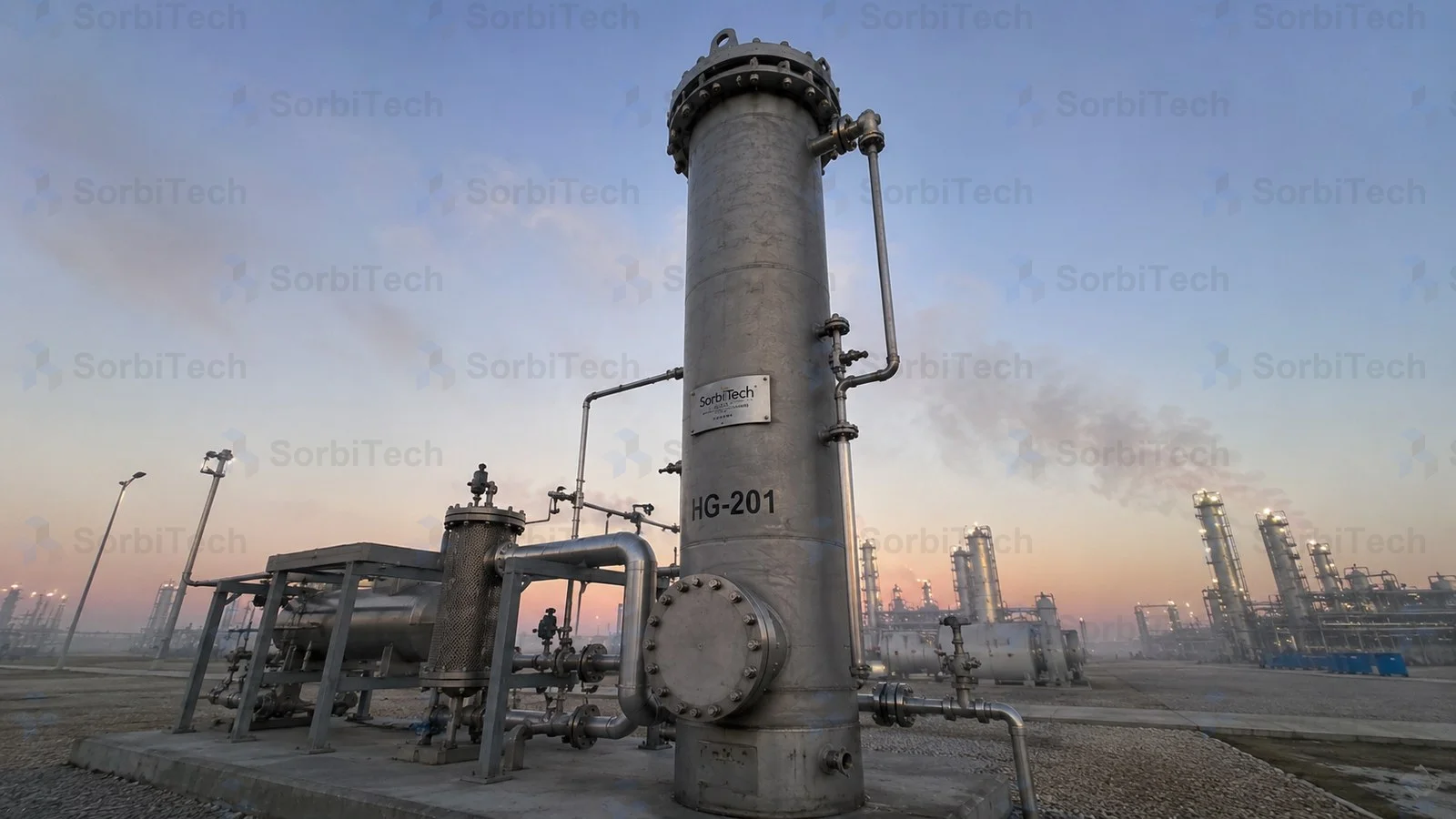
Representative process applications where the SorbiTech engineering team has scoped, sized, or supplied the bed. Each tile links to the full application page.
The SorbiTech group covers media supply, engineering design, lifecycle service, and quality documentation under a single accountability. The bead and the bed are one decision.
The grade shipped is the grade engineered into the vessel design. SorbiTech designs the dryer, sizes the bed, and supplies the media as one decision.
Every shipment ships with a certificate of analysis covering iodine number, water capacity, crush strength, attrition loss, and bulk density measured against the lot.
The bed is supported through its service life. Field sampling, performance audit, reactivation logistics, and end of life return are covered under one service agreement.
Process engineers, mechanical designers, and lifecycle specialists work the same project. The recommendation closes against duty data, not against a catalogue page.
Starting point for grade selection. The final specification is closed out after the SorbiTech engineering team receives duty data, inlet composition, and the target outlet condition.
Choose alumina when the dryer sees high velocity, frequent cycling, or deep bed depth that puts mechanical strength on the critical path. Silica gel has higher peak capacity. Alumina has higher mechanical strength and longer bed life under heavy service.
Backwash with raw water, then a dilute caustic soda solution at 2 to 4 weight percent that displaces the adsorbed fluoride. Neutralisation with dilute mineral acid follows, then a final rinse. The bed is returned to service for the next loading cycle. Typical campaign runs 30 to 60 cycles.
The WHO drinking water guideline for fluoride is 1.5 mg per litre. A correctly sized defluoridation bed delivers an outlet of 0.5 to 1.0 mg per litre during the working cycle, regenerating before the bed breaks through to the guideline value.
No. Caustic and acid impregnated grades are designed for single use polishing duty. The active impregnation is consumed during adsorption and cannot be restored on site. End of life carbon and alumina are returned for disposal in line with hazardous waste regulations.
Single bead crush strength above 160 newtons for the 3 to 6 mm grade. Attrition loss below 0.3 percent under ASTM D 4058 rotating drum test. Both values appear on the certificate of analysis with each shipment.
Submit process duty data and receive a written recommendation with grade, sizing, packaging, and lead time.
Tell us briefly what you need. Our technical team responds within one business day.
Request the TDS / datasheet. We send it on email after a brief review.