
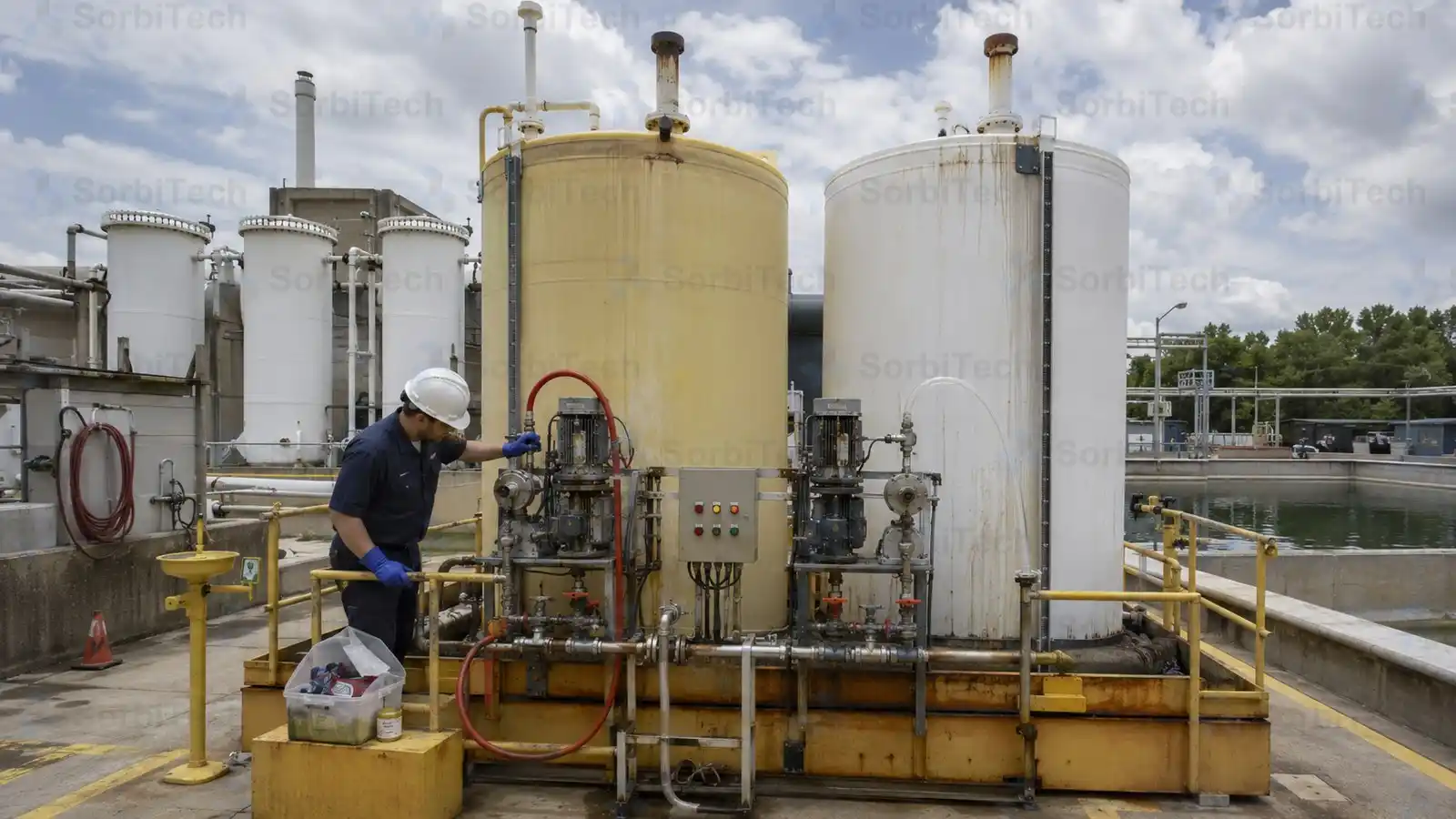
Fluoride Removal from Drinking Water
Reducing fluoride in drinking water to WHO limits using activated alumina adsorption, for municipal and community water supply in affected regions.
Fluoride removal by adsorption passes drinking water through a bed of activated alumina, which adsorbs fluoride ions and reduces concentration to the WHO guideline of 1.5 mg/L. The media is periodically regenerated or replaced, providing a simple, robust solution for affected municipal and community supplies.
Geological Fluoride and Public Health
Natural geological fluoride above the World Health Organisation guideline of 1.5 mg per litre causes dental fluorosis in children and skeletal fluorosis in long term consumers. The condition is irreversible. Affected aquifers run across large parts of East Africa, the Indian subcontinent, parts of China, and several regions of South America, supplying drinking water to communities that cannot afford a complex treatment plant.
The treatment chosen for these communities has to run with limited operator skill, modest civil infrastructure, and a robust supply chain for the active media. SorbiTech delivers activated alumina adsorption, which has met these constraints and been the technology of record in defluoridation programmes since the 1980s.
How Activated Alumina Removes Fluoride
Raw water flows through a fixed bed of activated alumina. The surface hydroxyl sites on the alumina exchange with fluoride ions in the water, binding the fluoride directly to the aluminium and releasing a hydroxyl ion. The water leaves the bed at a fluoride concentration that follows the breakthrough curve, starting near zero and rising slowly as the bed loads.
When the outlet concentration approaches 1.0 mg per litre the bed is regenerated. The bed is washed first with dilute sodium hydroxide to displace the fluoride into the wash water, then neutralised with dilute sulphuric acid to restore the surface hydroxyl chemistry, then rinsed with treated water before being returned to service.
What Sets the Design
The bed size and the change schedule follow the raw water quality and the contracted outlet:
- Raw fluoride concentration: typically 2 to 10 mg per litre in affected aquifers
- Competing ions: sulphate, phosphate, and silicate reduce the effective capacity
- Flow rate and bed depth: empty bed contact time of 5 to 15 minutes
- Contracted outlet: below the WHO guideline of 1.5 mg per litre
- Defluoridation grade SorbiTech AA-201 sized for the duty
- A regeneration or media replacement schedule driven by breakthrough monitoring
Operating Strategy: Regeneration or Replacement
Large municipal plants regenerate on site. The capital is justified by the volume of media in service and by the avoided cost of fresh media. Community scale plants and decentralised units replace the media instead. A 200 to 1,000 litre cartridge holds enough alumina to serve a village for six to eighteen months, and a delivered SorbiTech replacement is cheaper and simpler than running a chemical regeneration in a remote location.
The choice between the two is set by the volume of water treated, the available operator skill, and the distance to a supplier. SorbiTech sizes both options against the same raw water specification and recommends the route with the lower lifecycle cost.
Pretreatment and Bed Protection
A defluoridation bed performs at its rated capacity only when the inlet water is free of suspended solids, residual chlorine, and high concentrations of competing anions. A simple cartridge or sand filter ahead of the alumina bed extends the campaign by 30 to 50 percent by preventing surface fouling and channelling. Where the raw water carries free chlorine from a primary disinfection step, an upstream SorbiTech GAC 1240 guard layer removes the chlorine before it can attack the alumina surface chemistry.
In aquifers with high sulphate or phosphate, those anions compete with fluoride for the surface sites and reduce the working capacity. A pre treatment ion exchange or precipitation step is added in those cases, and the bed sizing is adjusted to the reduced effective capacity.
Monitoring, Reporting, and Operator Training
A defluoridation plant relies on a clear breakthrough monitoring schedule. The recommended routine is a daily field test with a portable ion selective electrode at the bed outlet, a weekly laboratory confirmation against an ion chromatograph, and a monthly mass balance against the inlet flow and concentration. Each result is recorded in a paper or digital logbook for the regulator.
SorbiTech provides the operator training, the monitoring kit, and the regulatory submission template as part of every plant delivery, so the community or utility has the documentation chain that the public health authority requires for ongoing compliance.
Delivery
SorbiTech supplies the duty as media only, as a SorbiTech containerised treatment unit, or as a complete plant delivered by SorbiTech with civil and pipework. Each option is sized for the raw water, the flow demand, and the contracted outlet, and is operated with a breakthrough monitoring schedule that keeps outlet fluoride within the WHO guideline. SorbiTech supplies the duty with the AA-201 defluoridation grade as media only or inside a SorbiTech treatment unit, across the municipal water sector.
Selection Guidance
Use NSF eligible defluoridation grade activated alumina. Size the bed for the raw fluoride level, flow, and target, and plan a regeneration or media replacement schedule based on breakthrough monitoring.
A Specified, Verified Solution
Define the duty
We capture your process conditions: flow, composition, pressure, temperature, and the target outlet specification.
Select media & configuration
Our engineers recommend the adsorbent grade and system type that meet the duty with margin.
Size & engineer
Bed sizing, vessel design, and cycle parameters are engineered to your case and documented for approval.
Commission & verify
We support loading, start up, and performance verification against the guarantee.
Recommended Products & Systems
Adsorbents & Media
-
01
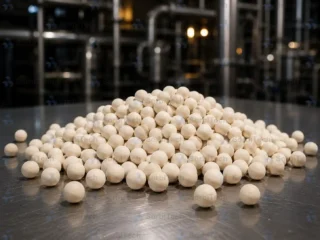 Adsorbent
Activated Alumina AA-201
Smooth sphere activated alumina for compressed air and gas drying, fluoride removal, and guard bed duty.
Water Cap.
≥ 18 %
Adsorbent
Activated Alumina AA-201
Smooth sphere activated alumina for compressed air and gas drying, fluoride removal, and guard bed duty.
Water Cap.
≥ 18 %
-
02
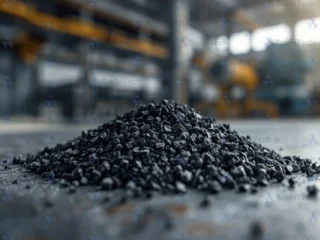 Adsorbent
Activated Carbon GAC 1240
Coal based granular activated carbon for dechlorination, taste and odour, and dissolved organics in water.
Form
12 × 40 US mesh (0.42–1.70 mm)
Adsorbent
Activated Carbon GAC 1240
Coal based granular activated carbon for dechlorination, taste and odour, and dissolved organics in water.
Form
12 × 40 US mesh (0.42–1.70 mm)
-
03
 Adsorbent
Powdered Activated Carbon
Fine powder carbon for slurry dosing in water treatment, sugar decolorization, pharmaceutical purification, and emergency contamination response.
Form
200×325 mesh (45–75 µm)
Adsorbent
Powdered Activated Carbon
Fine powder carbon for slurry dosing in water treatment, sugar decolorization, pharmaceutical purification, and emergency contamination response.
Form
200×325 mesh (45–75 µm)
Engineered Systems
-
01
 Equipment
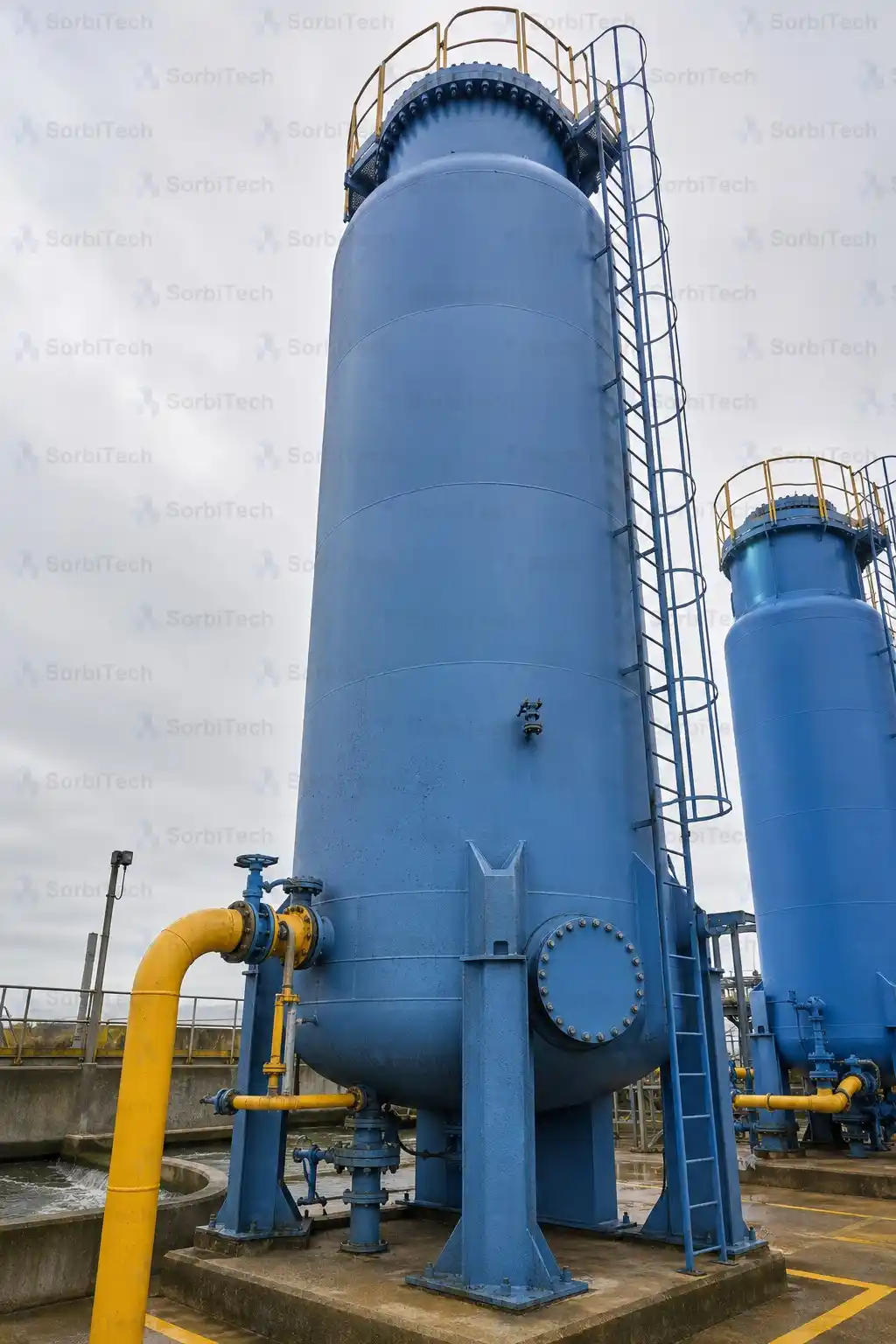
Activated Carbon Water Contactor
Granular activated carbon fixed bed water contactor for dechlorination, taste and odour, dissolved organic carbon, and emerging contaminant polishing in drinking water and process…
Capacity
5–2,000 m³/h
Equipment
Activated Carbon Water Contactor
Granular activated carbon fixed bed water contactor for dechlorination, taste and odour, dissolved organic carbon, and emerging contaminant polishing in drinking water and process…
Capacity
5–2,000 m³/h
-
02
 Equipment
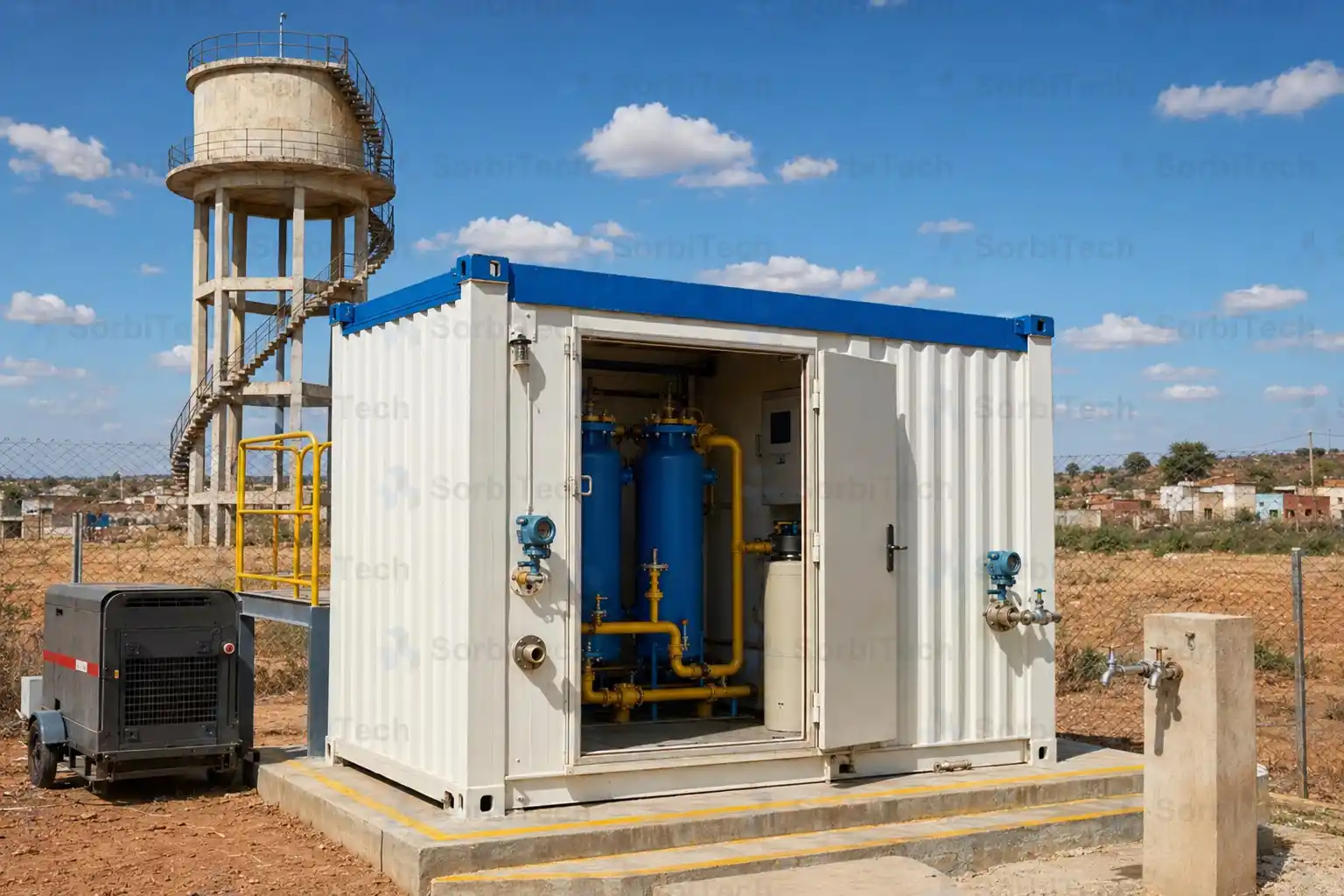
Community Defluoridation Treatment Unit
Containerised activated alumina defluoridation unit for community and decentralised drinking water supply to the WHO guideline of 1.5 mg per litre.
Capacity
0.5–50 m³/h
Equipment
Community Defluoridation Treatment Unit
Containerised activated alumina defluoridation unit for community and decentralised drinking water supply to the WHO guideline of 1.5 mg per litre.
Capacity
0.5–50 m³/h
-
03
 Equipment
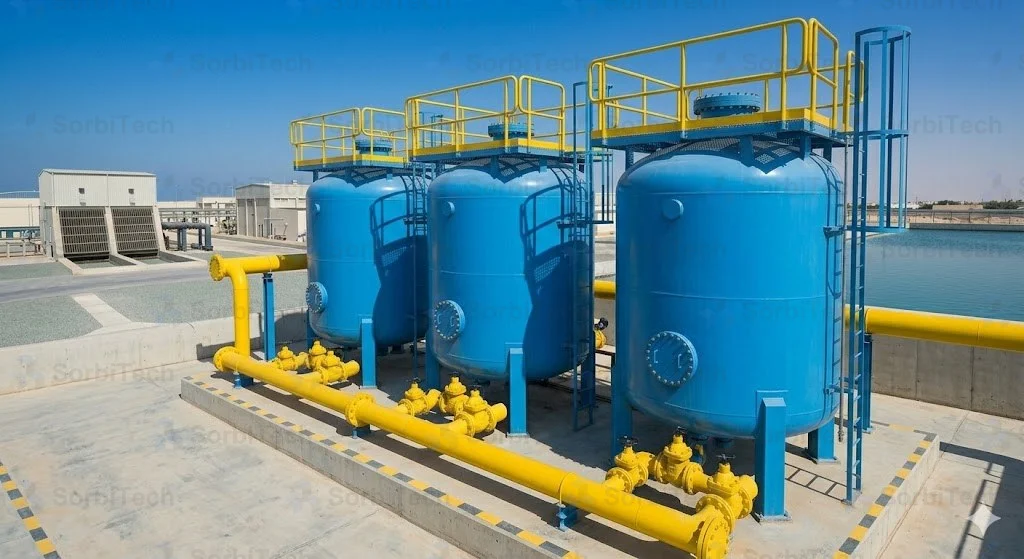
Multi Media Filter
Multi media filter for suspended solids and turbidity removal upstream of activated carbon polishing, reverse osmosis, or process reuse in water treatment trains.
Capacity
5–500 m³/h
Equipment
Multi Media Filter
Multi media filter for suspended solids and turbidity removal upstream of activated carbon polishing, reverse osmosis, or process reuse in water treatment trains.
Capacity
5–500 m³/h
-
04
 Equipment
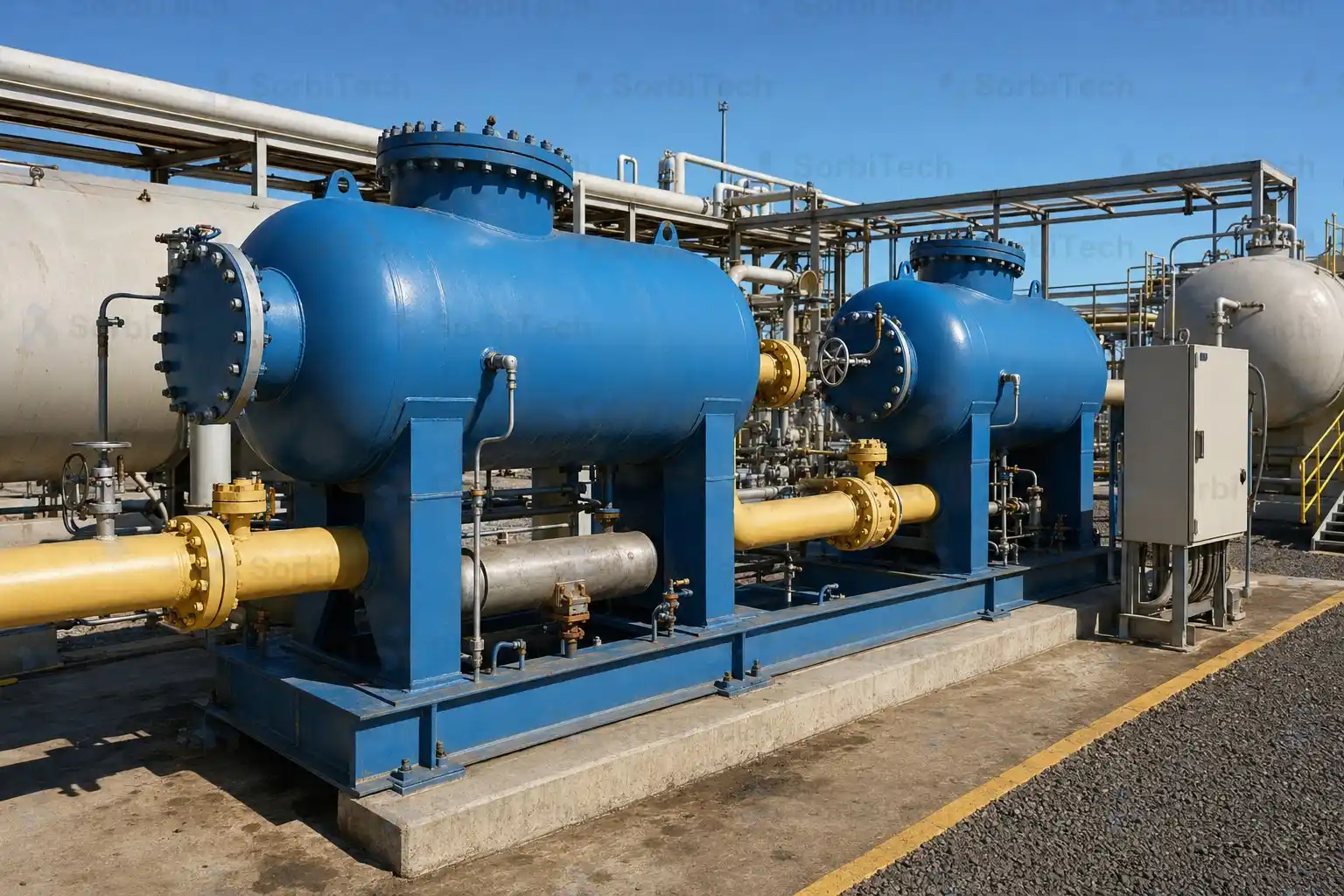
Coalescing Filtration Skid
Two stage coalescer and separator skid that removes fine dispersed hydrocarbons and solids from water down to single digit ppm. It is the polishing…
Capacity
2–200 m³/h
Equipment
Coalescing Filtration Skid
Two stage coalescer and separator skid that removes fine dispersed hydrocarbons and solids from water down to single digit ppm. It is the polishing…
Capacity
2–200 m³/h
Specify a Solution for This Application
Provide your process conditions and our team will recommend the grade, configuration, and sizing.