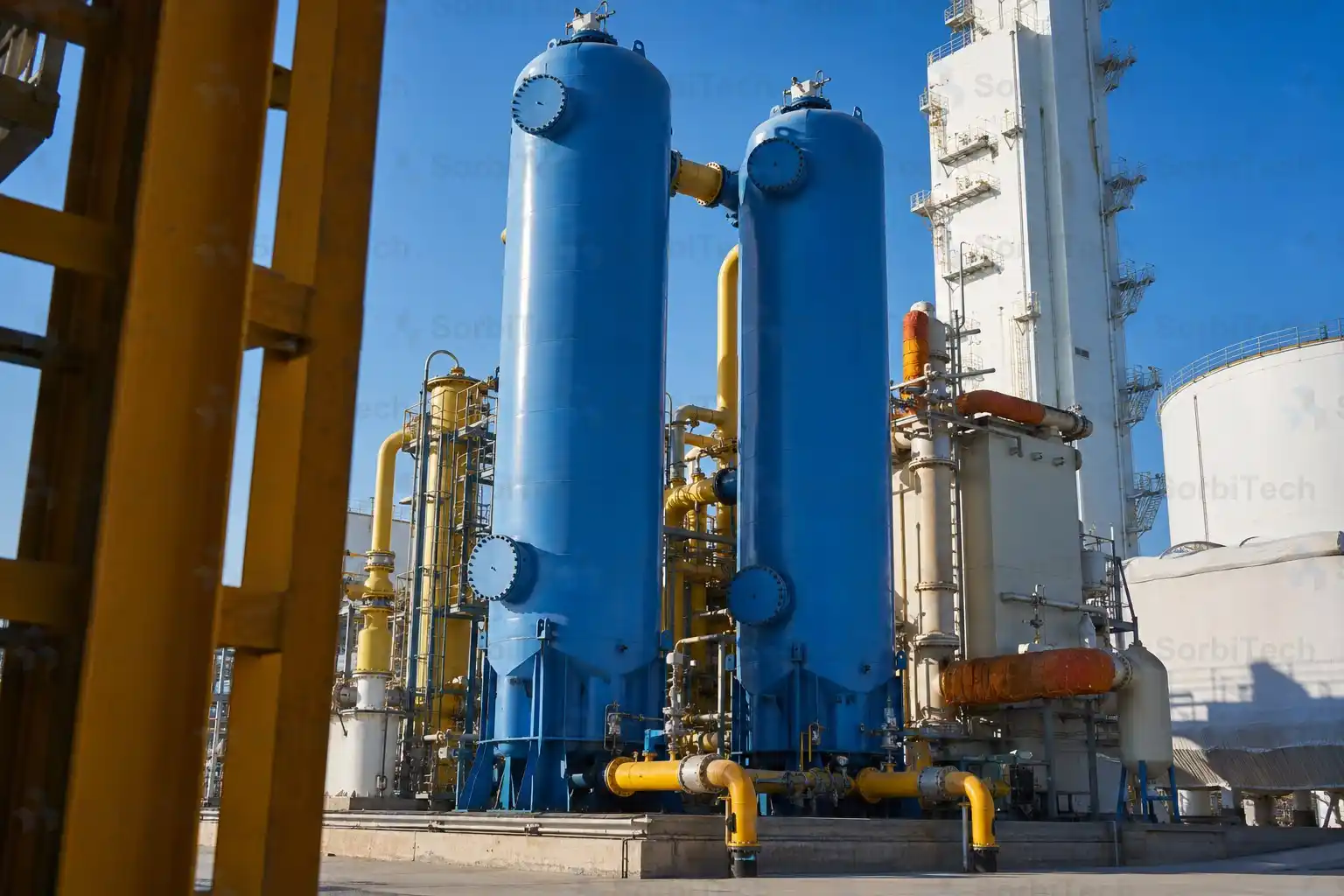
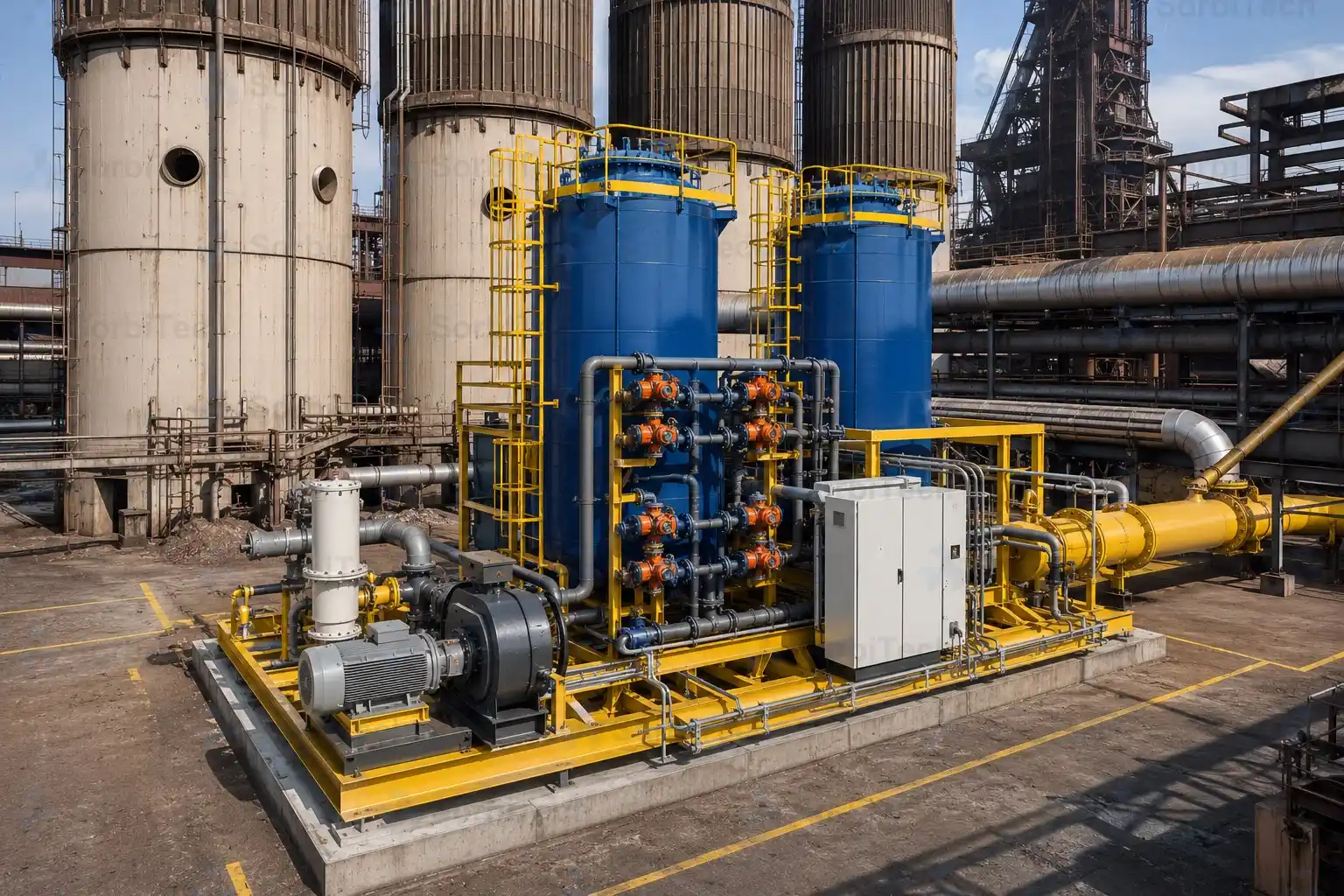
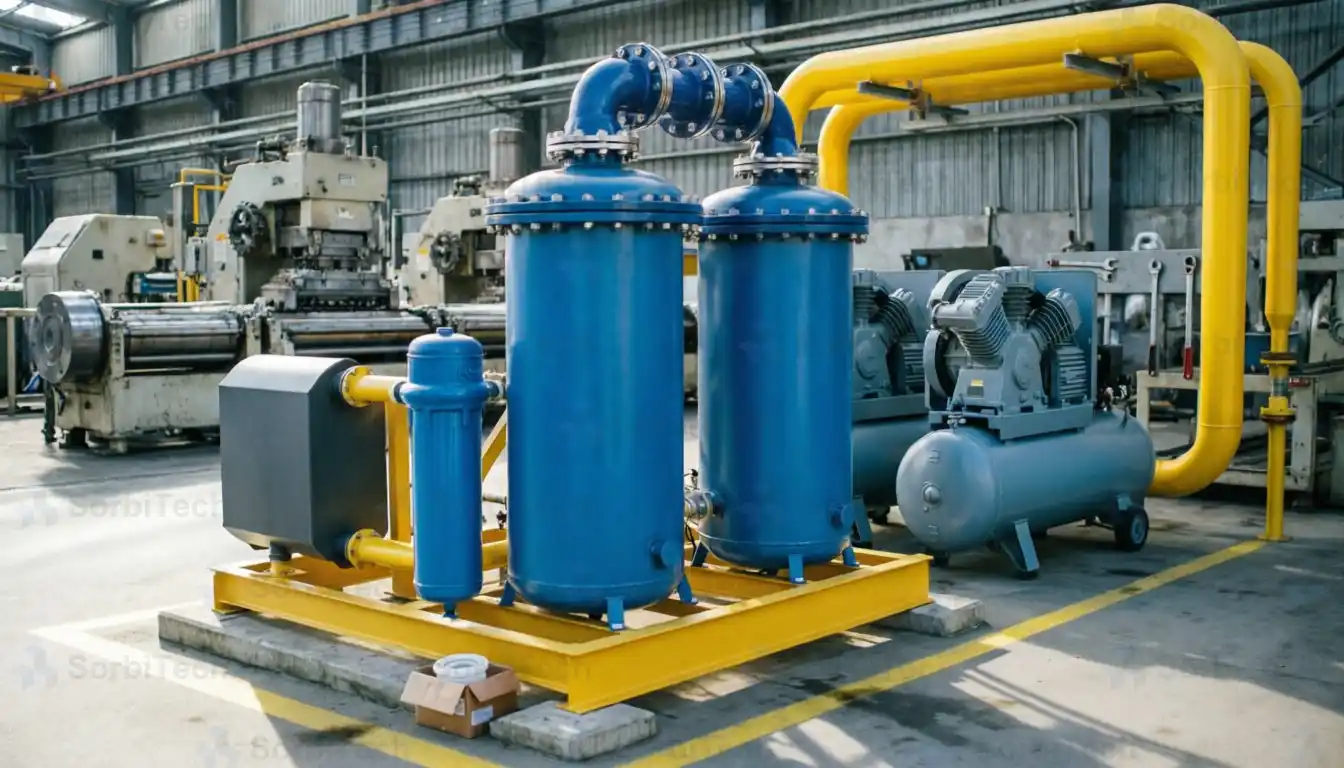
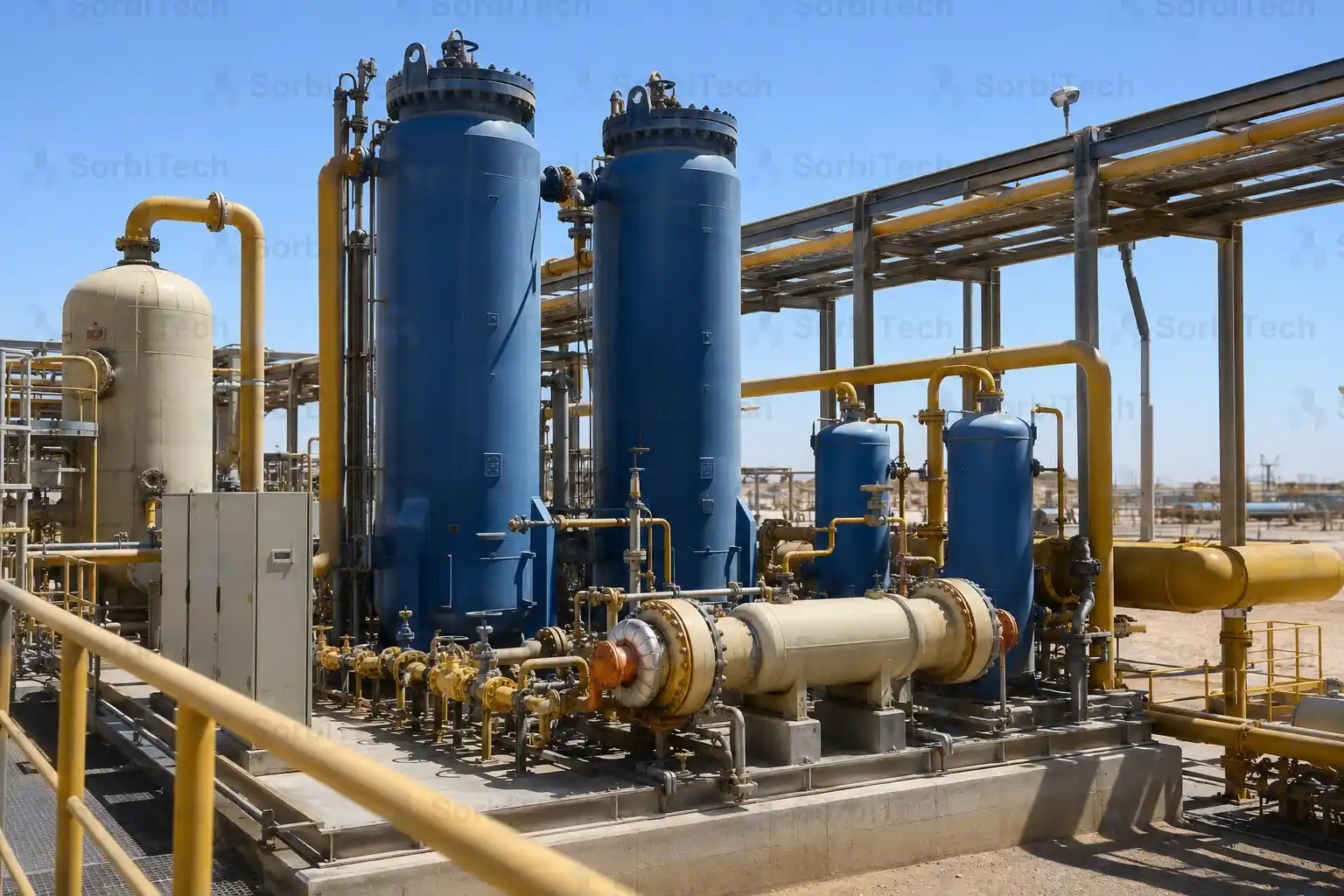
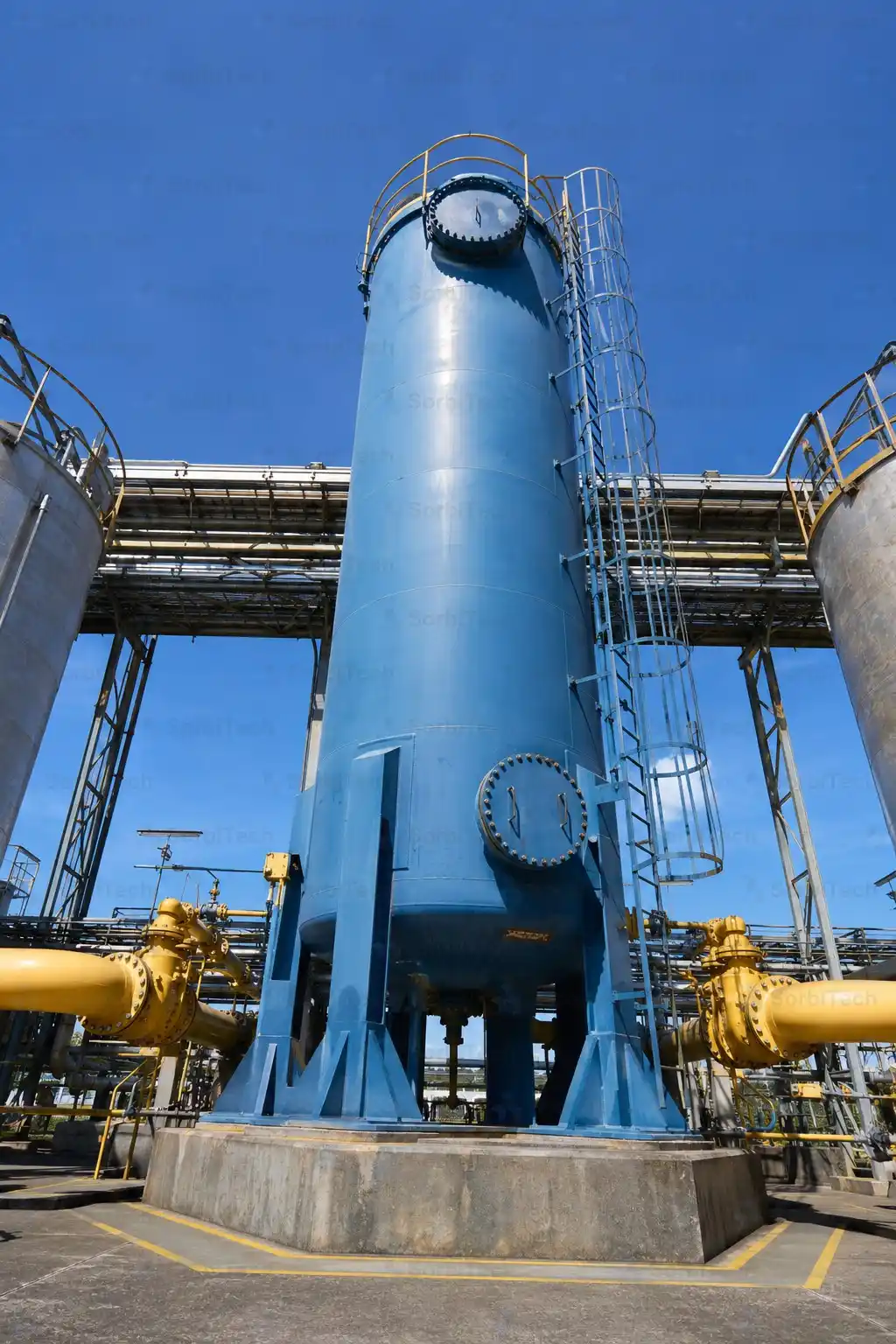
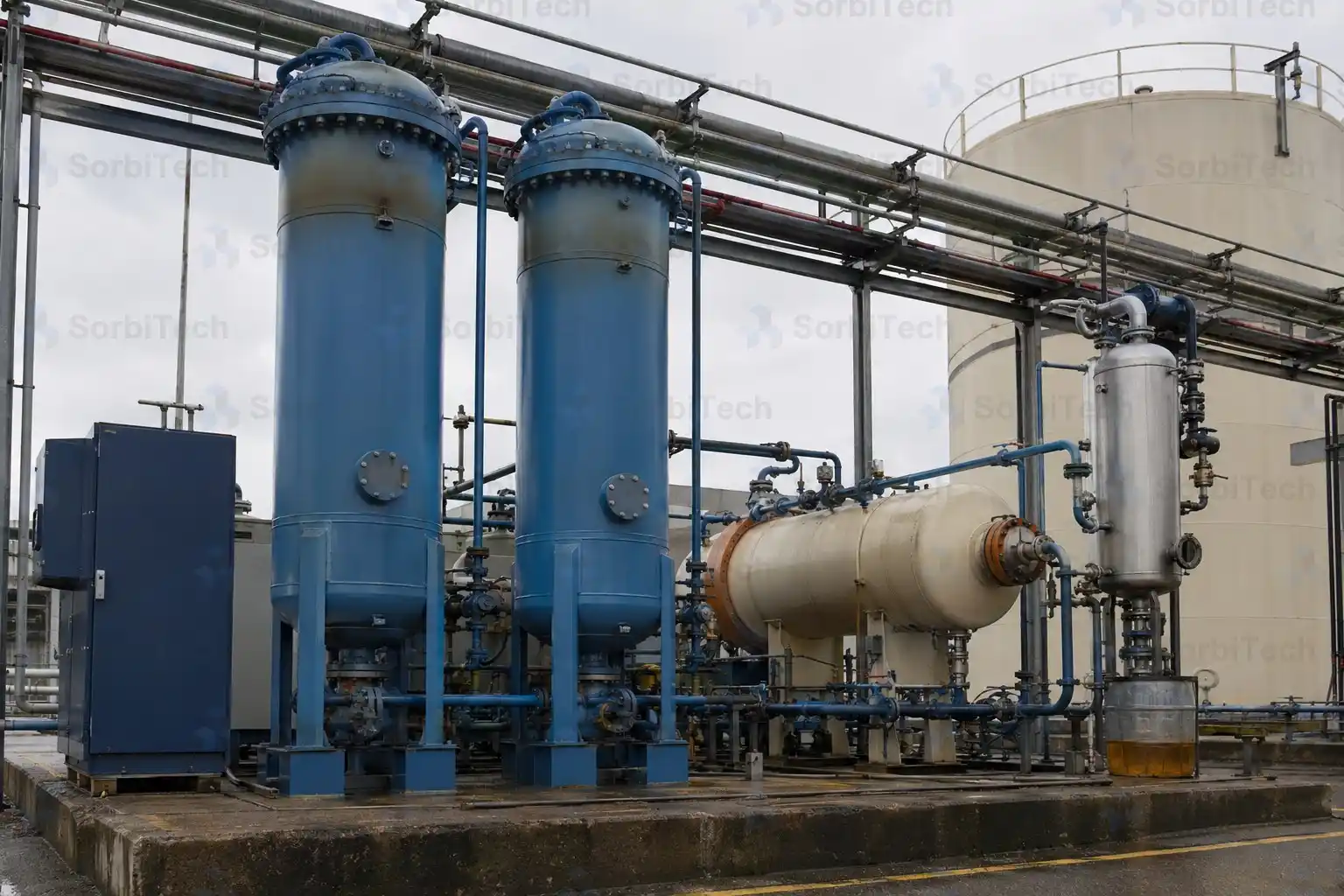
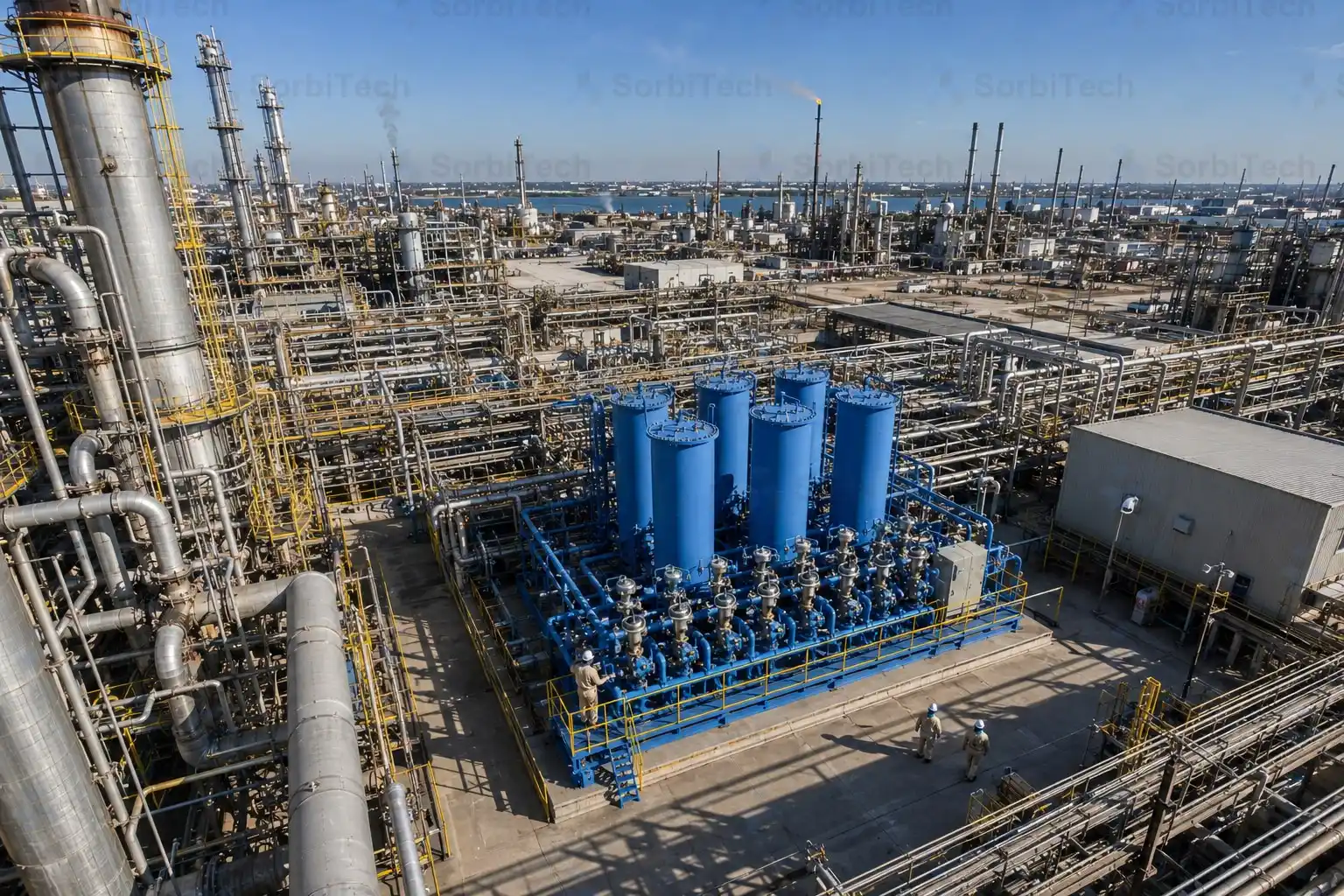
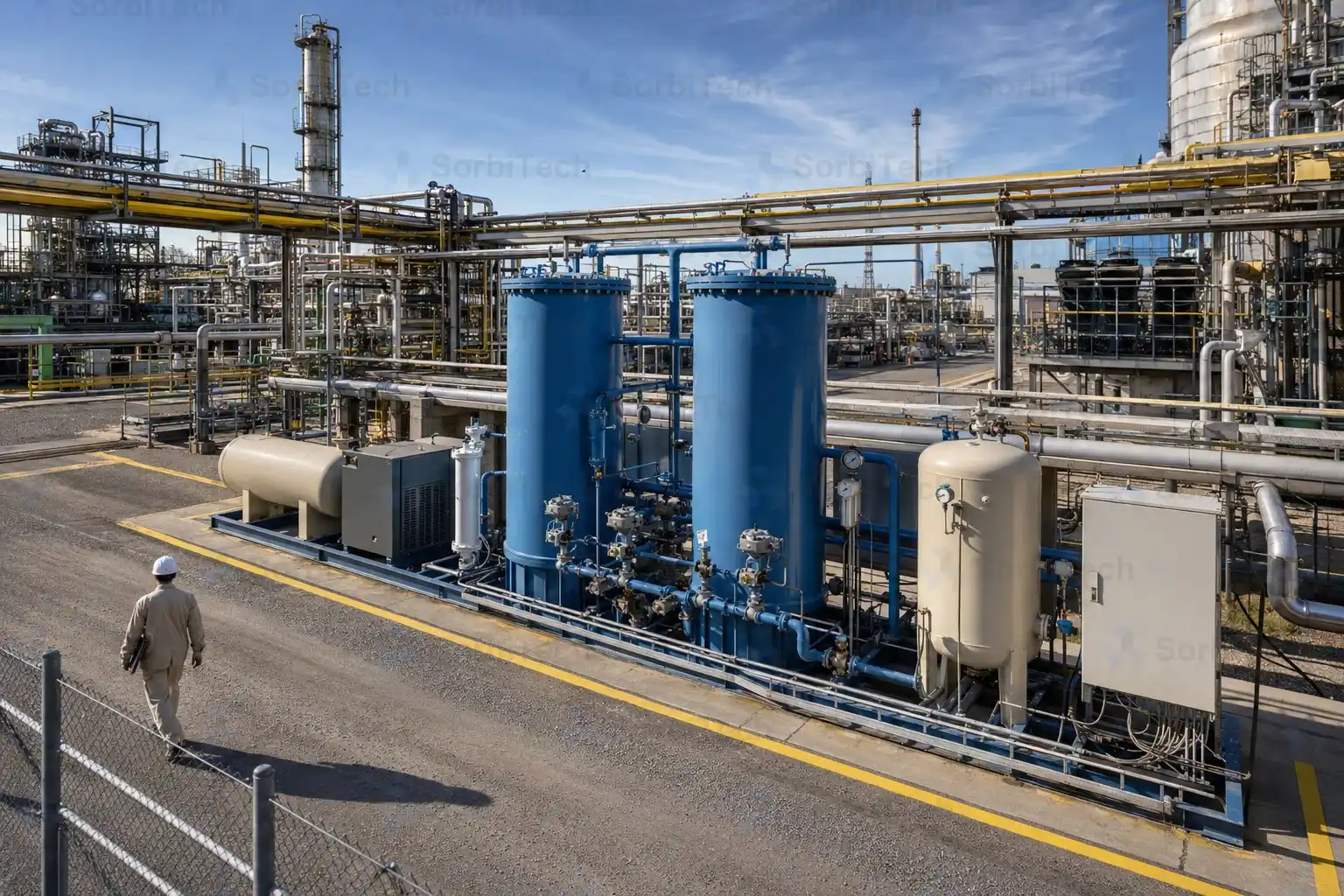
SorbiTech Twin Tower TSA Dehydration Unit Molecular Sieve Natural Gas Dryer
Systems & Equipment

Gas Treatment & Generation

Eleven adsorption packages covering gas dehydration, sweetening, biogas upgrading, nitrogen and oxygen generation, hydrogen purification, and solvent vapour recovery.

Systems 11 packages
Outlet dew point to minus 90 degrees C at line conditions
Cycle types TSA and PSA
Standards ASME VIII, PED, NACE MR0175
Equipment Category · Engineered by SorbiTech

Eleven adsorption packages covering gas dehydration, sweetening, biogas upgrading, nitrogen and oxygen generation, hydrogen purification, and solvent vapour recovery.

TSA and PSA are not variations of the same technology. They are two separate engineering disciplines that use the same class of materials. TSA sizing is governed by the regeneration heat balance: how much energy is needed to strip the loaded bed, how long the bed takes to cool before it returns to adsorption duty, and what fraction of the product gas must be consumed as purge. PSA sizing is governed by the pressure ratio: the difference in equilibrium adsorption capacity between the high adsorption pressure and the low regeneration pressure, and the cycle time required to load and strip the bed within that pressure window.

SorbiTech engineers eleven systems across both cycle types. TSA systems cover natural gas dehydration to pipeline and cryogenic specification, cryogenic ASU air pre purification for simultaneous water and CO2 removal, gas sweetening and H2S guard bed duty, and both heated and heatless compressed air drying. PSA systems cover nitrogen generation from compressed air using carbon molecular sieve, oxygen generation using zeolite, hydrogen purification from refinery off gas using layered beds, biogas upgrading, and solvent vapour recovery from process vent streams.

In every system the adsorbent grade, the bed height, the vessel diameter, the cycle time, and the valve sequence are calculated together. SorbiTech does not adapt a standard vessel to a new adsorbent without recalculating the cycle balance. The outlet specification is committed at contract against the stated inlet conditions, measured at commissioning, and maintained through the service life by scheduled media activity sampling and cycle adjustment.

Mechanism

TSA loads the adsorbent at process temperature and strips it at 150 to 350 degrees C using a heated purge stream. The regeneration energy balance and the bed cooling time set the cycle length. PSA loads at elevated pressure and strips at low or atmospheric pressure in seconds to minutes at ambient temperature. The pressure ratio and the equilibrium isotherm set the separation efficiency.

8 to 16 hours TSA adsorption period per tower
30 to 60 seconds PSA half cycle on carbon molecular sieve
Process Description

Two Cycle Types, Two Engineering Disciplines

In a TSA system the adsorption phase runs until the bed approaches the design loading. The regeneration phase passes a heated slip stream of dry product gas through the bed in the reverse direction. The temperature front propagates through the bed, desorbing the loaded species. The required purge temperature, typically 200 to 350 degrees C depending on the adsorbent and the species loaded, is calculated from the desorption isotherm and the mass of adsorbed material. A cooling phase follows before the bed returns to adsorption. The cycle time, typically 8 to 16 hours per tower, is set by the thermal time constants of the bed.

In a PSA system the thermal mass of the bed is irrelevant because the temperature does not change. The cycle time is governed by the kinetics of adsorption and desorption at the two operating pressures. Carbon molecular sieve for nitrogen generation selectively adsorbs oxygen from compressed air at the high operating pressure in 30 to 60 seconds. Depressurisation and purge at low pressure strip the oxygen in the next 30 to 60 seconds. The two towers operate in antiphase so the product outlet is continuous. Zeolite 13X layered with activated alumina in an ASU pre purifier removes water and CO2 simultaneously because each adsorbent addresses its target species without interference from the other.

SorbiTech PSA Nitrogen Generation Package on Site Nitrogen CMS Pressure Swing
SorbiTech Delivery
Engineering & Delivery

Factory Acceptance Test Verifies the Full Cycle Before Shipment

Every SorbiTech gas treatment system completes a factory acceptance test at the fabrication facility. The valve sequence is cycled through each step and the transition timing is confirmed against the PLC programme. For TSA systems, the heater duty and the outlet condition at simulated inlet loading are recorded. For PSA systems, the product purity at the rated cycle frequency is measured by the outlet analyser and the divert valve response is confirmed against the alarm setpoint.

Long lead procurement items are identified at the engineering review and ordered in parallel with detailed mechanical design. The pressure vessel, the adsorbent charge, and the programmable controller are the typical long lead items. Running procurement in parallel compresses the delivery schedule. The same project engineer who approved the process design is responsible for the factory acceptance test and for the site commissioning.

Engineered Systems

Systems in this category

Each system page carries the duty specification, the media grade, the vessel configuration, and the engineering selection guidance for that equipment type.

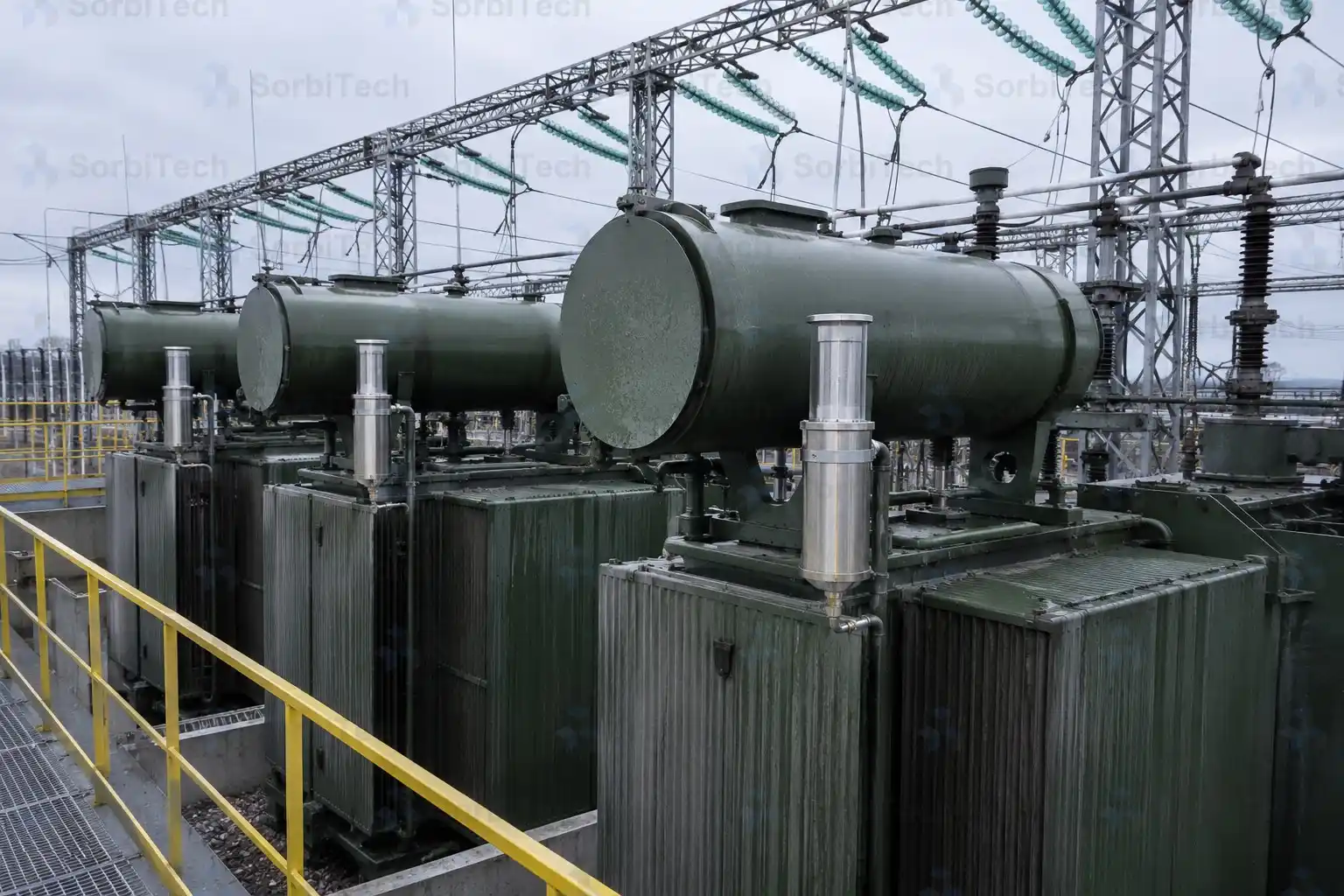
Transformer Breather Cartridge System

Transformer Breather Cartridge System

Pre packaged stainless steel transformer breather cartridge with indicating silica gel for grid transformer moisture protection across the high voltage transmission and distribution network.

Capacity: 0.5–25 kVA transformer to 800 kV substation

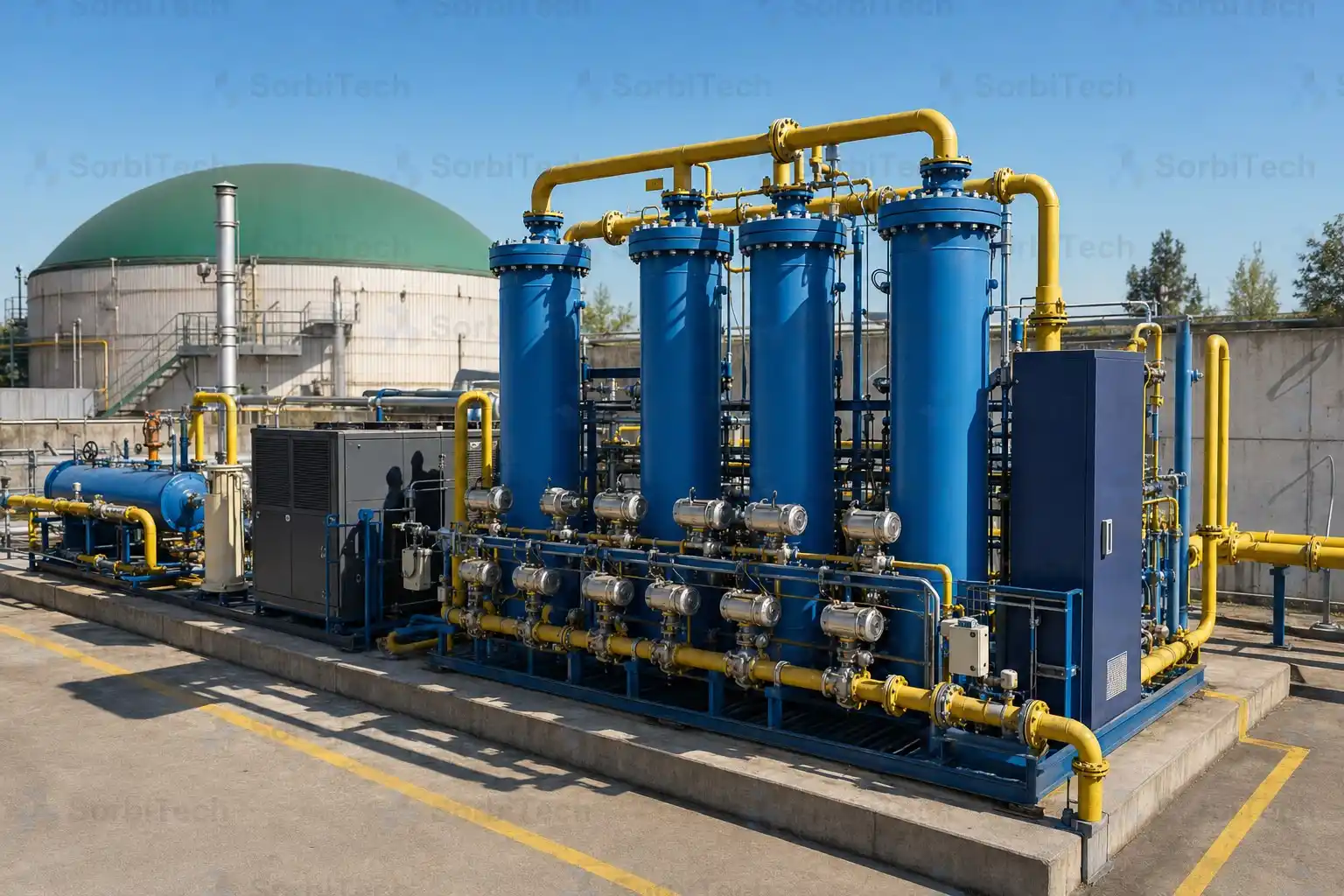
Biogas Upgrading Unit

Biogas Upgrading Unit

PSA biogas upgrading unit using carbon molecular sieve to separate carbon dioxide from methane and deliver grid quality bio methane from anaerobic digester biogas or landfill gas.

Capacity: 50–2,000 Nm³/h raw biogas

Oxygen VPSA Package

Oxygen VPSA Package

On site vacuum pressure swing adsorption (VPSA) oxygen generation package delivering 90 to 95 percent oxygen for medical, aquaculture, ozone generation, and metals applications.

Capacity: 50–2,500 Nm³/h O₂ (90–95 % purity)

Heatless Desiccant Air Dryer

Heatless Desiccant Air Dryer

Twin tower heatless desiccant compressed air dryer using activated alumina or silica gel for instrument and process air to pressure dew points below minus 40 °C.

Capacity: 50–10,000 Nm³/h

Gas Sweetening Unit

Gas Sweetening Unit

Molecular sieve and impregnated carbon gas sweetening unit for H₂S, CO₂, and mercaptan removal from natural gas, refinery gas, and LPG streams.

Capacity: 0.5–500 MMSCFD

Mercury Guard Bed

Mercury Guard Bed

Sulphur impregnated activated carbon mercury guard bed for natural gas, condensate, and refinery streams to protect cryogenic and brazed aluminium equipment from mercury attack.

Capacity: 0.1–500 MMSCFD

Vapour Recovery Unit (VRU)

Vapour Recovery Unit (VRU)

Activated carbon vapour recovery unit for tank farms, loading racks, and process vents to capture and recover hydrocarbons before stack release.

Capacity: 50–10,000 Nm³/h vent gas

Hydrogen PSA Purification Package

Hydrogen PSA Purification Package

On site hydrogen PSA package using a layered adsorbent bed for high purity hydrogen recovery from steam methane reformer off gas or electrolyser product.

Capacity: 50–50,000 Nm³/h H₂

PSA Nitrogen Generation Package

PSA Nitrogen Generation Package

On site pressure swing adsorption nitrogen generator using carbon molecular sieve. It delivers nitrogen at 95 to 99.999 percent purity for blanketing, purging, and inerting, with no dependence on delivered gas.

Capacity: 5–5,000 Nm³/h N₂

Why SorbiTech

One accountable supplier for media, vessel, and performance

When the adsorbent specification and the vessel design come from different suppliers, the performance guarantee has a gap between them. SorbiTech closes that gap by calculating both in one engineering record.

Adsorbent and vessel calculated together

The adsorbent grade, the bed volume, the vessel wall thickness, and the cycle parameters are solved in one engineering calculation. The media specification is not issued separately from the equipment specification. There is one calculation record and one performance guarantee.

Performance guarantee covers the contracted outlet specification

The contracted outlet condition, whether a dew point in degrees C, an oil concentration in mg per litre, or a product purity in percent, is the guarantee. SorbiTech measures the outlet at commissioning against the stated inlet conditions and issues the guarantee against the measurement.

ASME VIII or PED fabrication with third party inspection

All pressure vessels are fabricated to a named pressure vessel code. Third party inspection is appointed for all vessels regardless of pressure class. NACE MR0175 materials and post weld heat treatment are applied to sour service duty without a separate qualification process.

Lifecycle service under the original engineering record

Scheduled media sampling and laboratory activity testing track bed performance against the design specification. When the bed reaches the end of its service life, the reload is carried out under the original process calculation. The performance guarantee restarts after reload.

Selection Guide

Duty to recommended system

Starting point for the engineering conversation. The final specification closes after SorbiTech receives the inlet composition, the operating window, and the target outlet condition.

Duty or Target
Recommended Approach
Natural gas dehydration to pipeline pressure dew point
TSA twin tower, 4A molecular sieve for sweet gas or 13X for gas containing CO2, 8 to 12 hour adsorption cycle.
Cryogenic ASU air pre purification for water and CO2 removal simultaneously
TSA twin tower with layered 13X molecular sieve and activated alumina, 4 to 8 hour cycle.
On site nitrogen generation above 99.5 percent purity from compressed air
PSA twin or three bed with carbon molecular sieve, cycle time 30 to 60 seconds per step.
Biogas upgrading to biomethane above 97 percent methane for grid injection
PSA multi bed with carbon molecular sieve or VPSA cycle, sized to raw biogas flow and CO2 content.
Compressed air drying to ISO 8573 Class 2 pressure dew point
Heatless twin tower with activated alumina or 3A sieve, 5 to 10 minute half cycle.
Hydrogen purification above 99.9 percent from refinery off gas
Layered multi bed PSA with 5A zeolite, 13X zeolite, and activated carbon, sized to the feed H2 content.
Engineering FAQ

Common Questions on Gas Treatment & Generation

What outlet dew point is achievable from a molecular sieve dehydration unit?

Minus 40 degrees C at line pressure for a standard 4A molecular sieve bed on sweet natural gas with a regeneration temperature above 200 degrees C. Minus 70 to minus 90 degrees C at line pressure for cryogenic service duty using 13X or optimised 4A grade with a regeneration temperature above 250 degrees C. The contracted dew point is measured at the outlet at operating temperature and pressure, not at atmospheric conditions.

How long does a molecular sieve charge last before replacement?

Three to five years on natural gas dehydration within the design water loading and without liquid carry over or chemical contamination at the inlet. Glycol carry over, heavy hydrocarbon condensation, compressor oil, or amine ingress accelerate ageing and require earlier reload. SorbiTech measures the bed water capacity at 12 months by field sampling and laboratory analysis, establishing the decline rate against the virgin specification.

What is the regeneration purge fraction for a heatless compressed air dryer?

Twelve to eighteen percent of the product flow for standard activated alumina duty on instrument air at ambient temperature. The exact fraction depends on the adsorption pressure, the inlet dew point, and the design outlet dew point. A heated dryer reduces the purge fraction to three to five percent by raising the purge gas temperature before it enters the saturated tower, allowing a smaller vessel pair for the same throughput at the cost of the heater energy.

Can a PSA nitrogen generator run continuously without an operator on site?

Yes. The PLC sequence controller manages all valve switching, cycle timing, and product purity monitoring without operator input. An analyser on the nitrogen outlet stream activates a divert valve whenever purity falls below the setpoint, protecting downstream equipment from off specification gas. Remote monitoring via Modbus RTU or OPC-UA is standard on SorbiTech supply.

What inlet air quality does the PSA nitrogen generator require?

Oil free dry compressed air with aerosol content below 0.01 mg per cubic metre. Oil contamination from a lubricated compressor permanently blocks the pores of the carbon molecular sieve within weeks of operation, causing irreversible purity loss. Where a lubricated compressor is the only supply source, a coalescing filter rated to 0.01 ppm aerosol and an activated carbon guard vessel before the PSA inlet are mandatory.

Discuss Your Engineering Requirements

Provide your duty conditions and our team will recommend the right system configuration, media grade, and delivery scope.