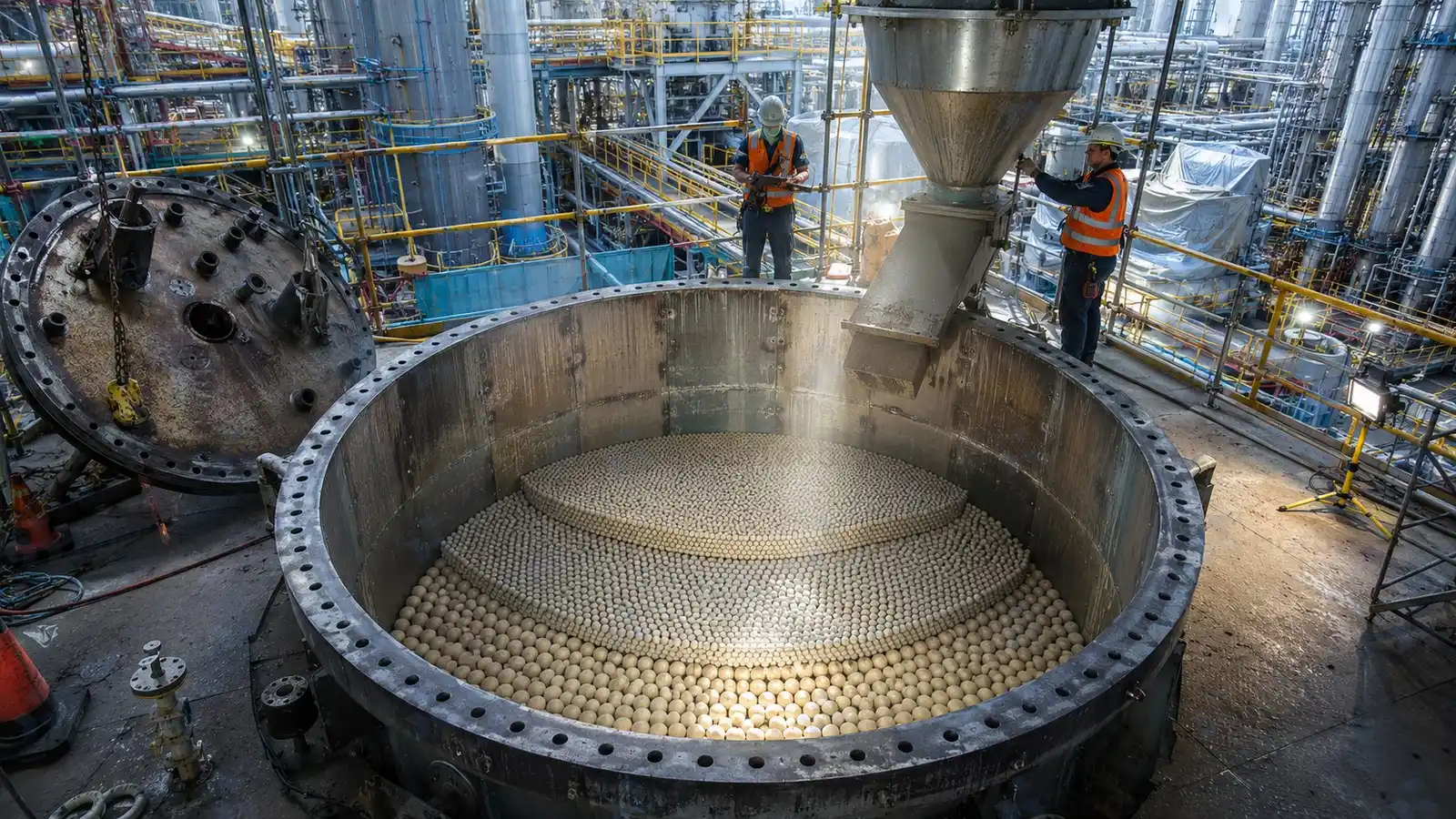
Catalyst Bed Support and Grading
Inert ceramic and high purity alumina support balls in graded sets for catalyst and adsorbent bed support, flow distribution, and thermal mass in refinery, petrochemical, and gas treatment reactors.

Specialty and catalysis covers the inert duties inside catalytic reactors and adsorber vessels. The role of the bed support and grading layer is mechanical and chemical: support the active catalyst or adsorbent under operating load, distribute the inlet flow uniformly across the vessel diameter, prevent fines migration into the underdrain, and resist the temperature and chemistry cycles of regeneration.
SorbiTech supplies the standard 99 percent alumina ceramic ball for general support duty, the high purity 99.7 percent alumina ball for service in contact with precious metal catalysts where silica migration would deactivate the active phase, and the rubberised compression pad assemblies that hold the bed against fluidisation during pressure swing cycling.
The supply is documented for the catalyst loading procedure: bulk density, crush strength, attrition loss, and alumina purity reported per lot. Size grading matches the underdrain spacing and the active catalyst particle size to prevent migration into the downstream piping. SorbiTech ships the graded set ready for loading by the operator turnaround team or the SorbiTech site supervisor.
Support media is silent infrastructure. It does not adsorb. It carries the load, distributes the flow, and prevents fines migration. The grading set is sized to the vessel.
The graded support layer at the bottom of an adsorber or catalyst vessel sits between the underdrain and the active bed. The set typically runs 25 mm at the very bottom against the underdrain, stepping down to 13 mm, then 6 mm, then matching the active bed particle size. This stepwise grading prevents the smaller active particles from migrating into the underdrain and creating channels through the bed.
The compression pad at the top of the bed holds the active particles against fluidisation during PSA depressurisation or process gas surge. The pad is a phenolic bonded glass fibre felt cut to the vessel internal diameter on the drawing. The mechanical contribution is silent: the pad reduces attrition loss by an order of magnitude over the bed life, extending the campaign before the next change out.

The support media set is matched to the host vessel. The underdrain spacing fixes the largest support size; the active bed particle size fixes the smallest. SorbiTech engineers the intermediate grades with a 2 to 3 ratio between successive layers, sized for the contracted cycle and inlet flow distribution.
For precious metal catalyst reactors the high purity 99.7 percent alumina ball is mandatory. Silica migration from a standard ceramic ball over the campaign life would migrate to the catalyst surface and reduce activity by 5 to 15 percent. The high purity grade eliminates this risk and is documented per lot against the catalyst loading procedure.
Each duty page carries the inlet specification, the recommended media or system, the cycle parameters, and the engineering selection guidance.
Inert ceramic and high purity alumina support balls in graded sets for catalyst and adsorbent bed support, flow distribution, and thermal mass in refinery, petrochemical, and gas treatment reactors.
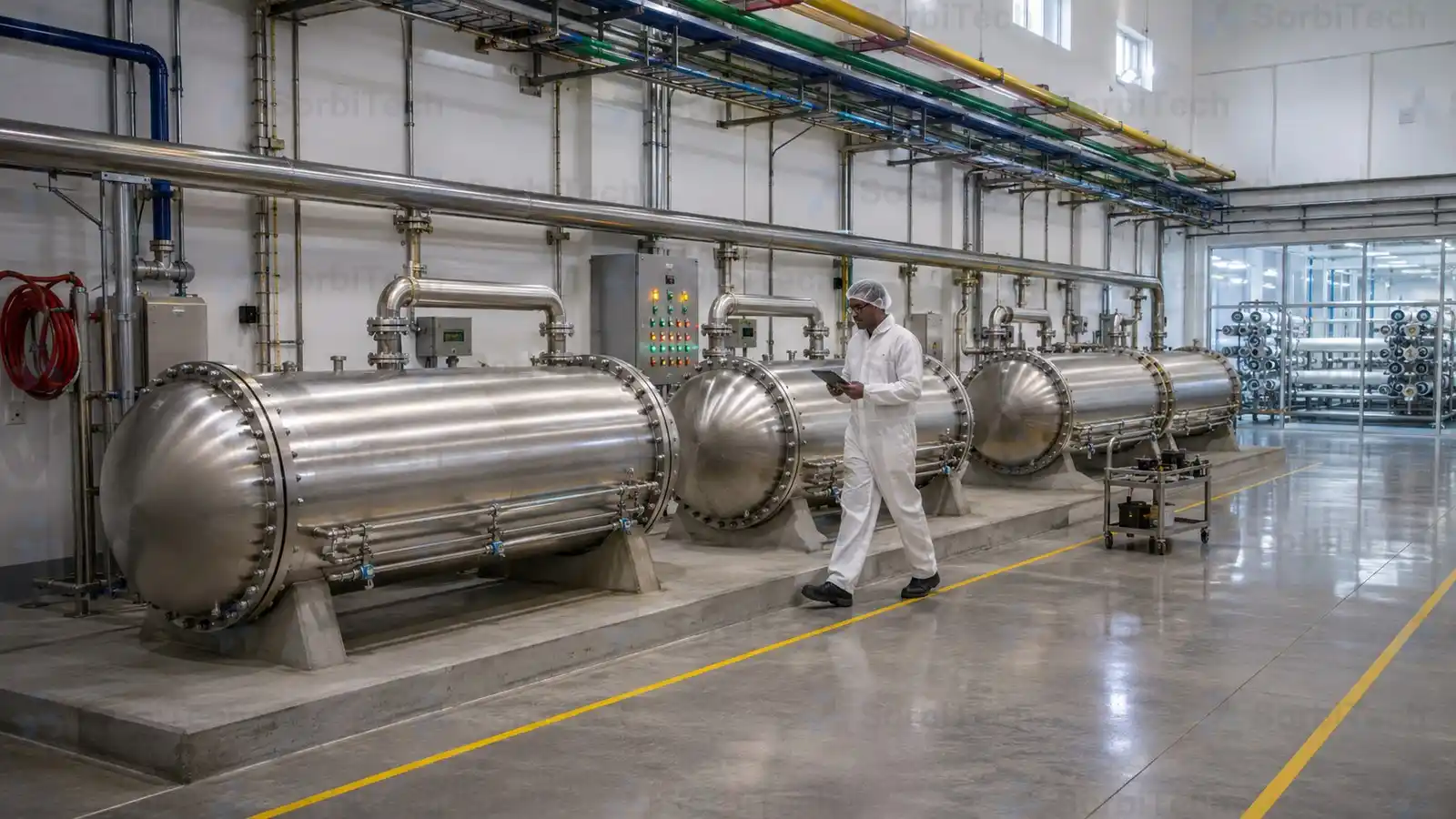
Granular activated carbon dechlorination of municipal supply water ahead of reverse osmosis, ion exchange, or chemical processing to protect downstream equipment from oxidative damage.
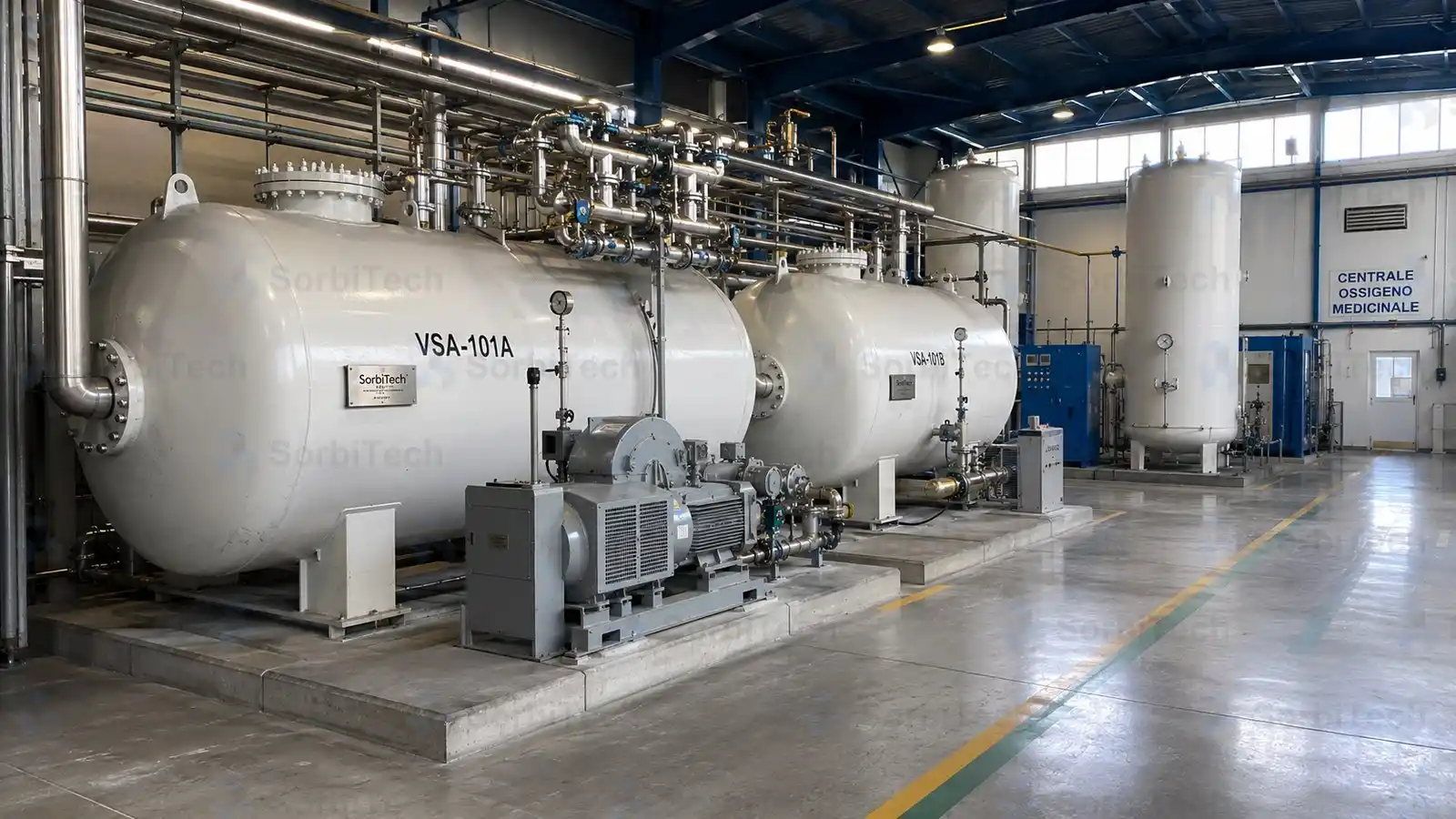
On site oxygen generation by pressure swing or vacuum pressure swing adsorption using lithium exchanged X zeolite for medical, aquaculture, ozone, and metals applications.
Four representative industries where SorbiTech delivers installations under this application theme, with the engineering record behind each.
Adsorption duties touch the media specification, the vessel design, and the project execution at the same time. SorbiTech engineers all three from the same record, with one performance guarantee against the contracted outlet condition.
The grade shipped is the grade engineered into the vessel design. SorbiTech designs the unit, sizes the bed, and supplies the media as one decision.
Every shipment carries a certificate of analysis covering iodine, water capacity, crush strength, attrition loss, and bulk density measured against the lot.
The bed is supported through its service life. Field sampling, performance audit, reactivation logistics, and end of life return under one agreement.
Process engineers, mechanical designers, and lifecycle specialists work the same project. The recommendation closes against duty data, not a catalogue page.
Starting point for the engineering conversation. The final specification closes out after SorbiTech receives the inlet composition, the operating window, and the target outlet condition.
When the support layer is in direct contact with a precious metal catalyst. Silica from a standard 99 percent ceramic ball migrates to the active catalyst surface over the campaign life and reduces activity by 5 to 15 percent. The high purity grade eliminates the silica source and is the reference for hydroprocessing and isomerisation catalyst reactors.
By the underdrain spacing of the vessel and the active bed particle size. The vessel fabricator specifies the underdrain. The active bed specifies the smallest support layer. The intermediate grades fill the gap with a 2 to 3 ratio between successive layers. The total graded depth runs 5 to 10 percent of the active bed depth.
No. The phenolic binder ages with heat and pressure cycling and the felt loses its spring. Compression pads are replaced at every active bed change out. The ceramic and alumina balls are inert and reusable; they are inspected for breakage at change out, washed, and reinstalled with the new active charge.
Yes. SorbiTech supplies bed support and grading to the OEM catalyst loading procedure, with documentation matched to the catalyst datasheet. The supply includes the certified analysis report, the size grading certificate, and the loading sequence documentation required by the turnaround team.
Standard packaging is 25 kg drums for site loading by hand, 500 kg big bags for crane loading, and 1000 kg sea freight containers for international shipment. Custom packaging is available for OEM and turnaround requirements on request.
Our 112-application database covers most industrial duties. Contact us to find the right solution.
Tell us briefly what you need. Our technical team responds within one business day.
Request the TDS / datasheet. We send it on email after a brief review.