
Crude Oil Desalting
Removing salt, water, and solids from crude oil at the refinery inlet using electrostatic coalescing and downstream effluent treatment of the desalter brine.
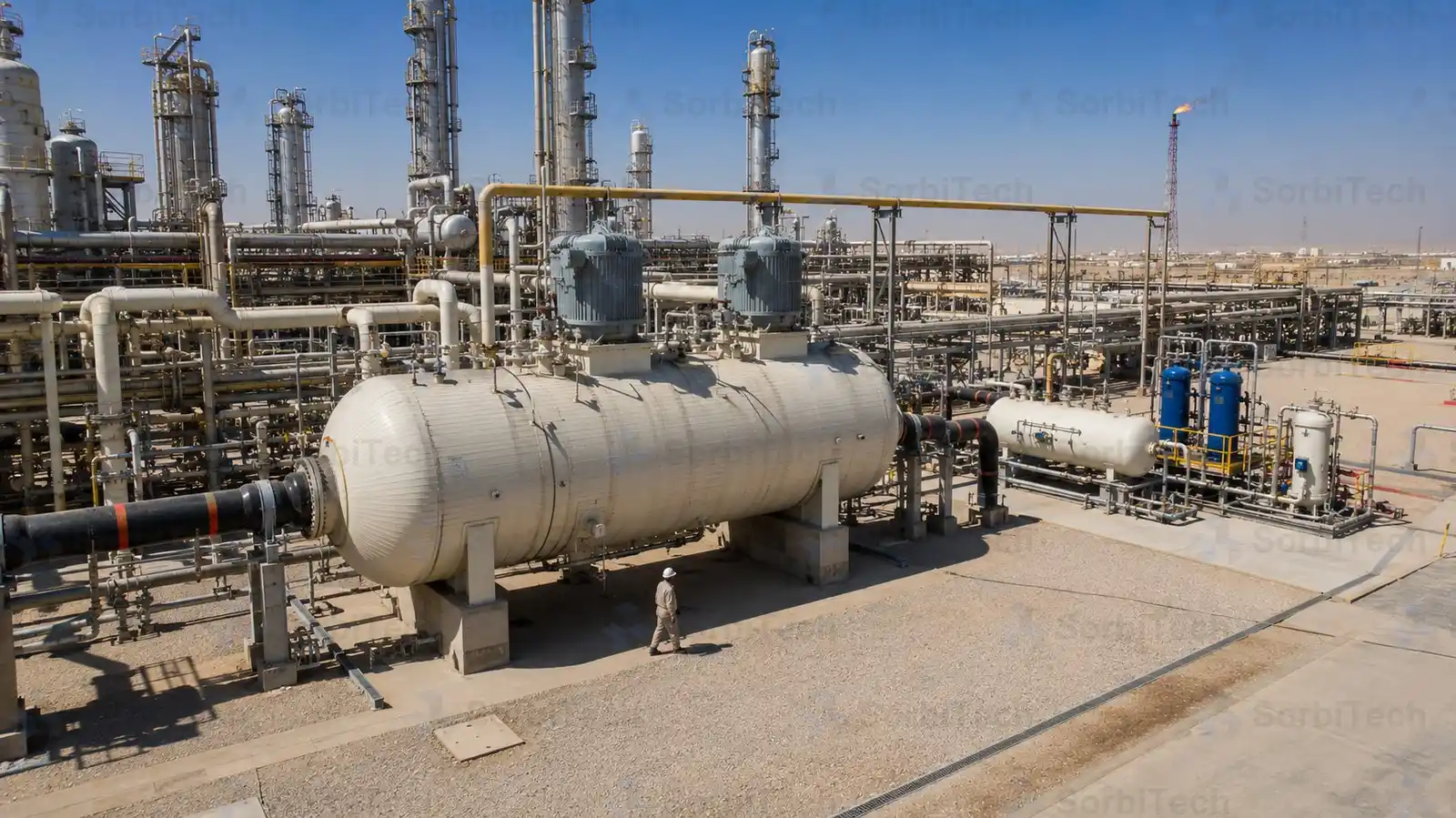
Crude oil desalting removes salt, water, and solids from crude oil at the refinery battery limits using electrostatic coalescing in a desalter vessel. SorbiTech delivers the downstream brine effluent treatment train (CPI separation, coalescing polishing, activated carbon polishing) that meets the refinery discharge consent on the desalter brine.
The Refinery Desalter and Its Effluent
Crude oil entering a refinery carries 0.5 to 5 percent water at the wellhead, plus dissolved salts and suspended solids that would otherwise destroy the downstream crude unit. The desalter washes the crude with fresh water and uses an electrostatic field to coalesce the salt laden water droplets; the desalted crude proceeds to the atmospheric distillation column, and the brine effluent goes to the refinery wastewater treatment plant. The brine is the SorbiTech treatment scope.
Brine Effluent Carries Oil, Hydrocarbon, and Solids
The desalter brine carries free hydrocarbons (from carryover at the electrostatic separation), dispersed hydrocarbons (10 to 100 ppm), dissolved hydrocarbons (BTEX, phenols), suspended solids from the crude, and the dissolved salts of the original wash water. The discharge consent (refinery effluent under the regional regulatory regime) typically requires below 10 mg/L oil at outlet.
Three Stage Brine Treatment Train
The SorbiTech brine treatment train stages a CPI separator for the free oil and settleable solids, a coalescing skid for the dispersed oil to single digit ppm, and an activated carbon polishing bed for the dissolved hydrocarbons. The combined train delivers the refinery discharge consent on a continuous basis with one performance guarantee.
Delivery and Sector
Delivered turnkey by SorbiTech with civil and electrical scope or as a fabricated skid by SorbiTech. The SorbiTech activated carbon is reactivated thermally at the partner facility through the SorbiTech reactivation programme. Sector coverage is petrochemicals and refining.
Selection Guidance
Electrostatic desalter is the refinery standard. The downstream brine effluent (desalter wash water plus the separated brine) requires staged treatment to meet the refinery discharge consent; SorbiTech delivers the brine treatment package.
A Specified, Verified Solution
Define the duty
We capture your process conditions: flow, composition, pressure, temperature, and the target outlet specification.
Select media & configuration
Our engineers recommend the adsorbent grade and system type that meet the duty with margin.
Size & engineer
Bed sizing, vessel design, and cycle parameters are engineered to your case and documented for approval.
Commission & verify
We support loading, start up, and performance verification against the guarantee.
Recommended Products & Systems
Adsorbents & Media
Engineered Systems
-
01
 Equipment
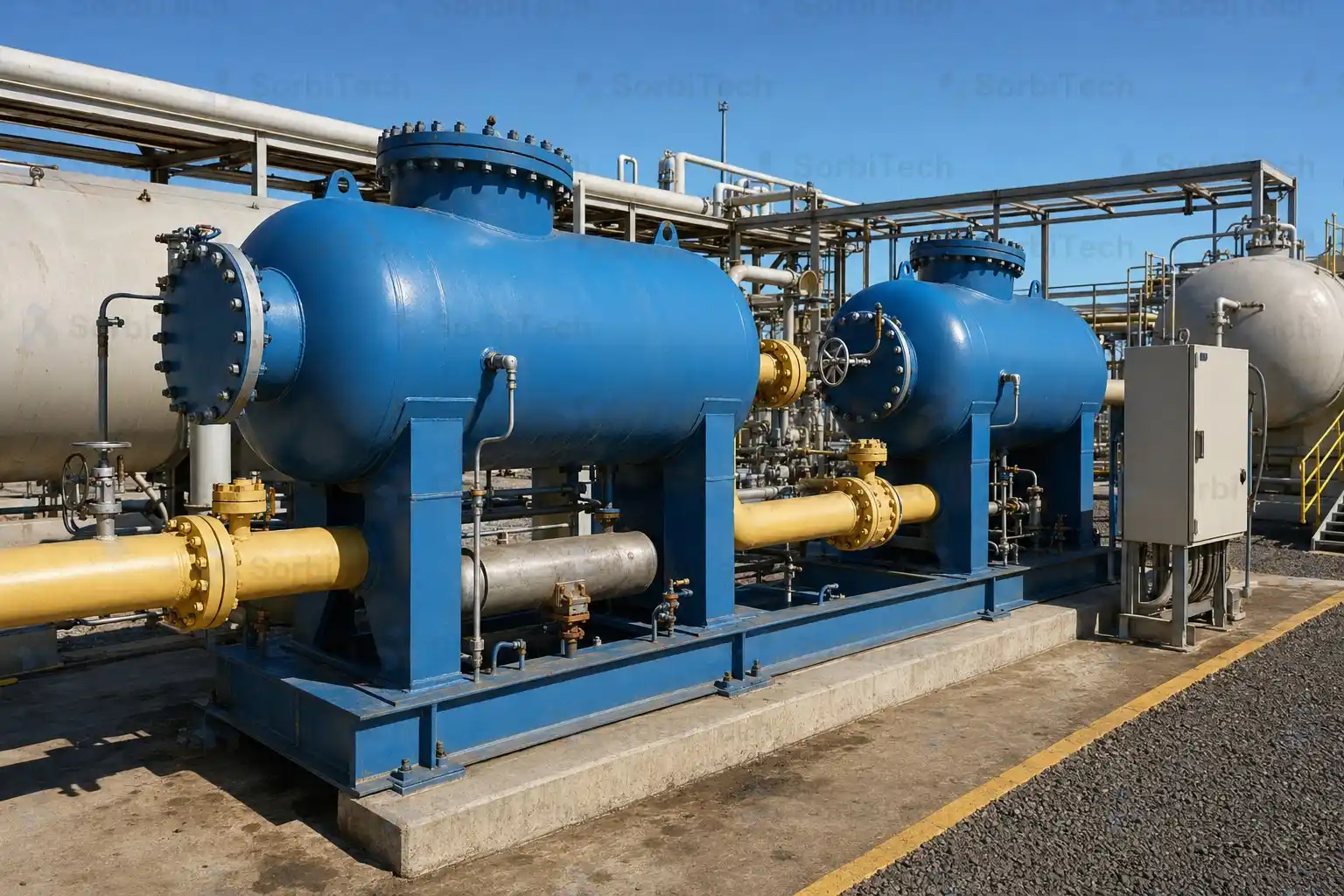
Coalescing Filtration Skid
Two stage coalescer and separator skid that removes fine dispersed hydrocarbons and solids from water down to single digit ppm. It is the polishing…
Capacity
2–200 m³/h
Equipment
Coalescing Filtration Skid
Two stage coalescer and separator skid that removes fine dispersed hydrocarbons and solids from water down to single digit ppm. It is the polishing…
Capacity
2–200 m³/h
-
02
 Equipment
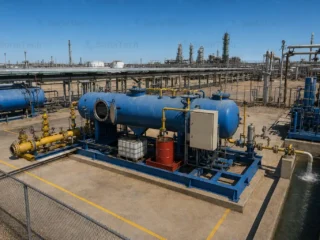
CPI Oil Water Separator
Corrugated plate interceptor that separates free oil and settleable solids from produced and industrial water to below 10 ppm. Compact, with no moving parts.
Capacity
5–500 m³/h
Equipment
CPI Oil Water Separator
Corrugated plate interceptor that separates free oil and settleable solids from produced and industrial water to below 10 ppm. Compact, with no moving parts.
Capacity
5–500 m³/h
-
03
 Equipment
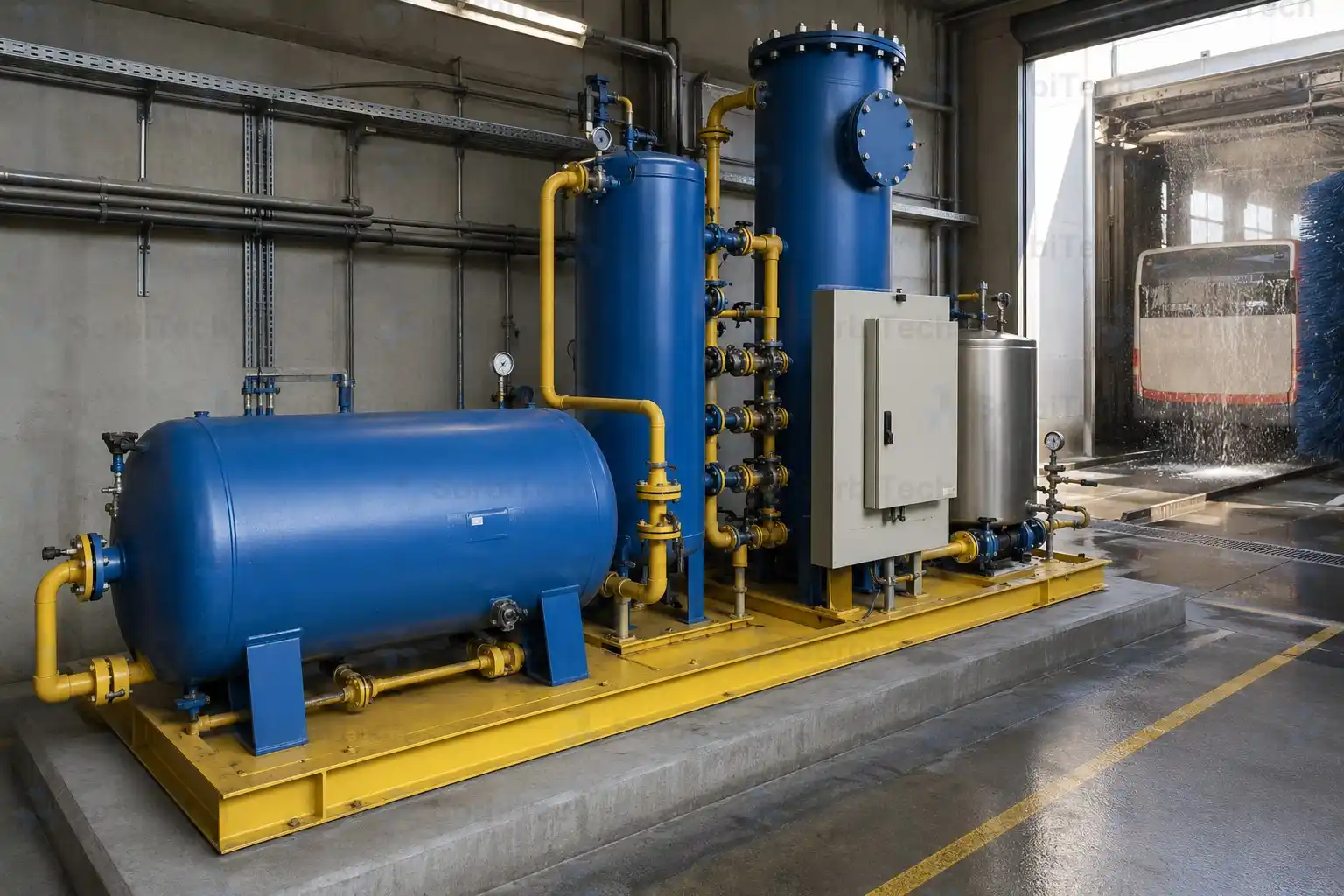
Vehicle Wash Water Recycling Skid
Compact wash water recycling skid for car, truck, bus, and heavy equipment wash bays with staged CPI separation, coalescing polishing, and activated carbon adsorption.
Capacity
0.5–50 m³/h
Equipment
Vehicle Wash Water Recycling Skid
Compact wash water recycling skid for car, truck, bus, and heavy equipment wash bays with staged CPI separation, coalescing polishing, and activated carbon adsorption.
Capacity
0.5–50 m³/h
Industries Using This Application
-
01
 Sector
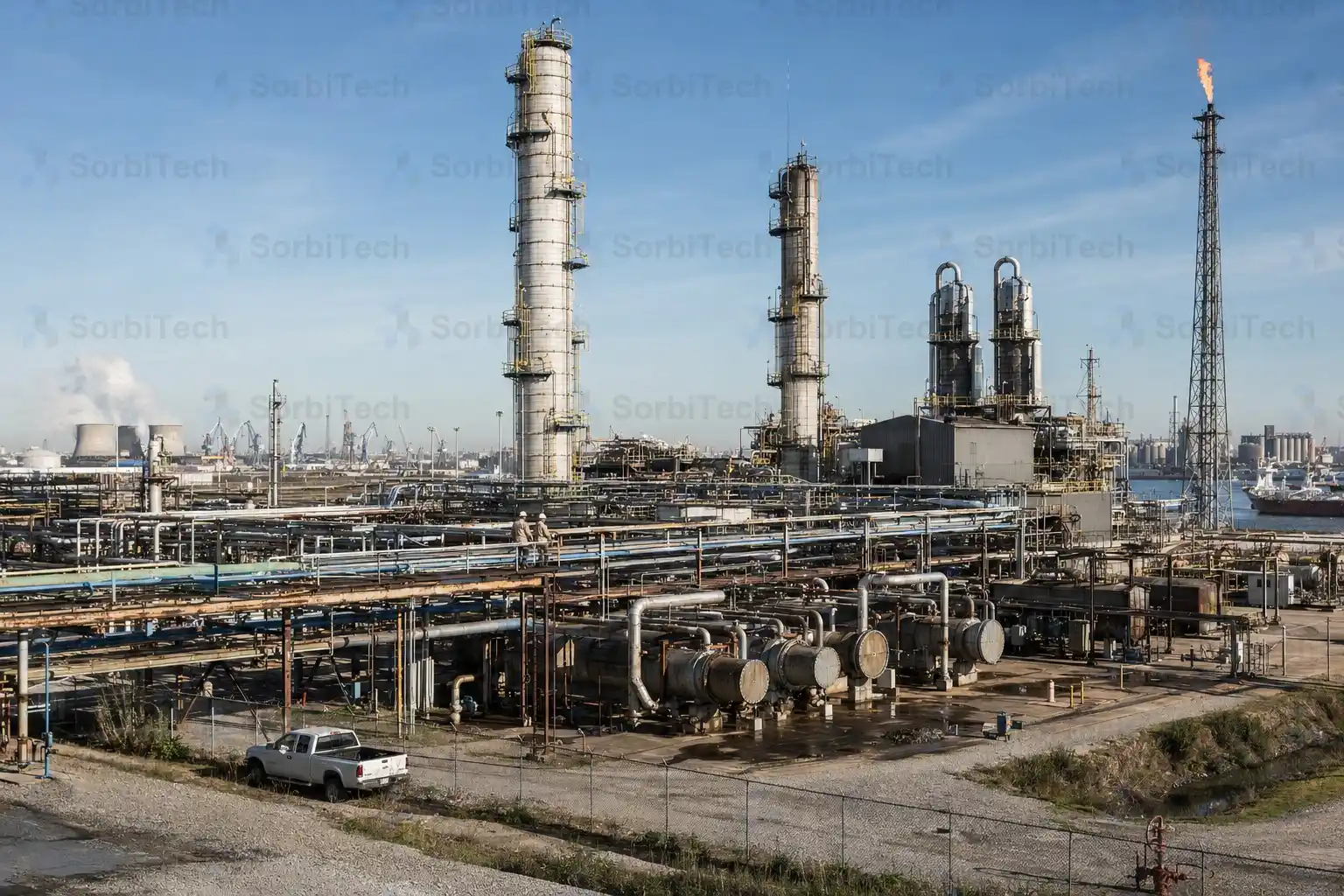
Petrochemicals & Refining
Adsorbents and separation systems for feedstock drying, process gas conditioning, solvent recovery, and refinery effluent treatment.
Sector
Petrochemicals & Refining
Adsorbents and separation systems for feedstock drying, process gas conditioning, solvent recovery, and refinery effluent treatment.
-
02
 Sector
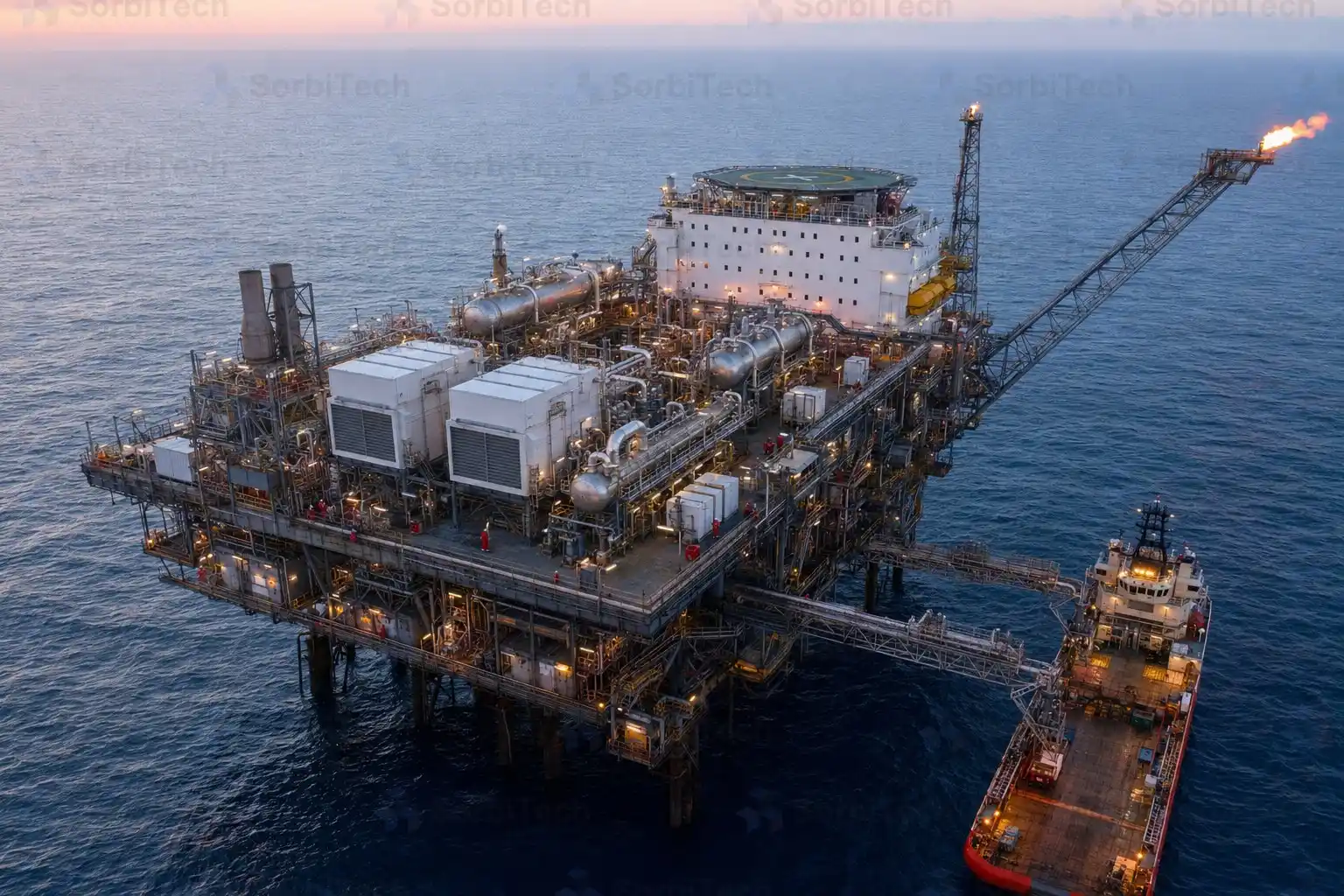
Oil & Gas
Complete dehydration, separation, and treatment across upstream, midstream, and downstream oil and gas. SorbiTech supplies the adsorbent media and the engineered systems from one…
Sector
Oil & Gas
Complete dehydration, separation, and treatment across upstream, midstream, and downstream oil and gas. SorbiTech supplies the adsorbent media and the engineered systems from one…
Specify a Solution for This Application
Provide your process conditions and our team will recommend the grade, configuration, and sizing.